MOGADISHU, Somalia (AXADLE) — The killing of Somali National Army soldier Ahmed Shire Hussein on September 8, 2026, began on a dusty road outside El Baraf in Middle Shabelle and ended as a stark measure of Somalia’s deepening internal fractures. Hussein, an active-duty soldier, was dragged from a transit vehicle not by Al-Shabaab, the armed group he was serving to fight, but, according to accounts collected from clan elders and opposition figures, by a local clan militia. No security agency has publicly confirmed a motive.
In a video recorded before he was executed, Hussein appeared stranded, unarmed and fully aware of what was unfolding. Facing the men holding him, he pleaded: “Abtiyaalow, ha i dilina” (“Maternal uncles, do not kill me”).
- Advertisement -
Those words carried more than fear. Clan elders and opposition figures interviewed for this piece said Hussein’s mother came from the Abgal clan — the same community as the armed men surrounding him. His father’s lineage, however, was Xawaadle. In the unforgiving arithmetic of Somalia’s clan blood feuds, they said, that paternal identity outweighed his maternal ties. Hussein was treated as a payable debt in a conflict he had not personally caused.
He had been traveling with two other soldiers when the vehicle was stopped. All three were seized. In such confrontations, determining lineage after a capture is often decisive; it is usually not the stop itself, but the ancestry established afterward, that determines who walks away. The other two soldiers were released without injury. Hussein was not.
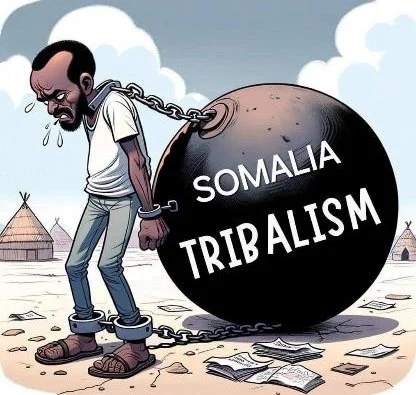
For those watching Somalia’s crisis from across the Horn of Africa, his death offers a narrow but revealing glimpse into a wider disaster: the country’s most dangerous battlefield is increasingly being carved inside itself, along stubborn and lethal tribal fault lines.
A ledger no one signed
To grasp how a government soldier could be taken from a road and killed by men connected to him through kinship, it is necessary to look at how customary law has been distorted by modern weapons, weak institutions and the absence of dependable state authority.
In its traditional form, customary law placed elders at the center of conflict resolution, often through negotiated compensation known as blood money. In today’s violent mutations, armed clan groups frequently sideline elders and replace mediation with immediate revenge.
The defining cruelty of the current pattern is that the original offender is rarely the person punished. Retaliating militias instead look for someone prominent, vulnerable or easy to reach from the rival clan. A doctor working in a Mogadishu hospital, a prosperous trader at a junction, or an off-duty soldier heading home to his family while dealing with a health crisis can all become stand-ins. Maternal ancestry, education, public service or a national uniform offers no safety once a clan ledger is deemed to require a death.
The process has become grimly systematic. A local trigger — a quarrel over land, access to a water well, or a killing decades in the past — is transformed into a collective obligation assigned to an entire rival sub-clan. Militias then bypass the person responsible and search for a target of value who can be reached. In Hussein’s case, the fatal criterion was not what he had done, but the paternal lineage he carried.
Not rage. A plan.
Modern revenge killings are often described as eruptions of anger, but the evidence points to something more deliberate. When a clan group moves to settle a “blood debt,” armed teams are assembled, financed and deployed with targets in mind. They stage highway ambushes, trade information about travel routes and wait at known chokepoints on rough roads. These killings are not improvised in a moment of fury. They are organized as acts of calculated retribution, reducing the murder of an uninvolved person to a transaction meant to balance an inherited tribal account.
Who pays for the guns
The machinery behind these killings reaches well beyond rural encampments. Such operations cost money: vehicles, modern firearms, communications and intelligence networks are all required. Funding is often linked to a damaging mix of local business interests and diaspora contributions sent through mobile-money systems, sometimes under the belief that the money supports “homeguards” or “community defense forces.”
The methods of surveillance have also changed. Militias use informants at transport hubs, bus stations, roadside restaurants and market stops. Those informants identify valuable targets, monitor their movements and pass details to armed groups positioned along vulnerable stretches of unpaved highway.
The killers act with striking confidence, not because Somalia has no punitive apparatus. The country’s Military Court has a record of severe sentences, including repeated orders for Al-Shabaab members to be executed by firing squad. Yet clan hit squads have killed in daylight, without masks, and recorded themselves doing it. The distinction is not capacity but protection. Armed men know their communities may resist arrest physically, while local politicians often press federal authorities to abandon inquiries rather than destabilize fragile clan arrangements. A court prepared to execute terrorists often does not confront a gunman shielded by his sub-clan, and that imbalance helps sustain the cycle of planned violence.
Not just El Baraf
The Xawaadle-Abgal tensions now disrupting the crucial routes between Hiiraan and Middle Shabelle are not unique. Similar fractures appear across much of Somalia’s semi-autonomous landscape, creating informal borders within the country. In Mudug and Galguduud, recurring feuds over grazing areas frequently become battles between rival sub-clans, turning pastoral settlements into frontlines. In Gedo’s Luuq district, small disputes over municipal representation can rapidly deepen into revenge cycles spanning generations and displacing thousands of families. In Middle Shabelle and Hiiraan — the corridor where Hussein was killed — the dynamic is not an outlier. It is at the center of the present emergency.
Why the courts never show up
A November 2025 report by the Heritage Institute for Policy Studies (HIPS), a Mogadishu-based policy think tank, offers a broader explanation for the fragility. The report found that Hirshabelle’s hurried, top-down creation in 2016, combined with unresolved clan grievances, left the state with weak institutions. Those weaknesses, it said, created space for both Al-Shabaab and clan militias to step into the resulting vacuum in security and justice. The report also cited the outsized political role of the Xawaadle and Abgal clans, and the exclusion felt by others, as a factor in the state’s instability.
That institutional failure is worsened by a more visible social problem: illiteracy. Limited formal education leaves large numbers of unemployed young people exposed to tribal mobilization. But illiteracy is not the root cause. The deeper engine is the absence of credible justice. Outside major cities, the federal government lacks courts and police forces able to impose rule of law, leaving rural communities to fall back on clan mechanisms.
Where functioning state courts cannot punish individual criminals, collective clan liability becomes a crude survival system. Local political actors then exploit that fragility as they compete for influence over checkpoints, farmland and the borders of administrative states. For young militiamen with little education and few economic options, enforcing a tribal blood debt can become a source of income, status and protection.
A gift to Al-Shabaab
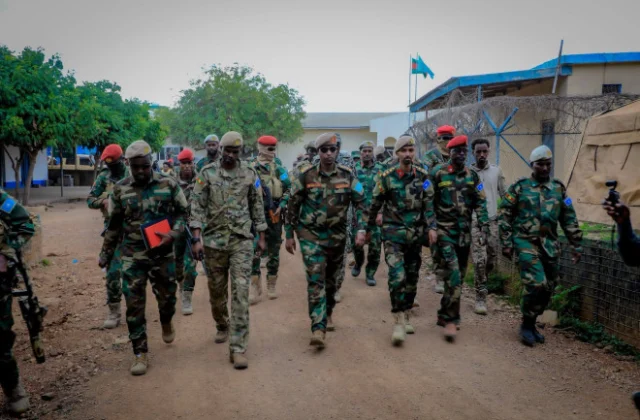
The political and security cost is severe, especially for Somalia’s campaign against Al-Shabaab. Ahmed Shire Hussein’s army uniform should have marked him as a servant of the state. Instead, his killing showed how deeply clan loyalties can undermine cohesion inside the security forces themselves.
The El Baraf corridor has already exposed this vulnerability. In December 2024, a similar flashpoint occurred nearby when a local militia ambushed and killed seven soldiers from a rival clan, halting local military operations for weeks.
When soldiers are killed in clan revenge attacks, the impact moves quickly through national army units. Battalions can begin to fracture along lineage lines. In earlier escalations, soldiers whose clansmen were targeted by rival militias have left frontline trenches and abandoned counter-terrorism bases, returning to home areas either to defend relatives or to participate in counter-revenge.
Each outbreak of clan violence raises the risk that national security forces will redirect their weapons from Al-Shabaab to one another. The resulting gaps are readily exploited by Al-Shabaab, which can present itself as a false mediator or offer heavy weapons to aggrieved sub-clans in exchange for loyalty. In Middle Shabelle and Hiiraan, competition over transit routes and unresolved political grievances have weakened battalions and exposed areas near El Baraf. In Mudug and Galguduud, disputes over pasture and water pull regional forces away from anti-terror operations. In Gedo’s Luuq district, struggles over local administration and land ownership have displaced civilians on a large scale and stalled governance.
Guudlaawe’s silence
Hussein’s execution also cuts into the fragile political order of the Hirshabelle regional government. The road through El Baraf is a vital artery linking Middle Shabelle and Hiiraan, both under State President Ali Abdullahi Hussein (Ali Guudlaawe). To observers, the killing is a direct indictment of his administration’s failure to secure regional highways and disarm local sub-clan militias.
When government personnel can be seized on a monitored route, it points to a deeper pattern of selective enforcement. Strong statements from Jowhar often follow such incidents, but the repeated failure of regional forces to make arrests has reinforced a sense of entrenched impunity.
Guudlaawe has faced this test before. After seven soldiers were killed in the same corridor in December 2024, he condemned the attack publicly and promised justice, but no prosecutions are known to have followed. As of August 2026, Hirshabelle Vice President Yusuf Dabaged was still trying to arrange a presidential visit to Beledweyne, a sign of how difficult it remains for Guudlaawe to engage directly with Hiiraan’s population. The tension has practical consequences: that same month, Ma’awisley fighters — government-aligned clan militias — reportedly took control of voter registration centers in Beledweyne, objecting to the disputed National Independent Electoral and Boundaries Commission’s plan to conduct elections in twelve Hirshabelle districts, including six in Hiiraan. The pattern reaches back at least to 2022, when the killing of the Beledweyne police station commander during clashes led Guudlaawe to form an investigative committee. Its findings, like the outcome of the 2024 soldier killings, were never made public.
Hiiraan wants out
The vacuum in governance has implications well beyond one road or one killing. The hostility between Abgal and Xawaadle communities is bound up with grievances over political representation inside Hirshabelle. With the regional capital in Middle Shabelle, many in Hiiraan have long voiced anger over what they see as marginalization and economic neglect by the state’s center of power.
Each killing that goes unpunished along the border corridor strengthens political hardliners in Beledweyne. Hussein’s death has already revived calls among local leaders in Hiiraan to cut ties altogether with the regional administration. By failing to hold individuals accountable, the state is allowing cycles of revenge to erode the territorial coherence of a key regional state.
The separatist push is neither new nor purely rhetorical. Former Hiiraan Governor Ali Jeyte Osman was named interim president of a self-declared “Hiiraan State” initiative, a movement rooted in the same complaints over power-sharing and neglect that Hussein’s killing has brought back to the surface. The existence of a rival administrative project, even an informal one, shows how close Hiiraan remains to a more formal break with Hirshabelle.
Everyone spoke except the government
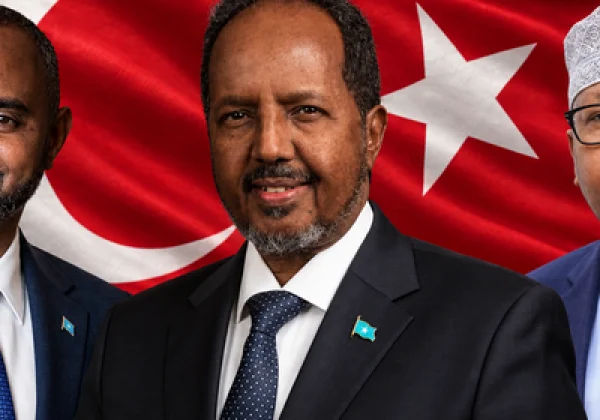
The response to the killing has been forceful in some quarters and absent in others. Former President Sharif Sheikh Ahmed, a prominent figure in the opposition coalition challenging the federal government’s electoral model, condemned the killing publicly. He described it as evidence of state weakness and linked it to the wider pattern of recurring clan revenge killings across Somalia.
Xawaadle traditional leaders also issued public criticism. In a video obtained for this piece, elders including Nabadoon Osman Mohamud and Nabadoon Hussein Colad blamed failures by regional security authorities and characterized Hussein’s death as a targeted killing driven by inter-clan hostility among local militias. They urged the federal government to ensure immediate accountability as the basis for lasting peace, while saying they were prepared to work with authorities toward a resolution.
The Federal Government’s reaction, by contrast, has been notably quiet. As of this writing, neither Mogadishu nor Hirshabelle President Ali Guudlaawe has issued a formal statement specifically addressing Hussein’s killing, a silence made more conspicuous by Guudlaawe’s earlier promise of accountability after the similar 2024 killings in the same corridor. Civil society groups and religious leaders had also not issued public statements on the killing as of this writing.
The video did the rest
The cycle persists because federal authority largely fades outside Somalia’s main urban centers. When revenge killings occur, federal courts and police rarely step in to arrest the gunmen responsible. The state frequently treats such executions as private clan matters best left to traditional elders, a posture that signals impunity even when it is not formally declared.
The recording of Hussein’s execution was not a side detail. It was part of the act. Sending footage of a killing into the phones and homes of a rival sub-clan is designed to intimidate, shame and provoke in ways a private killing cannot. It also forces public escalation, narrowing the space for quiet mediation by local leaders. Within hours of Hussein’s death, the video had spread across TikTok and Facebook. Algorithms then magnified the damage, pushing tribal war poetry and execution footage until a rural dispute became a global argument among diaspora communities, some of whose members help finance the violence taking place in Somalia.
Unless leaders in Mogadishu and the Ministry of Defense treat clan revenge killings not as isolated cultural disputes but as a direct threat to national sovereignty on par with terrorism, the blood ledger will remain open. Young men such as Ahmed Shire Hussein will keep facing their own maternal relatives with pleas for mercy, only to find that the system around them has none left to offer.
______________________________
ABOUT THE AUTHOR
Ismail Abukar is Co-Founder and Chairperson of the Organization for Prisoners’ Rights (OPR), an independent civil society organization based in Mogadishu, Somalia. He has spent seven years conducting primary field research in Somalia on prisoners’ rights, enforced disappearances, press freedom and electoral corruption. His investigations have appeared in African Arguments and Axadle, including “Somalia’s New Speaker Got His Seat Through a Military Operation,””The Disappeared,” and “A Government With One Foot Out the Door: Somalia’s Foreign Passport Crisis.” He holds an MA in International Law and Human Rights from the University for Peace (UPEACE) and maintains an active ORCID record: 0009-0003-1435-3691.