
Spain’s transport minister, Oscar Puente, has resigned over last week’s deadly train crash, the country’s second fatal rail accident this year. His announcement came just hours after he outlined emergency aid for victims and a package of new safety measures.
“A transport minister in a country like Spain cannot remain in office after two accidents of this seriousness in less than a year,” he told lawmakers on the Permanent Deputation, the standing committee that operates while parliament is dissolved.
- Advertisement -
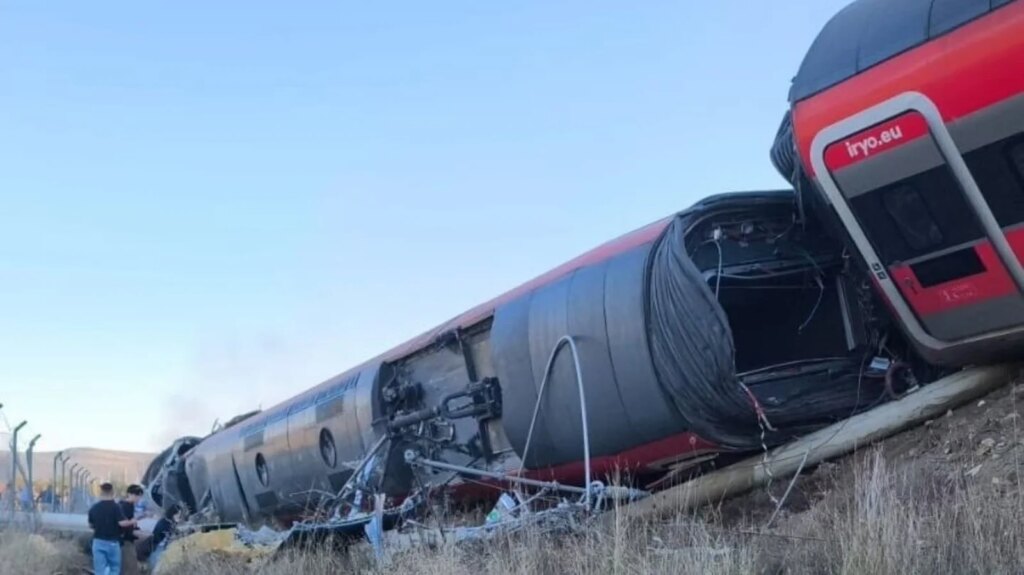
Puente spoke almost a week after the 28 October collision near Urda, a town in central Spain, which claimed 69 lives.
His resignation comes fewer than four weeks before the early parliamentary election called by Prime Minister Pedro Sanchez for 29 November. It also follows two deadly crashes on the same rail line this year.
Although Mr Puente had previously rejected calls to resign, he said he made the decision within minutes of learning about the crash. He remained in office, he said, until the initial emergency response was operating, preliminary inquiries had begun and the first steps to compensate victims and strengthen rail safety had been introduced.
Spain’s Transport Minister Oscar Puente has not specified when he will leave post
A separate accident in January, involving the same companies on the same route, killed 46 people.
Last Wednesday, a signalling failure on the Madrid-Seville line automatically brought several trains to a halt, after which controllers in Madrid assumed responsibility for managing the traffic.
According to Puente, the controllers cleared a state-owned Renfe train to continue even though a privately operated Iryo train was stopped farther along the track.
Investigators put the speed of the collision at between 160 and 200km/h.
Emergency aid package for victims
Under the measures announced by Mr Puente earlier on Tuesday, services on the Madrid-Seville line will be scaled back while the Railway Safety Agency assesses the route’s safety systems and the government completes the delayed deployment of the European RailTraffic Management System (ERTMS).
The planned safeguards include a 40km/h speed cap when drivers must rely on their own view to identify obstacles after a signalling failure. The government will also recruit additional personnel and improve working conditions in rail control centres.
Authorities said compulsory passenger-insurance payments for crash victims would be doubled, while compensation claims would be processed more quickly and temporary incapacity coverage would be strengthened.
Mr Puente also announced what he described as a world first: an AI agent for the railway network that will “detect anomalies and monitor conversations” between drivers and controllers, with the aim of reducing the risk of human error.
“We are not aware of any other railway system that uses this type of mechanism or technology. We will be the first to take this route,” Mr Puente said. Spain will also build a real-time digital model of the rail network, he added.
The dispute over responsibility for the crash deepened as unions warned that it was unfair to place the focus on human error alone.
Raquel Ayllon, a union leader at state-owned infrastructure operator Adif, said on Friday that controllers were working under demanding conditions.
“Human error is being criticized and questioned very quickly, while people are not really focusing on the central issue: the failure of the safety system,” Ms Ayllon said on TVE.