For a fifth straight day, Russian drones have battered Kyiv and the surrounding region, sending air raid sirens echoing through the capital at all hours and disrupting the lives of millions.
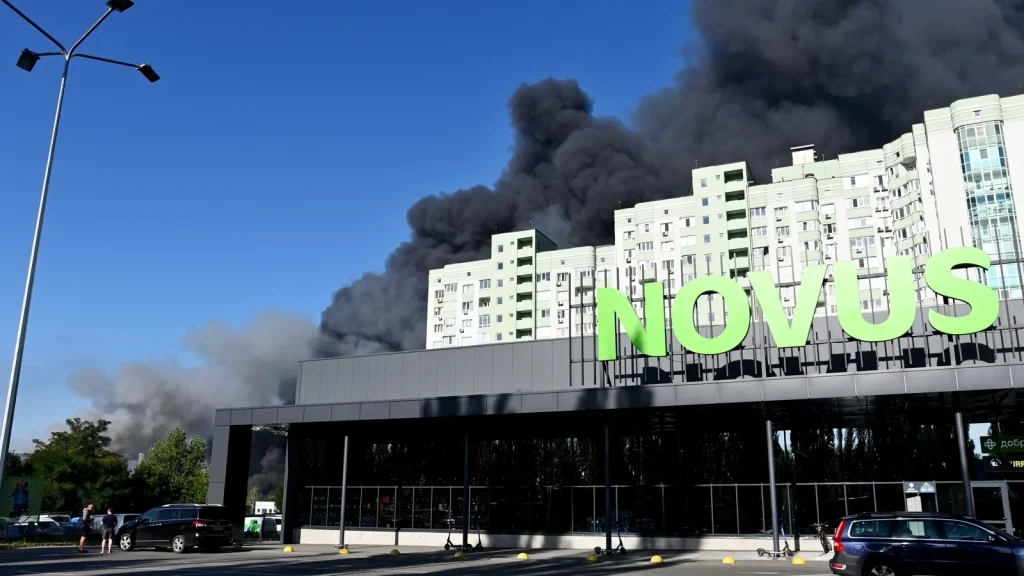
Four people were injured in the latest attacks, while warehouse facilities, an apartment building and a retail outlet were damaged in the Kyiv region, regional governor Tymur Tkachenko said on Telegram.
- Advertisement -
Large waves of drones, including a growing number powered by jet engines, have struck Kyiv and nearby communities in recent days. The attacks have killed residents and damaged homes and warehouses. On Friday, a Russian strike on an ammunition depot triggered a series of explosions that left 38 people dead.
Ukrainian President Volodymyr Zelensky said yesterday that the relentless attacks were designed to exhaust the population. Over four days, Russia fired almost 1,500 drones at Ukraine, more than half of them jet-powered, he said.
In Kryvyi Rih, a southeastern Ukrainian city, two people were injured when a jet-powered drone hit an industrial company, a local official said.
The latest strikes come as both Russia and Ukraine increasingly target commercial and economic infrastructure. Russia has hit warehouses belonging to Ukraine’s leading supermarket chains, its largest postal service and major home-goods retailers, while Ukraine has carried out attacks on Russian facilities.
A logistics hub in Yekaterinburg was targeted by a Ukrainian drone strike, the Russian city’s regional governor said on Monday.
Russia has intensified its aerial campaign this summer, exploiting Ukraine’s limited supply of interceptors capable of stopping ballistic missiles. But the expanding use of daytime drone barrages has brought another layer of disruption to Kyiv, forcing metro shutdowns and throwing ordinary routines into disarray.
When trains stopped crossing the Dnipro river during the alerts, dozens of passengers crowded onto Kyiv metro platforms, waiting for the service to resume.
Among those stranded was 38-year-old nurse and psychologist Yulianna Oliynyk, who was taking her two sons to a school before the academic year began. A fresh air raid warning left the family stuck underground.
“We’ve been waiting for about an hour, maybe,” she said as her sons, aged 11 and seven, rested on the platform.
Oliynyk said the family had already spent the previous night at relatives’ home after earlier alerts derailed their trip back.
“I’m already thinking maybe we should just take sleeping bags and sleep in the metro at the station near the lyceum… Last year it was difficult at school and now I honestly don’t even know what to do. I just don’t know.”