
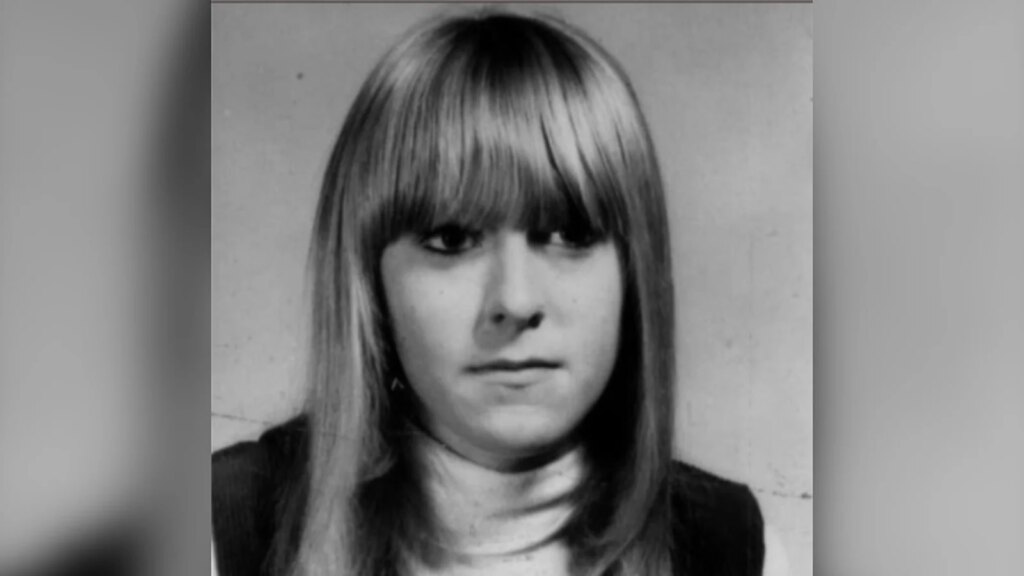
Nearly six decades after 16-year-old Jacqueline “Jackie” Dunleavy was murdered, Canadian police have identified an Irish man as the person responsible for her death.
Investigators in London, Ontario, said Michael Joseph Moore killed Dunleavy in 1968, bringing a long-running investigation to a close despite the suspect having died years ago.
Moore moved to Canada in 1967 and had been in the country for less than a year when the teenager was killed. He was 25 at the time.
He died on 3 March 2018, before police established that he was the man responsible for Jackie’s murder.
Detective Mike Budzyn said investigators combined DNA testing, analysis of preserved evidence and genealogical research to reduce the number of possible suspects to one.
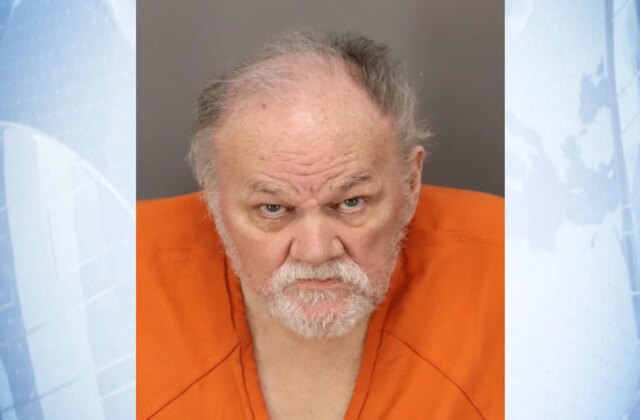
Michael Joseph Moore emigrated to Canada in 1967
“Our investigators conducted additional interviews, gathered new evidence, and obtained DNA samples for comparison. Those samples were submitted to the Centre of Forensic Sciences for analysis,” he said.
He added: “Based on the evidence obtained through this investigation, we are confident that the evidentiary threshold to support criminal charges was met.
“Had Moore been alive today, he would have been arrested and charged in relation to Jackie’s murder,” he said.
Police said Jackie was last seen alive on the evening of 9 January 1968, as she left her job at a local shop after finishing her shift.
A few hours later, three young people found her on the grounds of a school. Emergency responders pronounced her dead at the scene.
Police officers at the scene where Jackie Dunleavy was discovered
“The investigation determined that Jackie had been murdered. While she had suffered a head injury, the cause of death was determined to be strangulation.
“At the time, investigators conducted an extensive homicide investigation. Numerous leads were pursued, witnesses were interviewed, and forensic evidence, including biological material, was collected and carefully preserved.
“Despite those efforts, the person responsible was not identified, and the case remained unsolved,” a police statement said.
We need your consent to load this rte-player contentWe use rte-player to manage extra content that can set cookies on your device and collect data about your activity. Please review their details and accept them to load the content.Manage Preferences
Police said advances in technology since the killing had created new opportunities to revisit the case and pursue leads that were unavailable to investigators in 1968.
Detective Sergeant Micah Bourdeau said the original detectives had used every method and technology at their disposal in their effort to solve the crime.
“The evidence they carefully collected and preserved ultimately allowed investigators decades later to continue that work.
“This investigation shows the importance of preserving evidence and continuing to revisit historical cases as new technology becomes available,” he added.
In a statement, police said the decision to identify Moore publicly as the murderer “was not made lightly”.
“It followed careful consideration of the evidence, the public interest and the responsibility of the London Police Service to be transparent about the outcome of an investigation that had remained unresolved for nearly six decades.
“While criminal proceedings are no longer possible due to Moore’s death, that does not diminish the strength of the evidence or the confidence investigators have in the conclusion reached through this investigation.
“Publicly identifying Moore provides an accurate historical record and answers that Jackie’s family and the community have sought for decades,” the statement added.
Police described Moore as “white, around six feet tall and had dark hair. Typically, he was clean shaven, but he would sometimes grow out a beard when he was on vacation”.
Authorities also urged anyone with “historical information” about the case to contact investigators.
“Hearing the name Michael Joseph Moore, or learning information about him today, may bring back memories for people who knew him, had contact with him or were familiar with him during that time.
“Information that may not have seemed significant at the time could have meaning today.”
“I want to acknowledge the tremendous work of our Major Crime Section and the investigators, forensic specialists, and partner agencies, the Ontario Provincial Police and Toronto Police Service, who contributed to this outcome.,” said Chief Thai Truong of the London Police Service.
“Their collective efforts reflect the professionalism, persistence, and commitment that serious investigations demand.”