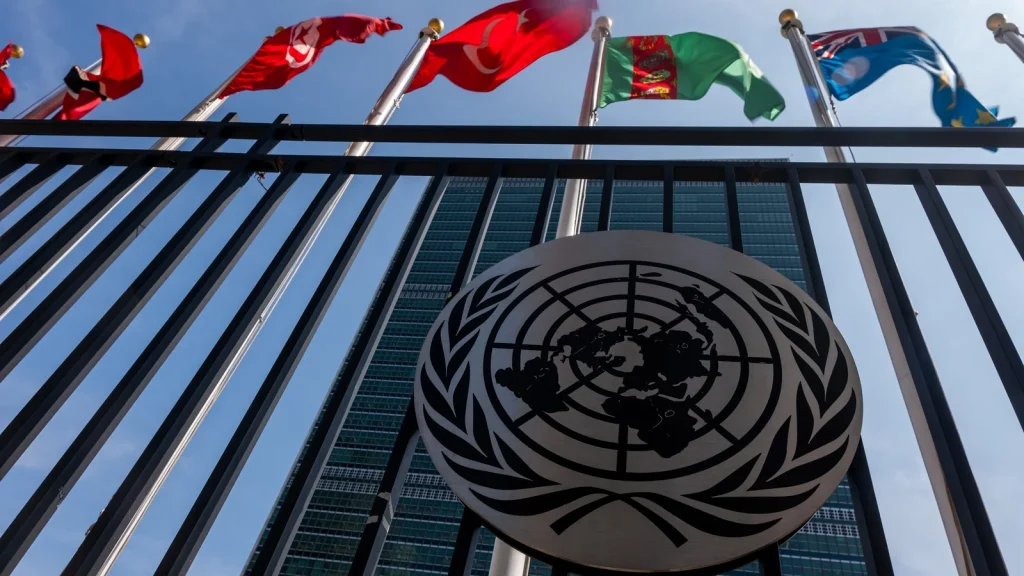
New York will become the centre of an increasingly fractured world this week as leaders gather for the 81st United Nations General Assembly, with wars raging, instability spreading and the organisation itself under mounting strain.
The UN has warned that more than 120 conflicts are now unfolding around the world while it confronts a severe financial crisis of its own.
- Advertisement -
Earlier this year, Secretary-General António Guterres said the organisation was facing “imminent financial collapse”.
The Taoiseach and senior ministers, including Foreign Affairs Minister Helen McEntee, will travel to New York for a packed programme of meetings and events.
During the week, national leaders will deliver statements from the General Assembly podium, setting out their governments’ priorities on the international stage.
Micheál Martin will be one of nearly 130 heads of state and government attending
The annual gathering of presidents, prime ministers and senior officials comes amid renewed instability in the Middle East, the continuing war in Ukraine and growing debate over the United Nations’ future role and effectiveness.
The confrontation between the United States and Iran is expected to dominate discussions, along with its consequences for regional security, the humanitarian situation, shipping routes and energy supplies.
Particular attention will focus on the Iranian delegation, including President Masoud Pezeshkian and Foreign Minister Abbas Araghchi, who have received US visas to attend the meeting.
Delegates will be watching for any opening for talks with Washington, as well as possible efforts to reduce pressure around the Strait of Hormuz and prevent further escalation between the US and Iran.
For Ireland, the gathering represents a significant diplomatic moment. The country currently holds the Presidency of the Council of the European Union, giving the Government increased visibility and influence during a crowded international week.
Several events involving Irish ministers will centre on the Middle East and Ukraine, while the Government also plans to underline its support for the UN system as its authority and capacity face sustained pressure.
That message will extend to the broader multilateral system, including bodies such as the International Criminal Court, as well as the humanitarian organisations dealing with rising needs and shrinking financial support.
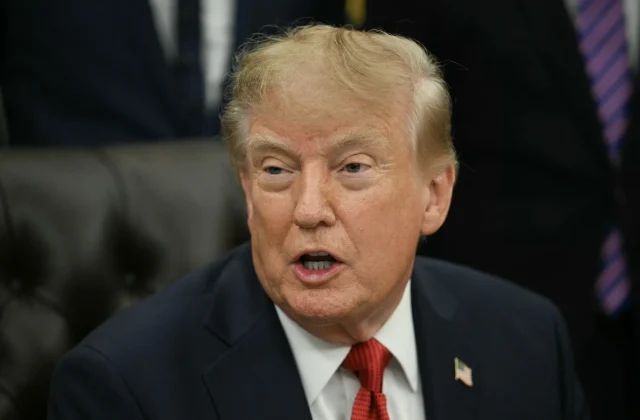
Ireland’s presence at UNGA follows US President Donald Trump’s visit last week, during which the Irish Government used a high-profile international platform to demonstrate how it is handling its close relationship with Washington.
Before the Taoiseach addresses the General Assembly on Thursday evening, the Government will again be required to balance its relationships with Washington, London and Brussels across issues including trade and foreign policy.
Ireland’s participation comes off the back of US President Donald Trump’s visit to last week
The uncertainty surrounding relations between the European Union and the Trump administration was highlighted again this week, after President Trump threatened additional tariffs on the EU. The warning came shortly after he announced the removal of tariffs on Irish whiskey in Doonbeg, Co Clare.
Trump’s anticipated first meeting with British Prime Minister Andy Burnham will also attract scrutiny, against a widening range of tensions in the so-called “special US/UK relationship”. Migration, energy and the president’s recent headline-making remarks about a United Ireland are among the issues in focus.
Another major issue for delegates will be the final stage of the United Nations Interim Force in Lebanon, or UNIFIL, which has long been central to Ireland’s overseas peacekeeping role.
The UN Security Council has ruled that UNIFIL’s mandate will expire on 31 December 2026, with the force expected to withdraw during the following year.
European and Arab military chiefs met in Paris last week to consider the operation’s approaching end and what might replace it, amid fears of renewed attacks in southern Lebanon.
UNGA discussions may examine the mission’s future, but the Taoiseach has made clear that any Irish participation in a post-UNIFIL force would require a mandate from the UN Security Council.
The UN Security Council has decided that UNIFIL’s mandate will end on 31 December 2026
Underlying the talks is a broader reckoning with the United Nations’ changing financial and operational circumstances.
This year’s theme captures that challenge: “Restoring Trust, Managing Transformation: A United Nations That Delivers for All”.
The assembly also takes place as the process of choosing António Guterres’s successor gets under way, with the next Secretary-General scheduled to begin the role in 2027.
For the United Nations, the gathering will test whether it can remain effective in a world increasingly divided by conflict and competing interests.
For Ireland, it will be a week defined by diplomacy on several fronts—and by the careful management of vital international relationships.