
More than 490,000 Russian soldiers were killed in Ukraine between February 2022 and the end of September 2026, according to leaked figures published this week by independent Russian media outlets.
Moscow began its full-scale invasion of Ukraine in 2022.
The figures came from 11 million death certificates extracted from databases belonging to Rosstat, Russia’s Federal State Statistics Service. Two hacking collectives — Belarusian Cyber Partisans and Silent Crow, a pro-Ukrainian group — obtained the records.
They shared the data sets in early November with the independent Russian outlets iStories, Meduza and Mediazona, as well as BBC Russian.
The scale of the losses offers a stark measure of the human cost of Russian President Vladimir Putin’s decision to invade Ukraine.
Based on the figure of 490,000 deaths, iStories calculated that one in every 17 Russian citizens who have died since 2022 was killed as a result of the war.
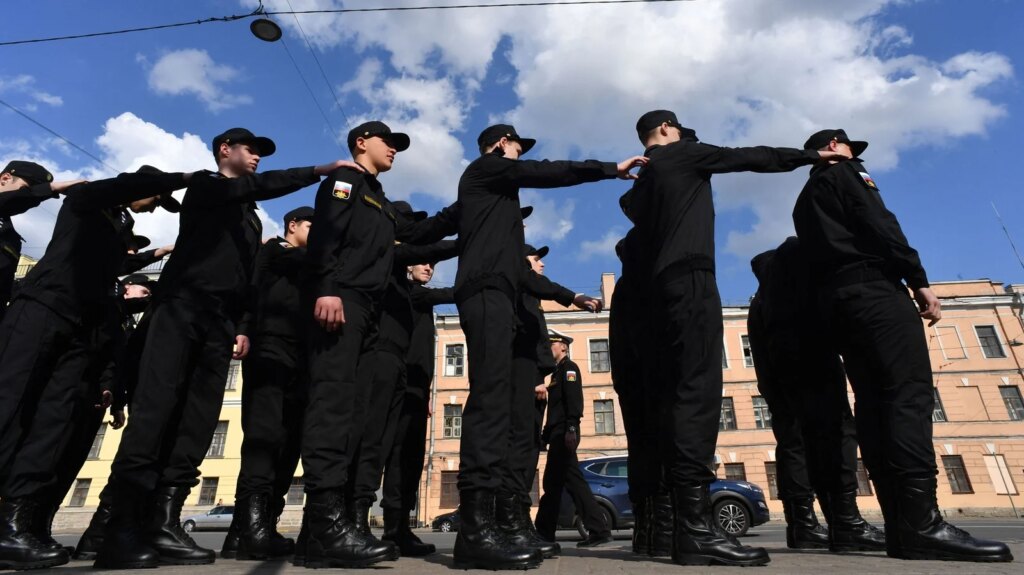
Russia’s armed forces consist of contract soldiers, known as kontraktniki, and conscripts — men aged between 18 and 30 who serve 12-month terms.
In practice, most kontraktniki deployed by Russia are fighting in Ukraine.
Nearly 300,000 young Russian men are drafted into the armed forces each year. The military has so far avoided sending conscripts to fight in Ukraine, although reports in 2024 said some had fought and died in the Russian border regions of Kursk and Belgorod.
Leaving the country is one way for men seeking to avoid conscription to escape military service.
For most, however, the money needed to build a new life abroad is out of reach.
Those unable to leave have sought help from the School of the Conscript, an exiled Russian NGO that advises young people on how to avoid military service legally.
The organisation campaigns for the abolition of conscription in Russia and its replacement with a volunteer army. It also opposes the invasion of Ukraine.
“We write guides, explain the law, share both successful and unsuccessful experiences of defending rights, and inspire people with the personal stories of those who have succeeded,” Alexey Tabalov, director of School of the Conscript, told RTÉ News.
“We share all of this with our audience through our website, Telegram channel, YouTube channel, and our pages on TikTok,” he said.
“We teach people the basics of the law and explain how they can defend their rights themselves, without the help of lawyers.”
Alexey Tabalov (C), director of School of the Conscript (courtesy: School of the Conscript)
The organisation advises men of conscription age on applying for deferrals, securing health-related exemptions and seeking alternative civil service, an option permitted under Russian law.
Since Russian authorities designated School of the Conscript a foreign agent in April 2023, its core team of eight lawyers has worked remotely from several EU countries and Georgia.
The lawyers also cooperate with a network of legal professionals across Russia who provide discreet advice to people who approach the organisation.
For lawyers working inside Russia, the risks are considerable. Their advice is delivered through online communications rather than face-to-face meetings.
Last January, Russian authorities designated Mr Tabalov himself as a foreign agent, accusing him of spreading fake information and speaking out against the “special military operation”.
The foreign-agent designation can lead to a person’s or organisation’s bank accounts being frozen, preventing donations from people inside Russia from being received in roubles.
Roskomnadzor, Russia’s media and communications regulator, blocked the organisation’s website inside Russia in 2024. Since earlier this month, the site has also stopped working in Europe.
Roskomnadzor blocked two of the organisation’s YouTube videos in 2024, but YouTube later restored them after a Russian investigative outlet reported on the restrictions.
“We know that the Russian state is keeping a close eye on our activities,” said Mr Tabalov, who now lives in Germany.
“We are monitored on a daily basis by the State Duma, the ministry of defence, Roskomnadzor and the security services.”
Russian students wait at a Moscow bus stop next to an army recruitment poster, February 2026
School of the Conscript began in 2009 as a local initiative in Chelyabinsk, a city in western-central Russia. Its original mission was to represent conscripts subjected to violent hazing rituals, a longstanding complaint within the Russian army.
The war in Ukraine has since transformed the organisation’s work.
Before the full-scale invasion, School of the Conscript received between 100 and 200 enquiries each month.
That figure surged to 4,000 monthly after Putin announced a partial mobilisation in September 2022.
“Enquiries came from those who had already been sent to war and from those who did not want to end up there,” said Mr Tabalov.
“At that moment, we realised that the purpose of our work would be to help any man liable for military service in Russia to avoid being conscripted into the Russian army and sent to war.”
The number of enquiries has since settled at roughly 1,000 a month. Between January and October this year, the organisation carried out more than 10,000 legal consultations — its highest annual total since it was founded.
Conscripts, prospective conscripts and older reservists from across Russia reach the organisation through a Telegram bot.
Once an enquiry is received, School of the Conscript lawyers hold an initial online consultation with the applicant. They then advise on the documents needed to secure an exemption or challenge a conscription notice.
Many applicants seek information about which medical conditions can qualify them for an exemption.
Russian naval cadets, pictured this week, on a bus in St Petersburg with a sign that reads ‘children’
Mr Tabalov said wives, mothers, sisters, grandmothers and aunts sometimes contact the organisation on behalf of young men.
“Men are often passive when it comes to defending their rights. It is women who resolve many issues on their behalf,” he said.
Nearly 80% of enquiries come from young men who have already been conscripted or from the parents of draftees.
The organisation also develops tailored defence strategies for complex cases. Since Moscow launched its full-scale invasion almost five years ago, its lawyers have taken part in several successful appeals.
Specific case details cannot be disclosed, however, because doing so could expose the lawyers and young men involved.
International private-foundation grants have kept the charity operating since 2022. Last year, it also issued several fundraising appeals on Telegram to help sustain its work.
Looking ahead, the organisation is concentrating on training young lawyers in Russia’s regions so they can handle more cases.
“We are building a network of lawyers in the regions whom we trust and on whom we can rely,” said Mr Tabalov.
“Perhaps some of them will one day become the driving force behind democratic change when Putin’s regime falls.”