
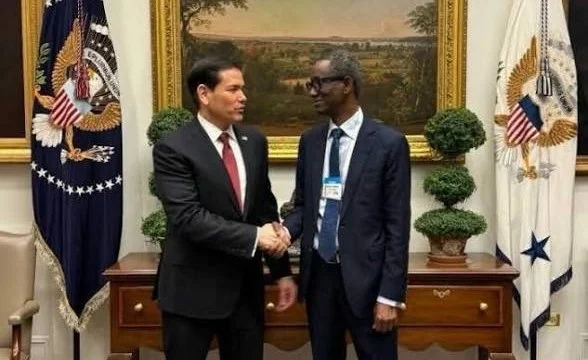
U.S. and Nigerian officials have convened their second Joint Working Group meeting as Nigeria seeks removal from the U.S. Countries of Particular Concern (CPC) list, a designation applied to countries where religious minorities are subjected to abuse and violent persecution.
The talks come as the Nigerian government continues to reject allegations that it has failed to protect religious minorities. The meeting nevertheless underscored Washington’s continuing concern over violence, accountability and the strength of Nigeria’s judicial and security institutions.
- Advertisement -
Focus on accountability and institutions
According to the U.S. State Department, discussions centered on the importance of ensuring that those responsible for violence are brought to justice. Officials highlighted the need for stronger judicial and security institutions as part of that effort.
The Joint Working Group also reviewed steps Nigeria has taken in response to long-running security threats, including extremist violence linked to Boko Haram and Islamic State-West Africa (ISIS-WA). The United States recognized Nigeria’s efforts to prosecute hundreds of suspects tied to those groups, expand judicial capacity and recruit and train an additional 50,000 police officers.
Those measures were presented as signs of institutional progress, particularly in a country where insecurity has strained both civilian protection and state capacity. For Abuja, such efforts are likely to form a key part of its argument for being removed from the CPC list.
Nigeria seeks removal from CPC list
Nigeria’s push to be taken off the U.S. designation list reflects a broader diplomatic effort to challenge the basis for the classification. The CPC label is used by the United States for countries where religious minorities are reported to face serious abuse and violent persecution.
Nigerian authorities have rejected those charges. Still, the latest Joint Working Group meeting suggests the issue remains active in bilateral relations, with both sides using the forum to measure progress and identify areas where further action is needed.
Security ties also under discussion
In addition to religious freedom and justice issues, the two sides discussed expanded military-to-military cooperation. The State Department said those conversations were continuing at the Pentagon, pointing to a wider security agenda beyond the Joint Working Group session itself.
The military component of the discussions comes as Nigeria remains engaged in efforts to confront insurgent groups and stabilize affected areas. Closer security cooperation with the United States could be significant, particularly if paired with improvements in judicial follow-through and civilian protection.
U.S. notes continuing concerns
Despite recognizing steps taken by Nigeria, the United States said important challenges remain. In a statement, the State Department said the Joint Working Group identified “continuing challenges, including reports of civilian fatalities and gaps in humanitarian expenditure transparency.”
That language indicates that, from Washington’s perspective, progress in prosecutions, police recruitment and judicial strengthening has not fully resolved concerns around the conduct of security operations and oversight of humanitarian spending.
The reference to civilian fatalities is especially sensitive in any discussion of state response to violence, as it touches directly on accountability and public trust. Likewise, concerns about transparency in humanitarian expenditure suggest that oversight of resources remains part of the broader policy conversation.
A relationship balancing pressure and partnership
The latest meeting reflects a relationship that is both cooperative and cautious. On one hand, the United States has acknowledged concrete Nigerian efforts in countering extremist groups and improving institutional capacity. On the other, it continues to raise concerns about civilian harm, transparency and the protection of vulnerable communities.
For Nigeria, the path toward removal from the CPC list may depend not only on security gains but also on whether those gains are matched by credible justice measures, stronger institutions and clearer safeguards for civilians and religious minorities. For now, the Joint Working Group appears to remain a key venue for testing that progress.