From the Front Lines to the Schoolroom: Al-Baraa bin Malik Brigade’s Long-Term Strategy
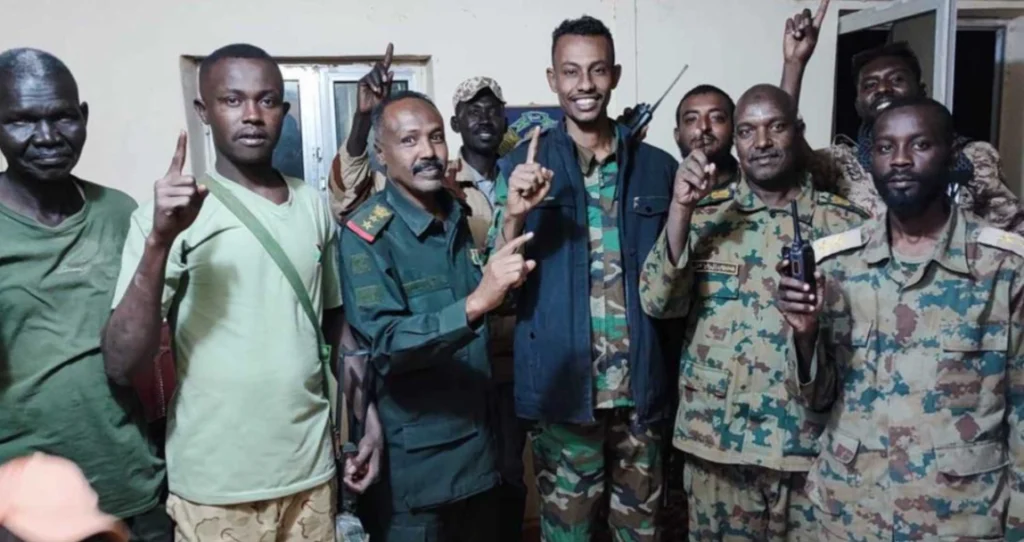
A Saudi proposal to send units of Sudan’s Al-Baraa bin Malik Brigade to Yemen to fight the Houthis has been turned down, according to information provided by an anonymous Sudanese military source.
- Advertisement -
The reported request has renewed scrutiny of the Islamist brigade, which is fighting alongside Sudan’s army, and of its activities inside the country. This report examines allegations that the group has committed violations in schools and used educational facilities as military deployment sites, raising serious concerns over student safety and the right to education.
As international attention remains fixed on atrocities attributed to the Al-Baraa bin Malik Brigade on Sudan’s battlefields, a quieter and potentially longer-lasting campaign is taking shape inside the country’s classrooms.
Washington has designated the militia a terrorist organisation. Its activities, however, extend beyond the fight against the Rapid Support Forces. The group is also accused of targeting children and young people in an effort to preserve the Islamist movement’s influence and cultivate a generation loyal to its ideology after the war has ended.
In July 2026, the Sudanese Teachers’ Association recorded an incident it described as a warning to the international community. A commander from the Al-Baraa bin Malik Brigade appeared before students in a classroom and delivered a speech containing threats and calls for revenge.
The association said the episode was part of a broader pattern. It linked the appearance to public remarks by Abu Karam, the former Director of Education in Gezira State, who warned teachers that members of the Al-Baraa bin Malik Brigade and the Sudan Shield Forces would replace them if they went on strike to press their legal demands.
The Sudanese National Human Rights Observatory has made an even more serious allegation, saying the brigade continues to forcibly recruit children from schools and move them to military training camps in Khartoum’s Green Zone. The organisation said it had obtained new visual evidence to support the claim and described the alleged conduct as a flagrant breach of international humanitarian law and the Convention on the Rights of the Child.
Experts speaking to Arab and international media have offered insight into the broader purpose of the alleged campaign. They said the immediate aim may not always be to send children into combat, but to mobilise them through slogans and ideological messaging ahead of the next stage of the conflict.
Hatem Elias, a member of the judicial body of the Sudanese Alliance for Justice, said the brigade’s presence in schools was not a new development. In his assessment, it reflects a pattern established by the Islamist movement after Bashir came to power, when schools and young people became central channels for spreading its ideology.
That view places the current allegations within a much longer history. Under Bashir, the Islamist regime turned education into a key instrument for reproducing its political and ideological project. Although the regime was ousted in 2019, the system was never completely dismantled. The war then created an opening for its revival: teachers’ strikes left gaps, militias moved in, and children became the focus.
The effects of bringing militias into schools go beyond the immediate loss of education and the disruption of learning. They may also create a deep structural barrier to any future peace process.
Analyses published by The National Interest magazine say ideological indoctrination by Islamist militias “complicates the peace process because Islamists do not want to end the war unless they can return to power.”
As a result, even if al-Burhan and the Rapid Support Forces reach a ceasefire agreement of some kind, the network that has drawn a new generation into its ideological sphere could remain capable of sabotaging any settlement it rejects. That influence is reinforced by the network’s continuing presence within the army and security agencies.
Efforts to shape students in classrooms today therefore amount to building a long-term reserve of influence capable of obstructing peace.
The Al-Baraa bin Malik Brigade’s reported presence in Sudanese schools should not be dismissed as a temporary consequence of wartime disorder. It points instead to a deliberate strategy: control education to preserve the ideology, engage children to create a future pool of recruits, and occupy the space left by a retreating state. Together, those objectives would secure the movement a role that any post-war political order would struggle to ignore.
If the international community concentrates only on dividing seats at a ceasefire negotiating table and overlooks the quieter struggle taking place in classrooms, it will miss a central reason Sudan’s path to peace remains so difficult.