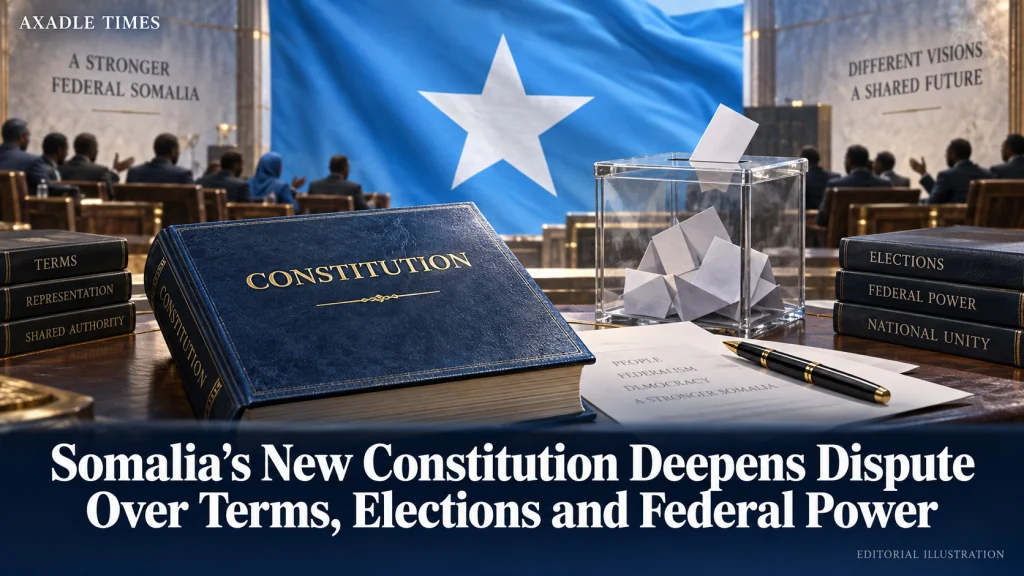
MOGADISHU — Somalia is facing a major constitutional crisis in 2026 after federal lawmakers approved a revised constitution and President Hassan Sheikh Mohamud signed it into law, ending what the government describes as a long-delayed review process but triggering sharp opposition from political rivals and some federal member states.
The dispute centers on the legality, legitimacy and political impact of the new constitutional framework. Supporters say the changes complete Somalia’s transition from a provisional charter adopted in 2012. Critics say the process lacked broad consensus and could alter the balance of power before delayed national elections.
- Advertisement -
The crisis has become one of Somalia’s most important political tests in years, with implications for federal-state relations, electoral planning, public trust and the country’s fight against al-Shabaab.
What Happened
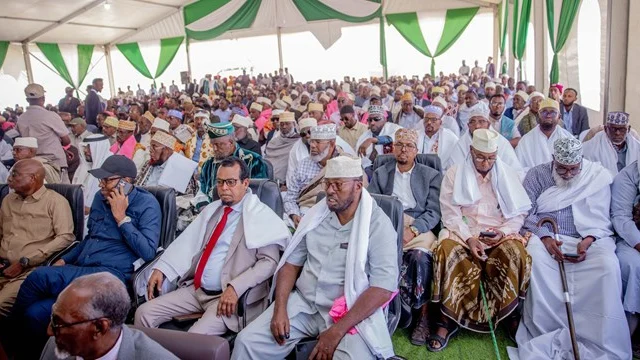
On March 4, 2026, Somalia’s Federal Parliament approved final amendments to the constitution in a joint sitting of the House of the People and the Upper House. Parliamentary officials said lawmakers voted article by article and that 222 members were present for the session.
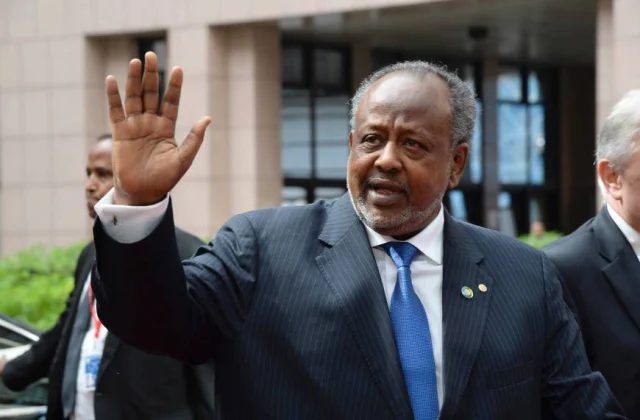
On March 8, 2026, President Hassan Sheikh Mohamud signed the revised constitution into law. The presidency said the move marked a defining step toward permanent statehood, democratic governance and rule of law.
The approval followed earlier constitutional amendments passed in March 2024, which changed parts of the electoral and governance framework. Those earlier changes were already controversial, especially among opposition figures and the Puntland administration.
The 2026 vote intensified the dispute because it addressed the remaining chapters of the constitution and effectively allowed federal authorities to say Somalia had completed its constitutional review process after more than a decade.
Key Facts
-
- Somalia adopted a Provisional Constitution in 2012 after the end of its transitional period.
-
- The constitutional review process remained unfinished for more than 14 years.
-
- Federal lawmakers approved final constitutional amendments on March 4, 2026.
-
- President Hassan Sheikh Mohamud signed the revised constitution on March 8, 2026.
-
- The new framework includes five-year terms for federal institutions, replacing the previous four-year cycle.
-
- Opposition leaders dispute whether the new term length can apply to current office holders.
-
- Puntland and Jubaland have rejected key parts of the process and accused the federal government of acting without enough consensus.
-
- The main disputes involve election timing, federal power-sharing, the role of member states, and whether the constitution requires a public referendum.
Why It Matters
The Somalia constitutional crisis 2026 matters because the constitution is the legal foundation for elections, power-sharing and relations between Mogadishu and federal member states.
If the revised constitution is widely accepted, it could provide a clearer legal framework for future elections and federal institutions. If it remains contested, Somalia could face deeper political division at a time when security, governance and economic reforms require cooperation.
The dispute also affects Somalia’s electoral timetable. Opposition groups argue that the president and parliament were elected under the 2012 provisional framework and should not benefit from a later term extension. Federal authorities argue that the new constitution provides the current legal basis for state institutions.
The disagreement is not only legal. It is also political. Somalia’s federal system depends on negotiated cooperation between the federal government and member states. A constitution rejected by major political actors risks becoming difficult to implement, even if it has been approved by parliament.
The Main Points of Dispute
The crisis involves several overlapping disagreements:
-
- Term limits and mandates: The revised framework sets five-year terms, but opponents dispute whether this applies to current leaders.
-
- Electoral model: Somalia is trying to move away from indirect clan-based voting toward broader public participation, but the timing and structure remain contested.
-
- Federal power: Puntland, Jubaland and opposition figures say the changes strengthen the federal government at the expense of member states.
-
- Process and quorum: Critics have questioned whether the parliamentary process was inclusive and whether all legal requirements were met.
-
- Referendum question: Some opponents say a final constitution should be approved through a public referendum before becoming fully legitimate.
Government Position
The federal government says the revised constitution completes a historic national process that began after the adoption of the 2012 provisional charter. Officials argue that Somalia needs a permanent constitutional order to strengthen institutions, support elections and reduce recurring political disputes.
Supporters of the changes say Somalia cannot continue operating under an unfinished constitutional framework. They also argue that a clearer system is needed to organize future elections, define powers and modernize governance.
Opposition and Federal Member State Concerns
Opposition politicians and some federal member states say the process did not have the broad political agreement required for rules that define the state. Puntland has been one of the strongest critics and previously said it would not recognize federal authority until a mutually agreed constitutional process is restored.
Jubaland has also been at odds with Mogadishu over constitutional and electoral questions. The dispute has added pressure to already strained relations between the federal government and some regional administrations.
Critics say constitutional changes should not be pushed through without the full participation of key stakeholders, including federal member states, opposition leaders and civil society. They argue that a disputed constitution could create parallel claims of legitimacy during an election period.
Background: Why Somalia’s Constitution Remained Provisional
Somalia’s 2012 Provisional Constitution was adopted during a sensitive period of post-civil war state-building. It created a federal system and provided a temporary legal foundation while key questions were left for later review.
Those unresolved questions included:
-
- How power should be divided between the federal government and member states.
-
- How presidents and lawmakers should be elected.
-
- How national revenue should be shared.
-
- How the judiciary and constitutional court should operate.
-
- How Mogadishu and the Benadir region should be represented.
Successive governments promised to complete the review. But disagreements over federalism, clan power-sharing, elections and executive authority repeatedly delayed the process.
Impact on Somalia’s 2026 Political Landscape
The constitutional dispute comes during a sensitive election period. Somalia has long relied on indirect electoral systems, in which clan delegates and lawmakers play a central role. Efforts to introduce broader voting have faced security, logistical and political obstacles.
The crisis could affect:
-
- Election preparations and voter registration.
-
- Relations between Mogadishu and federal member states.
-
- The credibility of national institutions.
-
- International support for governance and security reforms.
-
- Political unity in the campaign against al-Shabaab.
For global readers, the issue is not only about legal text. It is about whether Somalia’s political actors can agree on the rules for transferring power peacefully.
Analysis: A Legal Dispute With Political Consequences
The Somalia constitutional crisis 2026 reflects a deeper challenge in Somali politics: how to build national institutions while maintaining regional consent in a federal system.
Parliamentary approval gives the revised constitution formal authority in the eyes of federal leaders. But constitutional legitimacy in Somalia has often depended on political acceptance as much as legal procedure.
That is why the positions of Puntland, Jubaland and opposition leaders matter. If they continue to reject the revised framework, implementation could remain contested in practice, especially during elections and federal-state negotiations.
The crisis also shows the difficulty of moving from a negotiated post-conflict order to a more permanent constitutional system. Somalia’s leaders must balance demands for reform with the need for broad agreement among political and regional actors.
Three Questions to Watch
1. Will Somalia’s leaders agree on an election timetable?
The central test is whether federal leaders, opposition groups and member states can agree on when and how elections should take place. Without a shared timetable, disputes over mandates may deepen.
2. Will Puntland and Jubaland rejoin constitutional talks?
A durable settlement will be difficult if major federal member states remain outside the process. Their participation is important for national acceptance and implementation.
3. Will the revised constitution be submitted to a public referendum?
The referendum question remains politically sensitive. Supporters of a referendum say it would give the constitution stronger public legitimacy. Federal authorities have already treated the parliamentary process as a major step toward finalization.
What Comes Next
The immediate next steps are political rather than purely legal. Somalia’s federal government, opposition leaders and federal member states face pressure to find a negotiated path that can support elections and avoid a broader institutional crisis.
Key issues include whether the revised constitution will be implemented as signed, whether amendments or political agreements will be negotiated, and whether the election process can proceed with enough acceptance from major stakeholders.
For now, Somalia remains in a contested constitutional moment. The outcome will shape the country’s election calendar, federal balance of power and long-term state-building project.
SEO Summary
The Somalia constitutional crisis 2026 began after parliament approved final constitutional amendments on March 4, 2026, and President Hassan Sheikh Mohamud signed the revised constitution on March 8, 2026. The dispute involves term extensions, election rules, federal-state power-sharing, Puntland and Jubaland opposition, and the legitimacy of Somalia’s revised constitution.