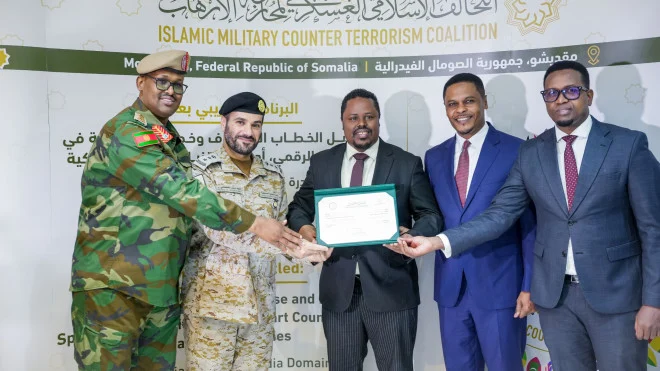
Forty Somali journalists, media professionals and social media influencers have completed a four-day specialist course in Mogadishu designed to help Somalia counter terrorist propaganda and online disinformation. Participants from public and private media outlets, digital platforms and the country’s federal member states learned how to identify false information, examine images and video, spot fake accounts and report extremist claims responsibly.
The programme’s significance extends well beyond its launch ceremony. Somalia has spent more than two decades fighting terrorism on the battlefield, while Al-Shabaab and, increasingly, ISIS-Somalia, also known as Daesh, have made the information environment another front in their operations.
- Advertisement -
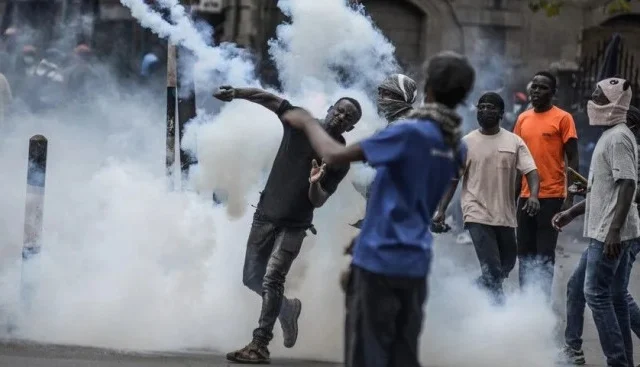
An old photograph falsely presented as evidence of a fresh attack can move through messaging groups within minutes. Recycled footage may be assigned a fabricated location, while an invented casualty figure can gain credibility after being repeated by multiple accounts. By the time journalists or government institutions determine the facts, the falsehood may already have alarmed communities, weakened public trust or delivered terrorists the psychological impact they failed to achieve on the ground.
In my experience coordinating defence communications, I have seen the strain this places on Somali newsrooms and public institutions. Initial reports from security incidents are frequently incomplete, yet journalists face pressure to publish immediately as hostile networks exploit every information gap. A later correction seldom travels as far as the first sensational claim. Speed is important, but accuracy is what ultimately safeguards the public.
Two threats using the same information space
Al-Shabaab remains Somalia’s main terrorist threat. The al-Qaeda-linked group has killed thousands of civilians, soldiers, public servants, religious scholars, journalists and community leaders. ISIS-Somalia is smaller, but its networks in the north-east have worked to broaden their operational, financial and recruitment reach.
Although the two organisations differ in size, structure and geographic concentration, both rely heavily on propaganda. They manipulate religion, exploit grievances and overstate their capabilities to recruit, intimidate communities and maintain funding. Their messaging is intended for audiences well beyond the sites of attacks: material produced in Somalia can be translated, repackaged and amplified across borders.
Military gains, therefore, are necessary but cannot deliver victory alone. The Somali National Armed Forces and local communities continue to pay a heavy price to retake territory, protect civilians and limit terrorist movements. Yet whenever militants lose ground, their propagandists attempt to hide the setback, exaggerate government losses or recycle old material to suggest that they still have momentum.
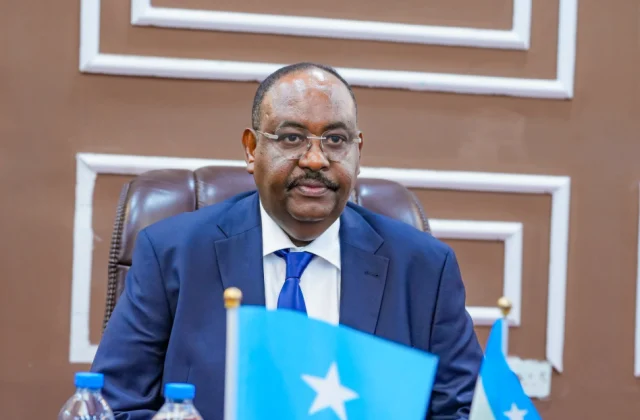
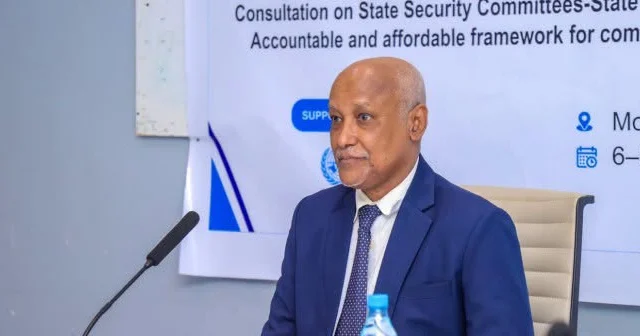
At the initiative’s launch, Defence Minister Ahmed Moallim Fiqi said Somalia’s experience had shown that counterterrorism could not depend exclusively on military and security action. IMCTC Secretary-General Major General Mohammed bin Saeed Al-Moghidi likewise cautioned that terrorist organisations had extended their battles beyond the physical front.
Journalism as a defence against manipulation
The Peace Journalists initiative was jointly launched in Mogadishu on 22 August 2026 during Major General Al-Moghidi’s official visit to Somalia. The event brought together senior officials from the country’s defence, security, justice and information institutions. Its inaugural training addressed extremist discourse and hate speech, digital verification, disinformation, coordinated influence operations and the creation of credible counter-messages.
The participants are not being turned into government spokespersons. Their strength comes from remaining trusted journalists and independent communicators capable of detecting manipulation before it reaches the public. Responsible security reporting is not about concealing facts or silencing criticism. It requires journalists to verify terrorist claims, respect victims’ dignity, avoid publishing operationally sensitive information and ensure that their outlets or accounts do not become unwitting propaganda channels.
That judgment is especially challenging during a rapidly unfolding attack. Confirming that an incident took place can clearly serve the public interest. But showing a terrorist video without context, placing an unverified casualty figure in a headline or publishing images that expose vulnerable survivors may advance the attackers’ aims. Professional judgement, stronger verification techniques, trusted sources and consistent editorial rules provide the better response.
Three priorities for the next phase
Four days of instruction can raise awareness and improve basic skills, but it cannot alone create the durable expertise and relationships Somalia requires. The programme’s next stage should focus on three practical priorities.
First, the 40 trainees should establish a professional verification network connecting Mogadishu to the federal member states. During major incidents, participants could exchange alerts, compare source material and seek help assessing disputed images, videos and accounts. Such a network would need strong security while protecting editorial independence and operational security.
Second, Somalia should introduce a training-of-trainers scheme. Journalists who completed the course could tailor its techniques to local languages, regional conditions and the constraints facing smaller newsrooms. This would extend the initiative beyond one cohort and build capacity in places where false information can spread before national media organisations are able to respond.
Third, the results should be reviewed after three, six and 12 months. Evaluations could track the time required to verify disputed material, the frequency with which terrorist claims are repeated without context, the number of Somali-language verification products produced and the extent of cooperation among newsrooms in different regions during crises. Such indicators would reveal whether the Mogadishu training is shaping everyday journalism.
Religious scholars, universities and research institutions should reinforce these efforts. Scholars can expose the misuse of Islamic language, while researchers can study how extremist narratives travel between platforms and audiences. Their findings should strengthen journalism without displacing the independent judgement of journalists.
Somalia brings frontline knowledge
The IMCTC operates across four connected areas: ideology, media, military cooperation and countering terrorist financing. Each is relevant to Somalia, but cooperation should involve shared learning rather than a one-directional transfer of expertise.
After more than 20 years confronting terrorism, Somalis have developed hard-won knowledge. Soldiers have fought across challenging terrain. Communities have resisted coercion. Religious scholars have rejected extremist interpretations publicly, in some cases at serious personal risk. Journalists have continued reporting despite threats and targeted killings.
That experience has revealed how terrorist groups establish themselves within communities, exploit local disputes, impose illegal taxes and present criminal coercion as governance. It has also demonstrated the importance of community resistance, credible religious leadership, coordinated security operations, accountable institutions and prompt communication grounded in verified facts.
Somalia can share these lessons with the coalition’s member states while drawing on international expertise in specialised training, doctrine, digital analysis and financial disruption. The most effective partnership will strengthen Somali institutions with capabilities they can sustain and outcomes visible to the public.
The work begins after the workshop
Major General Al-Moghidi’s visit translated international solidarity into practical cooperation. Somalia’s struggle against Al-Shabaab and Daesh has implications for the security of the Horn of Africa, the Red Sea, the Gulf and countries beyond the region. Recruitment messages and financial networks cross borders, and the response must do the same.
The 40 participants now return to their newsrooms, digital audiences and communities with a clear responsibility: challenge dramatic claims, verify information before amplifying it and describe manipulation without reproducing its intended impact. Institutions also have a duty to release accurate, timely information so journalists are not forced to work in an unnecessary vacuum.
The decisive test starts now. It will be measured by whether the participants stay connected, whether their skills reach newsrooms outside Mogadishu and whether institutions provide verified information swiftly during crises. If those conditions are met, Peace Journalists will become more than a four-day course—it will help deprive Al-Shabaab and Daesh of the fear, attention and credibility on which their propaganda depends.