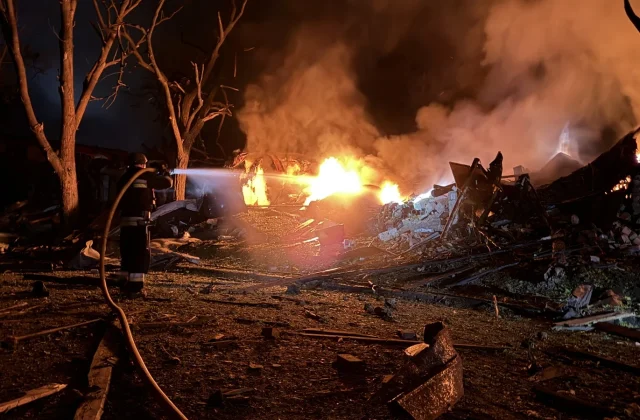

A flash tore across the sky, followed by a dull explosion. Near Izyum in eastern Ukraine, yet another petrol station had been reduced to wreckage.
Such scenes are becoming increasingly familiar as Russia steps up attacks on Ukraine’s logistics infrastructure.
- Advertisement -
Ukrainian media reports that Moscow has struck more than 200 petrol stations since July. Most of the damaged sites are in the east and northeast, along supply routes that run toward the front.
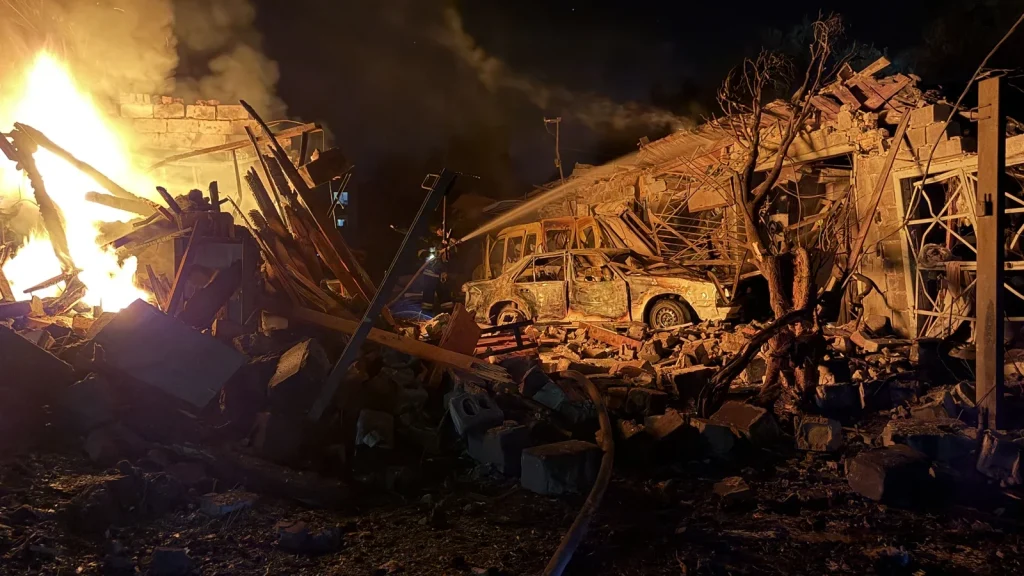
David Akopyan walked through the remains of his former workplace, passing a car scarred by shrapnel and sheets of metal twisted by the blast.
“I put up the barrier tape, cleared everyone out, and had barely reached my car when I heard the whistle of the missile,” he told AFP, gesturing toward a small building torn open by the explosion.
Concrete blocks positioned around the station as a protective barrier had offered little defense.
A sign showing the price of unleaded petrol remained visible, riddled with shrapnel and partly buried beneath the rubble.
“I think we only have two or three stations left in town,” Mr Akopyan said, scanning the ruins with a bewildered expression.
Since launching its full-scale invasion in 2022, Russia has repeatedly attacked Ukraine’s energy infrastructure, including thermal power plants, gas distribution networks and pipelines.
In recent months, however, petrol stations have increasingly become targets.
‘As difficult as possible’
Smoke rises in the distance following a Russian air attack on in Kyiv
As drones have transformed the battlefield, both Russia and Ukraine have increasingly targeted military logistics, including roads and supply centers.
Yet Russian strikes on roadside petrol stations “have no impact whatsoever” on the military because the “defence ministry has its own fuel supply system,” Ukrainian energy analyst Sergiy Kuiun said.
Ukraine’s energy ministry believes the purpose of the attacks is more calculated.
“These strikes are intended to damage civilian infrastructure, disrupt logistics, and make the humanitarian and economic situation as difficult as possible ahead of the coming winter, as well as to worsen the provision of essential services for communities,” it told AFP in written comments.
The campaign has created a cat-and-mouse struggle for station operators. Despite repeated attacks, they have managed to return about 80% of damaged pumps to service, Mr Kuiun said.
In Izyum, roughly 30km from Russian troops, air raid sirens can sound several times a day, forcing stations to shut temporarily.
At one petrol station covered by anti-drone netting, an employee smoked quietly while waiting for the latest alert to end.
Civilians and soldiers sat behind the wheels of their vehicles in lines, waiting for the pumps to reopen.
Sowing panic
Several civilians and journalists have been killed in attacks on petrol stations across Ukraine in recent months.
Along the roads surrounding Izyum, the burnt-out shells of stations have become part of the scenery: piles of warped, blackened metal marking the sites of recent strikes.
Residents of the garrison town said they feared running out of fuel if they were suddenly forced to evacuate.
Some are stockpiling supplies, while others are already weighing whether to leave because of the prospect of shortages.
Ukraine also accuses Russia of pairing the strikes with a “large-scale media campaign” designed to “sow panic and discouragement among the population”.
Petrol stations across the country are more than places to refuel. They often include restaurants, serve as meeting points and sometimes operate as bars, drawing military personnel but mostly civilians.
Some stations located more than 200km from the front line still bear the marks of recent drone attacks.
One employee, a former soldier, tried to project calm as he described the threat.
“Even if they bomb all the stations, there will be options for how to supply fuel… one way or another, we’ll keep working.”
But he acknowledged that he was uneasy about what could follow if the campaign grows more intense.
“For now, they are trying to drive all the civilians out of the town… then they’ll just wipe everything out.”