OP-ED: Ethiopia’s National Dialogue: Building Unity Across a Diverse Nation
1. The Genesis of the Ethiopian National Dialogue
- Advertisement -
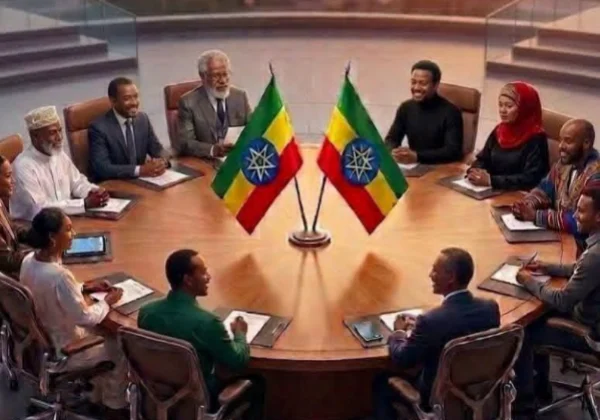
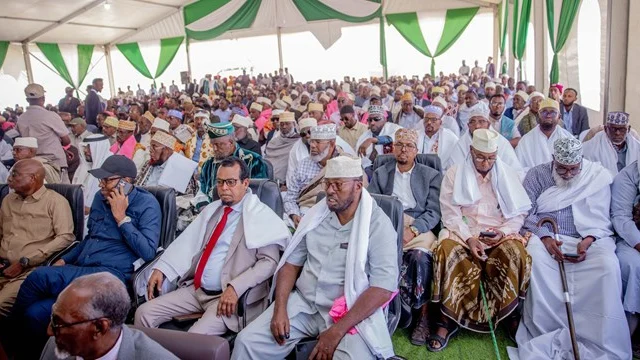
On July 15, 2026, Ethiopia formally opened a historic National Dialogue in Addis Ababa, bringing together an unprecedented 4,000 citizens. The gathering is examining the central questions identified through an extensive nationwide process to collect public agendas—issues that reflect the deepest areas of disagreement and divergence in contemporary Ethiopian society.
Eleven independently elected commissioners are leading the process. Their mandates emerged from a transparent public exercise and received formal approval on December 29, 2021, when the House of Peoples’ Representatives adopted Proclamation No. 1265/2021, establishing the Ethiopian National Dialogue Commission (ENDC).
For many years, Ethiopians have debated the effect of the existing constitution on political stability, institutional credibility, democratic development, peace, and the country’s long-term progress. A widely held public view is that the constitutional order has, unintentionally, reinforced ethnic and regional divisions instead of strengthening a common national identity. The government’s decision to launch the dialogue therefore reflects a larger national ambition: to build a peaceful, prosperous, and stable Ethiopia for future generations.
Ethiopia, Africa’s second most populous country and the world’s tenth, is an ancient center of civilization. Its reputation rests on its hospitality, rich cultural diversity, commitment to regional integration, and history of independence. The country has also made a longstanding contribution to international peace and security, repeatedly sending troops to United Nations and African Union peacekeeping operations in conflict-affected parts of the continent.
At home, new home-grown economic reform policies are generating strong momentum. Those socio-economic gains, together with a new political dispensation, reinforce Ethiopia’s importance to regional security and economic integration. Yet progress on that scale requires a dependable constitutional base and durable governance institutions. A peaceful national dialogue is consequently essential to consolidating peace and creating the conditions for sustainable development.
Ethiopia’s experience as a regional mediator offers an important lesson: difficult crises are more effectively addressed through organized dialogue than through force. In a society marked by extensive religious, cultural, geographic, and identity-based diversity, disagreement over national questions is unavoidable. A national dialogue provides a democratic, transparent, and practical means of bringing those differences into conversation rather than allowing them to be settled by the barrel of a gun. By convening elders, young people, women, religious figures, political parties, and academics, the process seeks to connect competing perspectives to a common national future.
2. The Eight Major Agenda Pillars
To organize the debate and provide a clear framework for deliberation, the ENDC placed the country’s principal challenges under eight major agenda pillars:
· A. Nation-Building, State Structure, The Status and Administration of Federal Cities (Addis Ababa and Dire Dawa), Religious Affairs, Historical Grievances, and Reconciliation, Institutional Building, the Rule of Law, and Human Rights, Socio-Economic Issues, Farmers, and Pastoralist Livelihoods, Anti-Corruption and Good Governance, and Peacebuilding
The ENDC has also invited civil society organizations, universities, and research centers to assess and improve the draft pillars as part of an ongoing validation exercise. At a recent validation forum, Chief Commissioner Prof. Mesfin Araya said sustained cooperation with civil society has been central to making the process inclusive, impartial, and credible.
3. Current Status of the Discussion: The Harmonization Process
The dialogue follows a structured, bottom-up model intended to ensure that every participant can contribute. The 4,000 delegates first formed eight thematic assemblies of 500 people, with each assembly assigned one agenda pillar. Each assembly was then divided into 10 smaller circles of 50 participants to encourage detailed discussion. After debating their topics, the smaller circles combined their conclusions and moved into five intermediate groups of 250 people, where competing positions could be compared and reconciled. The resulting proposals then returned to the larger thematic assemblies for final, comprehensive consideration. The process is now in this crucial harmonization stage. Its success depends not only on the willingness to speak, but also on careful listening, candid engagement with opposing views, and a shared readiness to compromise around common principles.
4. Conclusive Remarks
The Ethiopian National Dialogue Conference underscores a fundamental point: unity does not depend on making a diverse society uniform. It depends on the determination to engage honestly, respectfully, and patiently in shaping a political order that rises above individual and factional interests. Bringing the different agendas together is far more than a procedural task; it is an exercise in national reconstruction. It reflects the hope of millions of Ethiopians that the country can turn complexity into coherence, conflict into productive debate, and debate into a shared national direction.
Whether this landmark initiative succeeds will depend ultimately on the political will to carry out its conclusions and on the continued commitment of every stakeholder to uphold the compromises reached through harmonization. By transforming centuries of complexity into a framework for common progress, the national dialogue offers Ethiopia its strongest opportunity to achieve lasting peace, stable institutions, and shared prosperity.
By Yidnekachew Tekle, Minister Counselor, at the Ethiopian Consulate in Puntland State State of Somalia of Somalia.
DISCLAIMER: The views expressed in this article are the author’s own and do not necessarily reflect Axadle’s editorial stance.