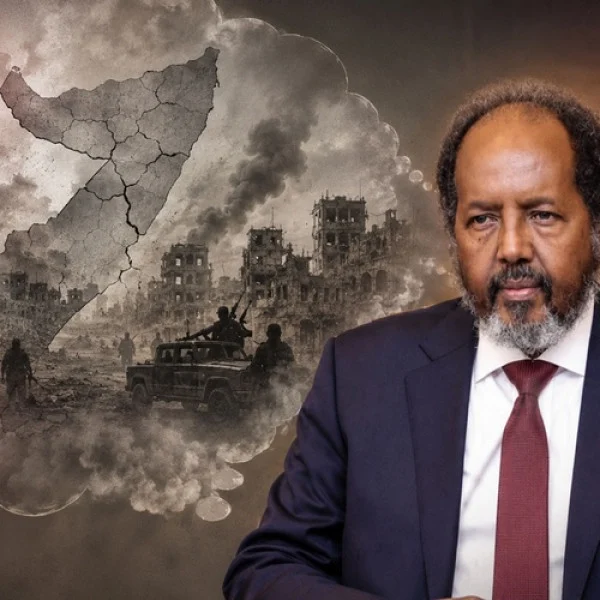
Editorial: Hassan Sheikh and a System of Government Confined to Select Regions
Somalia’s national government was, during Hassan Sheikh Mohamud’s presidency, concentrated in regions populated by communities seen as politically aligned with him, while other federal member states experienced political upheaval and attacks allegedly conducted with Somali state resources and international support intended for the country’s recovery.
- Advertisement -
Hassan Sheikh won a second presidential term on May 15, 2022, and officially took office on May 23. Thereafter, his domestic travel was focused largely on Galmudug, Hiiraan and the Shabelle regions.
His second trip inside the country came on June 2, 2022, when he travelled to Dhusamareb after spending two days in Baidoa.
On November 24, 2022, he visited Nur Dugle in Middle Shabelle. His itinerary at the time also included Masaajid Ali Guduud and other areas.
In 2023, Hassan Sheikh remained in Dhusamareb for a prolonged period while directing military operations. On September 3 that year, he travelled from Dhusamareb to Mahaas in the Hiiraan region.
On April 1, 2024, he visited Harardhere and El Dheer in Galmudug.
He travelled to Adan Yabal on March 18, 2025, and returned to the front lines in Middle Shabelle two days later, on March 20. In March 2026, he also visited Lower Shabelle.
Those who have followed Hassan Sheikh’s political career say the pattern of his travel was intended to portray him as president of specific regions rather than as a national leader representing all of Somalia and its federal member states on an equal basis. In their view, his approach continued to mirror political divisions and alignments rooted in the civil war.
The Role of the Prime Minister
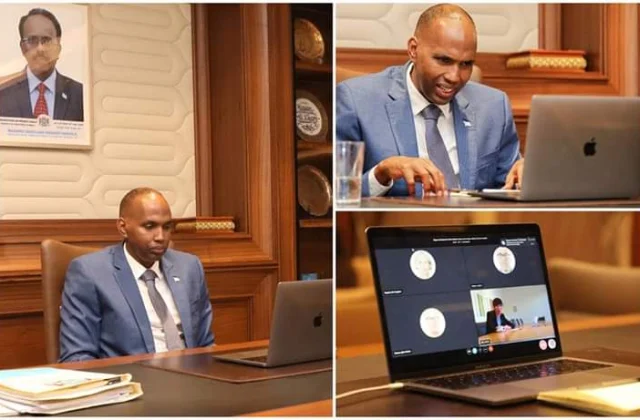
Prime Minister Hamza Abdi Barre came to office through Somalia’s 4.5 clan-based power-sharing formula, a system under which he holds the seat assigned to the Darood communities. Critics say his government has also gone beyond its mandate.
Despite that arrangement, the prime minister has been accused of contributing significantly to instability in administrations populated by the communities he represents under the 4.5 formula. He has been portrayed as advancing the political vision of Hassan Sheikh’s camp, which critics say seeks to build a Somali system centred on a single individual.
Political analysts say the electoral structure favoured by that group recalls models used in some neighbouring countries, where one ruling party oversees tightly managed elections and the results are effectively predetermined.
Why Has the Galmudug Visit Come at This Moment?
Hassan Sheikh returned to Dhusamareb on August 14, 2026, after the failure of what critics described as a Villa Somalia plan to generate political tension and insecurity in Puntland State.
Political observers viewed the trip as an attempt to divert attention from the setbacks suffered by the effort to weaken Puntland State.
On August 17, his convoy passed through Xananbuure, Godinlabe, Cadaado and Galinsoor before continuing towards southern Galkayo.
The tour focused on areas inhabited by Habar Gidir communities, the largest population group in Galmudug and one frequently identified as Hassan Sheikh’s political base since his return to power. It did not extend to most parts of Galmudug populated by Darood communities.
Peace in Mudug and the Final Card
Related communities living on both sides of Galkayo—in Galmudug and Puntland State—have maintained peace across the Mudug region for a significant period. In recent years, politicians from both sides have worked extensively to end the intercommunal violence that once troubled the area.
Some political analysts nevertheless believe Hassan Sheikh is using the visit as a final political move to reignite tensions among the communities sharing Mudug.
Similar conflicts occurred during Hassan Sheikh’s earlier term in office, but substantial efforts have since been made to resolve them. Former Galmudug President Ahmed Abdi Kariye Qoorqoor was a central figure in those efforts, helping preserve peace in Mudug and promote coexistence among Galkayo’s communities throughout his presidency.
Qoorqoor was removed through an electoral process that did not have political consensus. Critics say the process reflected the system Hassan Sheikh wants to impose nationally—one-party rule comparable to the Somali Revolutionary Socialist Party during the dictatorship.
Hassan Sheikh’s party appointed Liban Shuluq to replace Qoorqoor as Galmudug’s leader. The immediate question is whether Shuluq can protect the peace in Galkayo and the broader Mudug region that Qoorqoor worked to sustain during his tenure.
Liban Shuluq is from one of the communities living in Mudug, particularly in Galkayo. Critics further allege that he handled revenue sent to the former Somali president from miraa khat imported from Kenya.
Will Liban Shuluq emerge as a leader dedicated to security, peace and coexistence among Mudug’s communities? Or will he follow the system and political programme of Hassan Sheikh’s camp after succeeding Qoorqoor?
The Questions That Remain
Why did Hassan Sheikh limit his visits to regions inhabited by communities that backed his political agenda?
Why did his tour exclude the areas of Galmudug populated by its other communities?
Why did he travel to southern Galkayo only after the plan to destabilise Puntland State had failed?
Was the trip designed to advance peace and government engagement, or was it intended as a political signal to Puntland State?
With Hassan Sheikh remaining in office beyond his mandate, does he intend to reinforce peace among Mudug’s closely related communities, or to reopen the wounds of past conflict?
After replacing Qoorqoor, will Liban Shuluq maintain peace and coexistence in Galkayo?
Will he work to protect the security and stability of the communities that share Mudug, or will he administer Galmudug according to the system and plans of Hassan Sheikh’s group?
The central issue, ultimately, is whether former Somali President Hassan Sheikh Mohamud regarded himself as a national leader responsible for representing Somalia’s people and regions equally. Or was the system of government under his leadership limited to particular communities and territories?
AXADLETM