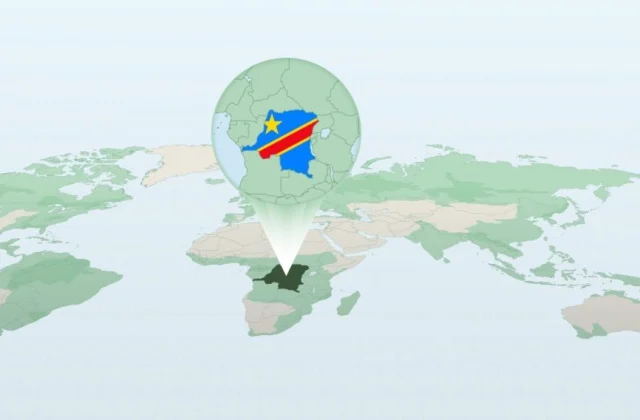
African health ministers have rejected widespread border closures as the Democratic Republic of Congo’s Ebola outbreak continues to expand, agreeing instead to keep borders open while intensifying surveillance and coordination. The outbreak has produced more than 10,000 confirmed cases and nearly 5,000 deaths.
The decision came after an emergency virtual meeting organized by the Africa Centers for Disease Control and Prevention (Africa CDC). More than 40 health ministers took part in discussions on containing the outbreak, which is being driven by the Bundibugyo strain of the Ebola virus.
- Advertisement -
Under the agreement, countries will reinforce their health systems, coordinate response efforts and closely track cross-border travel. The strategy favors heightened vigilance over sweeping restrictions on movement.
Africa CDC Director-General Jean Kaseya said the continent was not making sufficient progress against the outbreak, which has a case fatality rate of 48.5%, according to the agency.
“I stood before more than 40 African ministers and said what the data tells us: We are not winning so far,” Kaseya said.
“Together, we agreed to prepare every country, coordinate across our borders and keep those borders open while watching them closely. Our partners are standing behind Africa’s plan.”
Kaseya said the crisis had expanded over five months from a national emergency into a continental health security threat. Insecurity, humanitarian emergencies and funding shortages have made efforts to stop transmission more difficult.
Uganda’s Health Minister Chris Baryomunsi said his country’s experience demonstrated the value of detecting infections early and responding decisively.
The World Health Organization declared Uganda free of Ebola in August after the country recorded 20 confirmed cases following the outbreak’s declaration in May.
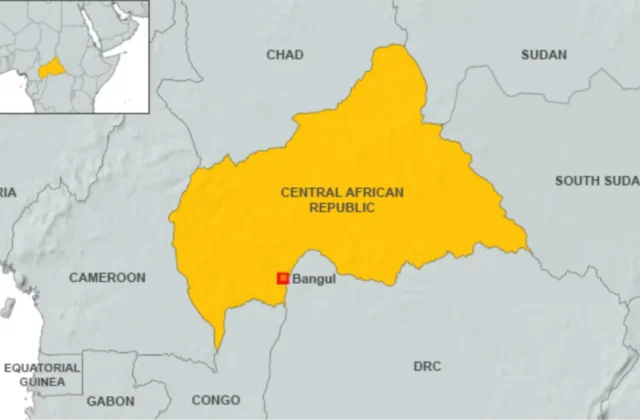
The Africa CDC has listed 10 additional countries as being at risk: Rwanda, Kenya, Tanzania, Angola, Burundi, the Central African Republic, the Republic of Congo, Ethiopia, South Sudan and Zambia.
The outbreak has now exceeded 10,170 confirmed cases, making it the second-largest Ebola epidemic ever recorded. Some experts fear it could ultimately surpass the 2014-2016 West African outbreak, which infected roughly 28,000 people and killed more than 11,000.
Researchers differ on whether the current epidemic will reach those levels, but they agree that the possibility of further international spread will grow unless transmission in the DRC is brought under control.
The DRC is recording between 400 and 500 new confirmed infections each week, and weekly totals have remained broadly steady.
Dr. Boghuma Titanji, an infectious disease specialist at Emory University, said the figures provided little reassurance: Cases were not increasing exponentially, but neither were they falling.
Contact tracing and gaining the trust of affected communities remain among the response’s biggest challenges. In some areas, health workers have spent more time convincing residents to cooperate than delivering medical care.
Less than one-quarter of new cases are linked to people who had already been identified as contacts of infected patients. That pattern indicates that many transmission chains are still going undetected.
France, Kenya, Nigeria and Uganda have also recorded cases connected to the outbreak, with about 30 confirmed infections reported outside the DRC.
Justin Lessler, a University of North Carolina researcher specializing in infectious disease outbreaks, said the immediate risk to the United States remained extremely low. He cautioned, however, that nations with fragile health systems could struggle to contain imported infections.
South Sudan is considered particularly vulnerable because of its conflict and humanitarian pressures.
Ebola is transmitted through direct contact with bodily fluids from infected people, including blood, vomit and semen. Halting the virus depends on isolating patients, tracing contacts and maintaining strong infection-prevention measures.
The response has been complicated by the fact that the outbreak is caused by the Bundibugyo virus, a strain related to, but distinct from, the Ebola virus responsible for most earlier epidemics.
Early diagnostic tools were designed mainly to identify the more familiar Ebola virus, slowing detection of the strain responsible for the current outbreak. Although authorities declared the outbreak in May, medical evidence indicates that transmission had started months earlier.
Armed conflict, fragile health infrastructure, mistrust within communities, misinformation and cuts to international aid have added to the difficulties facing responders.
Katie Thomas-Canfield, the International Rescue Committee’s Ebola response director, said sustained engagement with affected communities was critical to disrupting transmission chains.
Dr. Wendy Armstrong, president of the Infectious Diseases Society of America, said the outbreak was still far from controlled and could worsen.
Experts expect transmission to continue through the end of the year, though vaccine development could bring hope in 2027. Several vaccine candidates are being tested against the Bundibugyo strain, and Titanji said she was hopeful an effective vaccine could be available within the next 12 months.
Researchers are also revising their projections to determine how the epidemic may unfold.
In May, the U.S. Centers for Disease Control and Prevention (CDC) released computer-generated scenarios projecting that infections could rise to between 10,000 and more than 20,000 over a three-month period. The agency is updating those projections but declined to make scientists available to The Associated Press (AP) to discuss the latest trends.
Alessandro Vespignani, a disease modeler at Northeastern University, said weekly infection totals had not fallen enough to demonstrate meaningful progress.
He said there had not yet been the kind of “decay in the number of cases weekly that we need to see the light at the end of the tunnel.”