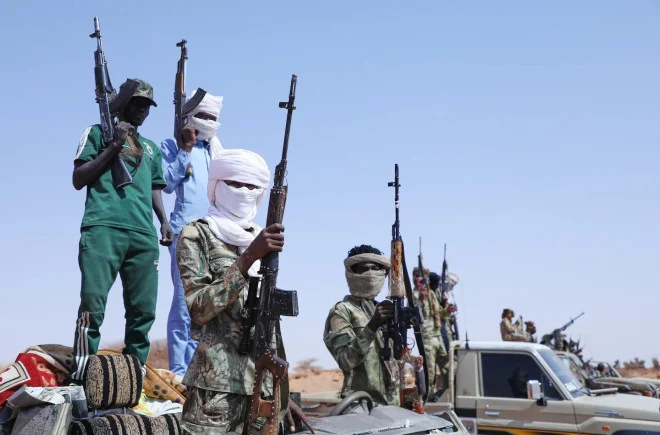
Foreign weapons, military technology, fighters and supply networks are helping fuel Sudan’s war, giving both sides the reach to attack civilian areas far from the front lines with drones, a United Nations fact-finding mission said on Thursday.
The conflict began in April 2023 after a power struggle between Sudan’s military and the Rapid Support Forces (RSF). More than 14 million people have since been displaced, while the fighting has produced one of the world’s most severe humanitarian crises.
- Advertisement -
In a report, the U.N. mission said drone strikes killed more than 1,000 people during the first five months of 2026. Investigators accused both the military and the RSF of serious breaches of international humanitarian and human rights law in their use of drones, saying some actions could constitute war crimes.
The RSF and Sudan’s military did not immediately respond to Reuters requests for comment. Both forces have denied abuses in the past. The mission said it had found grounds to believe that individuals and entities in the United Arab Emirates, Chad, Libya and Somalia formed a network supplying the RSF with weapons, equipment, logistical support, training and foreign personnel.
According to the report, as many as 2,000 Colombian contractors helped operate and maintain drone systems and other sophisticated weapons used by the RSF. Some were present during operations around al-Fashir in Darfur, a city the RSF captured in October 2025. The U.N. mission has previously said mass killings there bore hallmarks pointing to genocide.
The UAE has repeatedly rejected allegations that it provides military backing to the RSF. Its diplomatic mission in Geneva reiterated that position, saying it “remains committed to open and constructive dialogue with the Fact Finding Mission”.
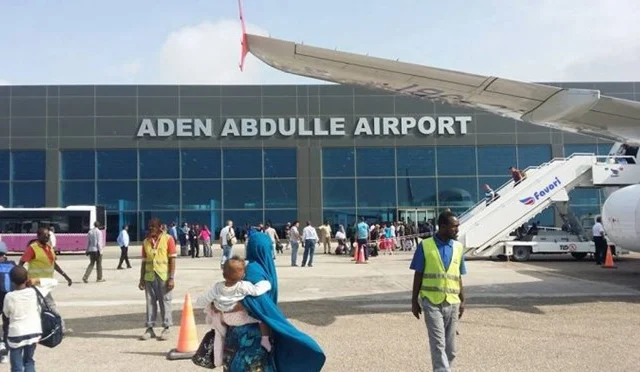
Somalia’s government said it viewed the report’s allegations seriously. It said it had not authorised the use of Somali territory, airspace or ports for military purposes by parties to the conflict, while acknowledging “gaps” in information-sharing between the federal government and regional authorities.
Colombia told investigators that it opposed mercenarism and was taking steps to address the involvement of Colombian nationals in overseas conflicts.
Makaila Ahmad, ambassador to Chad’s mission in Geneva, told Reuters that all allegations against Chad were false. He reaffirmed the country’s neutrality in Sudan’s war and said Chad was making significant efforts to secure its borders and stop arms trafficking.
Libya’s mission in Geneva, which represents the internationally recognised government in Tripoli, did not immediately respond to a Reuters request for comment.
DRONE WARFARE
The U.N. mission said its inquiry into outside support for Sudan’s military remained at an early stage. However, it had identified evidence that foreign-supplied combat drones and loitering munitions — weapons capable of hovering over an area before striking — had increased the army’s ability to conduct long-range attacks.
Investigators said some of those weapons had been used against civilian sites, including Yabus Market in Blue Nile State.
The greater range, endurance and growing sophistication of drone systems allowed Sudan’s military and the RSF to hit targets well beyond the immediate battlefront, the report said. Evidence indicated that both sides had carried out drone attacks killing civilians and striking hospitals, schools, markets and displacement sites.
Between May and July 2026, repeated RSF drone attacks damaged electricity and fuel infrastructure in El Obeid, the capital of North Kordofan. The city was under army control as RSF pressure mounted in June. The strikes disrupted water supplies, healthcare, transport and other essential services in a city already facing severe pressure and a partial siege.
The report also cited army strikes that investigators said killed at least 70 people at Ad-Da’ein Teaching Hospital in East Darfur.
The mission renewed its call for the enforcement of an arms embargo covering Darfur and urged the U.N. Security Council to expand the measure to all of Sudan.
Reporting by Olivia Le Poidevin; Additional reporting by Emma Farge, George Obulutsa and Giulia Paravicini; Editing by Tom Hogue, Peter Graff, Aidan Lewis