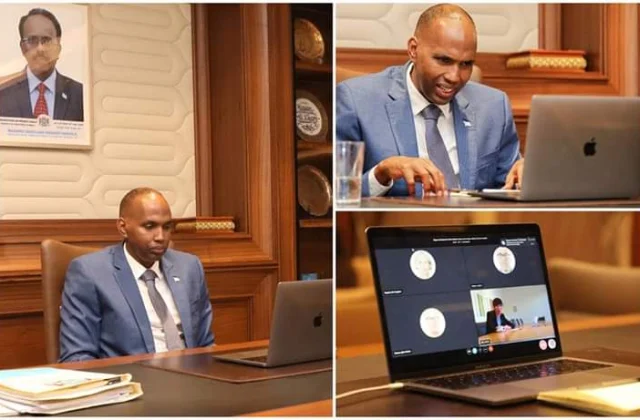

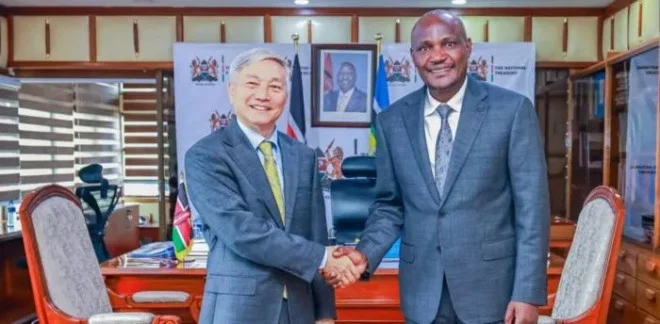
Treasury CS John Mbadi meets with World Bank Divisional Director for Kenya, Rwanda and Somalia Qimiao Fan in Nairobi, September 2, 2026. National Treasury
The World Bank has set out a series of reforms for the National Treasury to strengthen public payroll controls and curb irregular government expenditure.
- Advertisement -
At a meeting with World Bank Regional Practice Director Hassan Zaman and Divisional Director for Kenya, Rwanda and Somalia Qimiao Fan on Wednesday, September 2, Treasury Cabinet Secretary John Mbadi reviewed steps to make human resource and payroll records more accurate and consistent across national and county governments and other public institutions.
Additionally, the package will introduce unified payroll numbers and support the cleanup of county payrolls using findings from the Office of the Auditor-General.
“Harmonising HR and payroll data across national and county governments and other public institutions. Improving payroll integrity through unified payroll numbers and cleaning of county payrolls based on Office of the Auditor-General findings,” Treasury listed in a statement after the meeting.
The payroll reforms are part of the Eighth Development Policy Operation (DPO 8), the final stage of a World Bank-backed programme focused on public sector reforms and improved management of government finances, as Treasury seeks Ksh94 billion in funding.
The discussions take place as the government intensifies efforts to remove irregular payroll entries and strengthen oversight of public funds.
A previous forensic audit placed the value of suspected payroll fraud across national and county governments at Ksh6.2 billion.
The investigation uncovered ghost employees, forged records, duplicate salary payments and questionable bank account details.
Government figures have also shown that more than 17,000 suspected ghost workers were identified in various public institutions.
In response, the Public Service Commission (PSC) cautioned human resource officers against authorising irregular payments and directed government agencies to process salaries only through the official payroll system.
Officials at the meeting also assessed measures to reinforce fiscal discipline and consolidation, while ensuring that additional allocations for county governments are approved and released without delay.
Mbadi said the Treasury would work with the World Bank and relevant agencies to resolve delays and complete the outstanding reforms within the DPO 8 timeframe.