Jigjiga’s Remarkable Transformation Over Seven Years
When I last visited Jigjiga, the capital of Ethiopia’s Somali Regional State, it was 2019. Returning yesterday, seven years later, I found a city transformed almost beyond recognition.
- Advertisement -
The scale of the change is difficult to miss.
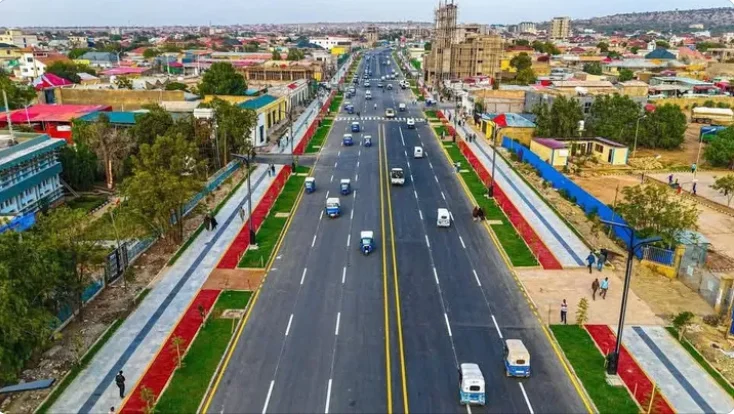
Across the city centre, broad, newly paved roads—some stretching to three lanes in each direction—are lined with modern streetlights and cleaner public spaces. A growing skyline and expanding commercial districts now give parts of Jigjiga the feel of a fast-developing urban centre.
Cranes rise above the city in every direction. A shopping mall is under construction in one location, while a modern hotel is taking shape elsewhere. Restaurants, commercial premises, and other businesses are multiplying, signalling stronger investment, rising economic activity, and a growing appetite for urban development.
The changes go well beyond appearances. They are backed by major public infrastructure projects.
In February 2025, the Ethiopian federal government, led by Prime Minister Abiy Ahmed, and the Somali Regional State administration, headed by President Mustafa Mohamed Omar, announced a 30-kilometre urban corridor programme for Jigjiga. The first stage covered 10 kilometres and, according to government figures, had created as many as 12,500 employment opportunities.
Another significant project was opened in May 2026: a 7.3-kilometre bypass road measuring 30 metres in width. The road was built at a reported cost equivalent to about US$4.5 million and is intended to reduce congestion while strengthening commercial transport links.
For a city whose infrastructure was far more limited during my previous visit, these projects represent substantial and visible investment.
Still, the most notable change was not the construction alone. It was the mood of the city.
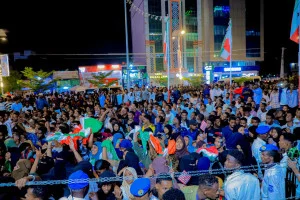
Jigjiga now feels energetic, busy, and increasingly self-assured. Commercial life fills its streets, while public areas appear more orderly, cleaner, and more inviting.
The sense of security was particularly notable. Residents moved freely, including women walking through the city during the evening.
In a region shaped by a complex political past, such routine scenes have an importance that extends well beyond their apparent normality.
Much of this progress has taken place under the administration of Mustafa Mohamed Omar, who became president of the Somali Regional State in August 2018.
His government has presided over major changes in urban infrastructure and public administration. The difference between the Jigjiga I saw in 2019 and the city I encountered yesterday is striking.
Jigjiga’s progress also forms part of the wider transformation Ethiopia has pursued since Prime Minister Abiy Ahmed took office in April 2018.
I arrived in Addis Ababa before travelling to Jigjiga and was similarly struck by the capital’s changing face. Major road projects, modern infrastructure, and ambitious construction schemes have reshaped large parts of the city.
The changes visible in both Addis Ababa and Jigjiga point to a broader national drive to modernize Ethiopia’s urban infrastructure.
What makes the Somali Region’s experience especially significant, however, is that its transformation is not limited to roads, buildings, and public spaces.
Alongside rapid urban modernization, the region has also experienced important shifts in its political and social environment, including developments involving civil liberties, freedom of expression, and personal security.