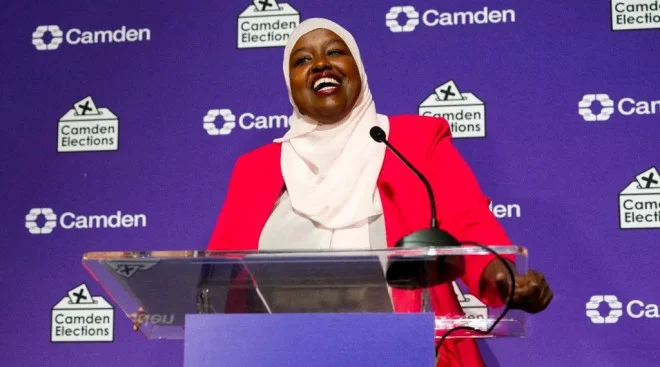
Sagal Abdi-Wali’s victory in Britain’s Holborn and St Pancras parliamentary by-election on October 8, 2026, marks a significant moment for Somali political representation abroad. Standing for the Labour Party, she secured 12,292 votes to win the London constituency.
For Somali communities across the world, her election offers both encouragement and an opportunity for reflection. It demonstrates what sustained public service and political participation can achieve, while raising a broader question: how can Somalia create the conditions for similar talent to flourish at home?
- Advertisement -
Abdi-Wali’s Somali heritage gives her victory particular significance for the diaspora. Her parliamentary responsibility, however, extends to every constituent she represents. The lasting measure of her success will be how effectively she serves that community.
A growing Somali presence in international politics
Abdi-Wali joins other politicians of Somali origin who have earned positions in public office abroad. They include Ilhan Omar in the United States House of Representatives, Ahmed Hussen in Canada’s federal parliament and Mohamed Firin in Ontario’s provincial legislature. Reports following Sweden’s September 2026 election also identified five politicians of Somali origin elected to the country’s parliament.
Their careers illustrate the contribution Somali communities can make to public life. They also highlight the importance of institutions that provide routes into politics through elections, community organising and public accountability.
These achievements should not suggest that diaspora politicians face no barriers, or that the countries in which they serve offer perfect political systems. They nevertheless demonstrate that Somali talent can gain recognition and win the confidence of diverse communities.
The lesson for Somalia
From an African perspective, the significance of these successes reaches beyond representation abroad. They invite scrutiny of the political conditions that enable capable people to lead—and those that prevent them from doing so.
For Somalia, the central challenge is to build institutions that reward competence, protect equal opportunity and hold public officials accountable.
Political disputes, patronage and the pursuit of private interests must be confronted wherever they undermine public service. When access to office depends more on personal connections than ability, qualified citizens lose opportunities and public confidence suffers.
Reform requires more than replacing individual leaders. It demands transparent appointments, credible political competition, stronger oversight and consistent application of the law. Without those foundations, even capable and well-intentioned officials can struggle to deliver lasting change.
Public office must also be understood as a responsibility entrusted by citizens. Leaders should be judged by the services they deliver, the institutions they strengthen and their willingness to answer for their decisions.
An opening for young people and women
Abdi-Wali’s election can offer encouragement to young Somalis, particularly women considering careers in politics and public service. It provides a visible example of leadership attained through participation and the confidence of voters.
For that inspiration to produce meaningful change in Somalia, young people and women need practical opportunities to influence decisions. Their inclusion must extend beyond symbolic appointments to genuine political participation and access to responsibility.
Somalia’s diaspora can contribute experience, professional networks and knowledge of public institutions. That contribution is most useful when it supports local expertise and responds to the priorities of communities inside the country.
Turning pride into progress
Abdi-Wali deserves congratulations on her election and best wishes as she takes on the responsibility of representing Holborn and St Pancras. Her victory is an occasion for celebration, but it also offers a useful starting point for a deeper discussion about leadership.
For Somalia, the task is to translate pride in its people’s achievements abroad into opportunities at home. That means building a political system in which ability can emerge, integrity is valued and public service carries a clear obligation to citizens.
The country’s future depends on giving its people the conditions to contribute: peace, justice, functioning institutions and leadership committed to the public good.