Erdogan Signals Egypt Could Join Expanding Defence Pact as Saudi Reservations Emerge
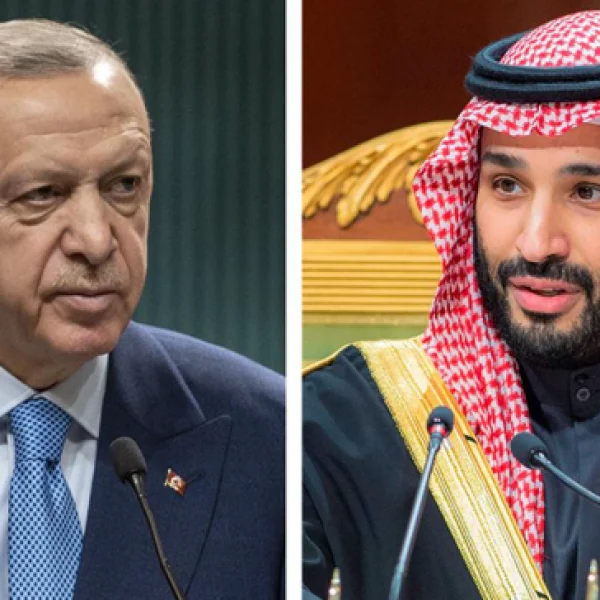
ANKARA — Turkish President Recep Tayyip Erdogan has indicated that Egypt could become part of a new mutual defence agreement between Turkey, Saudi Arabia and Pakistan, raising the prospect that the three-nation pact could eventually grow into a broader regional alliance.
- Advertisement -
Speaking to Al Jazeera, Erdogan said the Mecca Defence Agreement remained open to additional members and was not aimed at any specific country.
Turkey, Saudi Arabia and Pakistan recently signed the pact, which declares that an armed attack on one member would be treated as an attack on all three. The clause has prompted comparisons with Article 5 of NATO, whose collective-defence principle considers an assault on one member an assault on the alliance as a whole.
Erdogan dismissed claims that the agreement posed a direct threat to any particular state. His comments came as some Western media reports suggested the developing security partnership could emerge as a counterweight to Israel’s influence in the Middle East.
He also said Turkey would not remain passive when countries in its neighbourhood and across the region were confronted by crises, citing the situations in Syria, Gaza and Lebanon.
Yet sources familiar with the discussions, cited in reports, said Saudi Crown Prince Mohammed bin Salman had reservations about Egypt joining the arrangement. Those concerns reportedly centre on Cairo’s close ties with Abu Dhabi.
Saudi Arabia and the United Arab Emirates have increasingly differed over elements of regional policy, including developments in southern Yemen and other issues. Riyadh is consequently said to be wary of extending the defence framework to a country it considers closely aligned with the UAE.
Neither the Turkish nor Saudi government has publicly confirmed the reported differences between Erdogan and Mohammed bin Salman.
Pakistani officials, meanwhile, have warned against equating the agreement with NATO or presenting it as an initiative designed to confront a particular country.
Even so, the pact marks an important development in defence cooperation between Turkey, Saudi Arabia and Pakistan — three influential Muslim-majority states whose strategic interests are expanding across the Middle East and beyond.
The agreement was reached as tensions remain elevated throughout the region, including amid the conflicts in Gaza and Syria and broader disputes involving regional powers. Countries in the Horn of Africa are also facing mounting security and military pressures.
Erdogan has increasingly portrayed Turkey as a regional power prepared to play a larger role in conflict resolution and to support allies and partners during periods of instability.
His reference to Egypt is likely to sharpen attention on Cairo’s position as regional states reassess and reshape their security relationships.
Egypt has longstanding defence and diplomatic ties with Saudi Arabia, alongside strong relationships with the UAE and Turkey. A decision by Cairo to join the pact could therefore carry major consequences for the region’s balance of power.
For the time being, the agreement remains limited to Turkey, Saudi Arabia and Pakistan, and no formal announcement has been made that Egypt has been invited to join.
AXADLETM