
Speaking on the *David Hearst Podcast* broadcast by Middle East Eye, Ambassador Alexander Rondos, who previously served as the European Union’s Special Representative for the Horn of Africa, warned that the region is passing through one of the most dangerous periods in decades. In an interview with the programme’s host, David Hearst, Rondos said international diplomats were dangerously dividing the interconnected crises in Ethiopia’s Tigray region, Sudan, the Nile River and Yemen on the opposite side of the Red Sea, rather than addressing them as a single rapidly converging catastrophe.
Tigray at the Heart of the Region and on the Brink of Interstate War
The renewed fighting in northern Ethiopia’s Tigray region has brought Addis Ababa and Asmara to the brink of direct military confrontation. Ethiopia has accused Eritrean forces of crossing into Tigray to support armed groups opposed to the federal government—an accusation Eritrea has rejected—while Ethiopian drone strikes have targeted positions in the region and federal forces have advanced towards the Eritrean border.
According to Rondos, an undeclared war is already under way, fuelled by the collapse of international rules and deterrence, encouraging the parties to create new realities on the ground:
Defensive Barrier and Deterrence
Historically and geographically, Tigray serves as the strategic bridge between Ethiopia and Eritrea. Eritrea views a friendly or independent Tigray as a barrier protecting it from Ethiopian hostility, while Addis Ababa sees control of Tigray as a vital means of countering threats along its northern border.
* **A Fragile Alliance Against Abiy:** Rondos noted that the alliance between the Tigray People’s Liberation Front (TPLF) and other armed opposition groups—reportedly encouraged by Eritrea—is historically immature and extremely fragile. As federal forces have recently made gains in Tigray, removing the TPLF from its leadership role in the alliance could cause the broader insurgency to collapse rapidly.
* **The Risk of Miscalculation:** Ethiopia and Eritrea have both been acquiring modern weapons from foreign countries, but Eritrea has yet to reveal the extent of its military reserves. Rondos warned that Addis Ababa could become overconfident because of its recent battlefield successes and attempt to advance towards Asmara or the Red Sea port of Assab without fully calculating the long-term costs of occupying territory or mobilising society on a broad scale.
Access to the Sea: From a “Strangling Cord” to a “Necklace of Ports”
The border tensions are rooted in Ethiopia’s desire for independent access to a seaport on the Red Sea, raising concerns in Eritrea, which fears ambitions directed at its coastline and the port of Assab. Although landlocked Ethiopia currently relies heavily on Djibouti and has explored alternative routes, including Berbera in the North Western State of Somalia and Lamu in Kenya, Rondos noted that few ports in the region have the capacity to handle the heavy cargo of a country of 130 million people.
Rather than relying on unilateral military force, Rondos urged Ethiopia and neighbouring countries to pursue regional economic integration:
Agreed Port Zones
Rondos argued that reliable access to the sea could be secured peacefully through long-term agreements granting Ethiopia dedicated sections of ports under its own protection—similar to commercial arrangements—allowing Addis Ababa to import sensitive materials without undergoing foreign inspections.
A Regional Market
By building economic infrastructure linking the Horn of Africa, Kenya and Uganda, regional leaders could create a unified market of more than 200 million people. As Rondos put it, Ethiopia should work with its neighbours to build a “guaranteed necklace of ports” rather than feel that it is tied to a “strangling cord”.
Sudan, the Nile River and Rival Regional Alliances
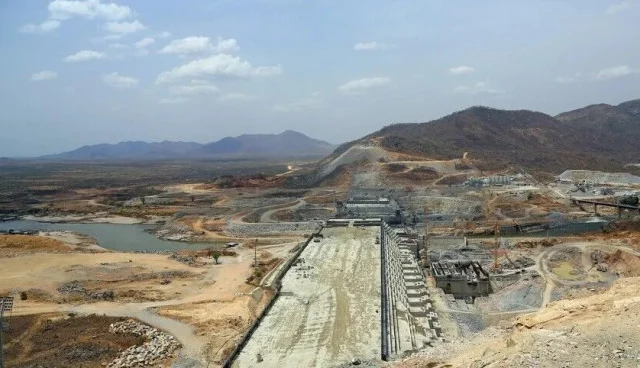
The Tigray conflict is closely linked to the devastating war in Sudan and the long-running dispute over the Grand Ethiopian Renaissance Dam (GERD):
The Sudan Connection
The removal of Tigrayan and Eritrean forces from the military balance would directly affect Sudan’s capabilities, where the Sudanese Armed Forces (SAF) rely on a coalition of militias that includes influential Tigrayan fighters.
The Nile River Dispute
Egypt views the GERD as an existential and national security threat, leading Cairo to form a tactical “the enemy of my enemy is my friend” alliance with Eritrea. Rondos suggested that Egypt is spending an enormous amount of diplomatic capital to oppose Ethiopia, when a peaceful and rebuilt Sudan—which historically served as the region’s breadbasket—could become an effective bridge for economic cooperation and water management backed by Gulf investment.
Competing Alliances
Two shifting blocs have emerged in the region. On one side, Egypt, Eritrea, Sudan and Somalia recently met in El Alamein to affirm that Red Sea security belongs exclusively to the coastal states—a move Ethiopia views as an attempt to strangle its maritime ambitions. On the other, the United Arab Emirates (UAE) maintains close ties with Ethiopia and is pursuing a long-term post-oil strategy focused on controlling global supply chains, mineral routes and ports—a pattern Rondos compared to the historic trading empires, one that risks provoking an uprising among Africa’s rapidly growing young population.
The Two Shores of the Red Sea: Yemen and the World’s Vital Chokepoints
Hearst and Rondos also examined how instability along Africa’s coast interacts with the escalating conflict in Yemen near the Bab el-Mandeb strait. Rondos described the crisis as stretching from the Nile River to the Strait of Hormuz:
Maritime Trade and Insurance
Even without a full naval blockade, Houthi threats near Bab el-Mandeb are enough for major marine insurers such as Lloyd’s of London to restrict coverage, paralysing global commercial shipping. Rondos noted that the Houthis are increasingly behaving like an established government weighing its regional power, rather than merely acting as a proxy.
Infrastructure and Refugee Risks
A broad collapse across the Horn of Africa would endanger critical undersea internet cables passing through Djibouti and connecting Europe with East Africa, while also triggering massive waves of refugees crossing the Red Sea towards Saudi Arabia and the Gulf states.
A Plan to Resolve the Diplomatic Crisis
As the United Nations Security Council holds closed-door meetings to discuss the escalating tensions, Rondos outlined four urgent steps needed to prevent a wider catastrophe:
1. Revive Existing Legal Agreements.
International guarantors—including the United Nations, the European Union and the United States—should reactivate the 2000 Algiers Agreement that demarcated the Ethiopia-Eritrea border, providing an immediate legal foundation for de-escalating the crisis.
2. Abandon Fragmented Diplomacy.
Mediators should stop addressing Sudan, Tigray and Red Sea security separately. Instead, they should establish a direct regional communications channel and a cooperative framework comparable to the deterrence systems of the Cold War era.
3. Implement