Mogadishu (AX) — As Somalia prepares to enter Africa’s vast single market, the country’s national trade union federation is pressing for stronger labour safeguards and a formal seat for workers in the implementation of the African Continental Free Trade Area.
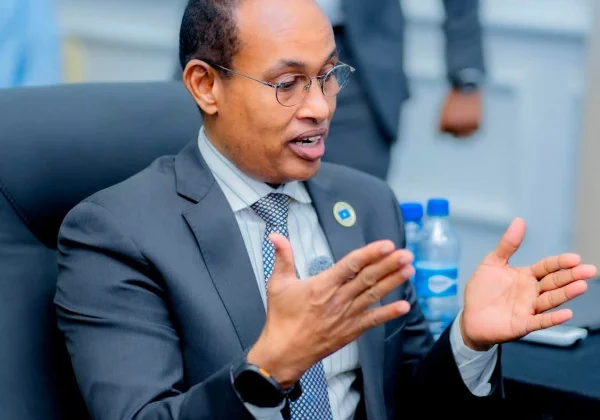
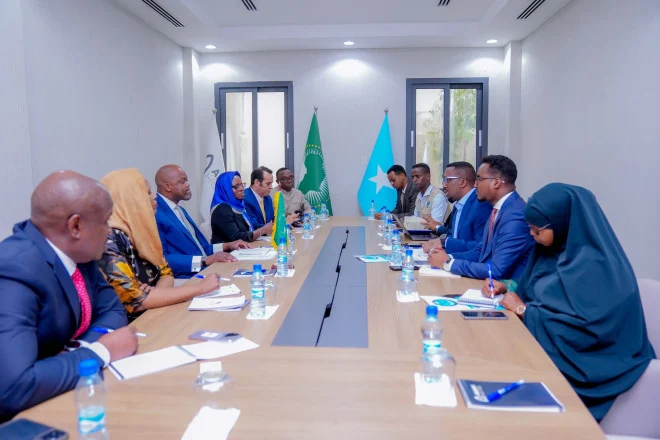
The appeal came Monday during a meeting between African Continental Free Trade Area (AfCFTA) General- Secretary Wamkele Mene and leaders of the Federation of Somali Trade Unions (FESTU), headed by secretary-general Omar Faruk Osman.
- Advertisement -
The talks were held during Mene’s first official visit to Somalia, which ran from 16 to 18 August, at a pivotal stage in the country’s preparations for the trade pact’s practical rollout. Somalia has completed its domestic ratification process and is now developing the measures needed to enable Somali companies and products to trade under AfCFTA rules.
FESTU says Somalia’s access to a market of more than 1.4 billion people should deliver more than higher trade volumes. The federation wants the agreement to help develop the country’s productive economy, generate decent work and ensure workers and their unions have a voice in trade and investment policy.
At the meeting, FESTU urged authorities to include trade unions from the outset of AfCFTA implementation, rather than seeking their views only after key economic decisions have been made. It argued that governments and companies cannot shape a free trade market on their own, given the central role of workers in production, services and wider economic activity.
The federation noted that trade liberalisation, investment and economic integration directly affect jobs, pay, workplace conditions and labour rights. In line with positions advanced by the International Trade Union Confederation (ITUC) and ITUC-Africa, FESTU called for institutionalised social dialogue and permanent union representation in relevant AfCFTA governance structures.
“Workers are at the heart of production, services and economic development. As Somalia advances its participation in the AfCFTA, we want to see trade and investment creating decent jobs, protecting labour rights and delivering real benefits to working people and their families, with trade unions having permanent and structured engagement with the AfCFTA,” Osman said.
Mene welcomed FESTU’s participation and the wider role of organised labour in Africa’s economic integration agenda. He described the Somali federation’s involvement in AfCFTA implementation discussions as a positive example of social dialogue and pointed to efforts to strengthen cooperation with trade unions across the continent.
His visit comes as Somalia weighs the potential impact of the agreement on its economy. The government says AfCFTA could open the wider African market to Somali businesses, support export growth, encourage value addition and attract investment. As implementation moves forward, Somalia is also looking towards its first exports under AfCFTA preferences.
FESTU says the opening should prompt Somalia to reconsider its place in regional commerce. Instead of remaining primarily a consumer and importer, the federation believes the country must build its capacity to produce, process and export goods to markets across Africa.
Achieving that goal will require investment in productive industries, workforce skills and decent jobs, ensuring that expanded market access creates opportunities inside Somalia. The approach is also reflected in the government’s AfCFTA plans, which include increasing locally manufactured and processed exports and promoting products under a “Made in Somalia” identity.
FESTU credited the minister of commerce and industry, Ambassador Gamal Mohamed Hassan, with promoting an inclusive, social dialogue-based approach to AfCFTA implementation through engagement with government, business and organised labour.
The federation considers that tripartite cooperation essential as Somalia converts its AfCFTA commitments into national policies and practical steps. It says collaboration among the three groups can help ensure that rising trade and investment generate decent employment while upholding workers’ rights.