As artificial intelligence races ahead, Chinese President Xi Jinping called on the United States and China to ensure the technology remains a force for human benefit and control—a central issue as he met with Donald Trump.
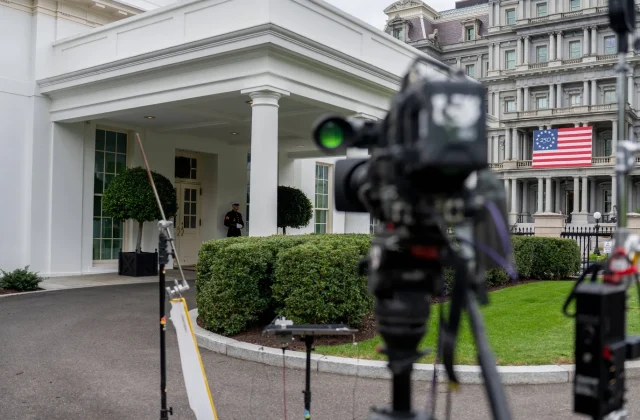
“We have both the capability and responsibility to develop and manage AI for good and ensure that the development of AI is always under human control,” Mr Xi said at the White House.
- Advertisement -
Speaking after Mr Trump welcomed him to the White House this afternoon, Mr Xi also urged the world’s two largest economies to avoid confrontation and preserve channels for dialogue.
“China and the United States must hold the line on maintaining no conflict and no confrontation between us,” he said. “Our two militaries should maintain regular dialog and improve mechanisms for crisis communication and prevention.”
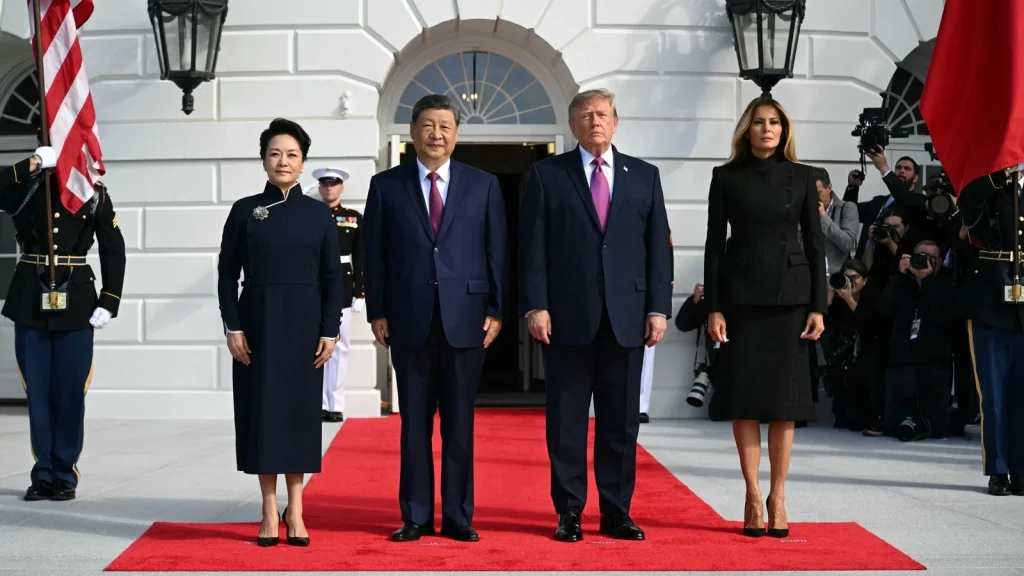
A formal welcome on the White House South Lawn launched today’s events
The summit marks Mr Xi’s first visit to Washington in more than a decade and is the second face-to-face meeting this year between the leaders of the world’s two biggest economies.
Speaking from the White House grand foyer, Mr Trump emphasized his personal relationship with the Chinese leader and pointed to progress made by the two countries on trade.
“During this visit, we will also discuss pressing issues concerning security, technology, and ‘super intelligence,’” Mr Trump said, using his alternative term for artificial intelligence. “The decisions we make in these areas today can promote peace and prosperity for decades and decades to come.”
US President Donald Trump greets Chinese President Xi Jinping after he arrived at Joint Base Andrews in Maryland
Mr Xi described the rivalry between Washington and Beijing as something that should remain “healthy” and stay within clear limits. He added that China was ready to work more closely with the US to combat illegal drugs.
For Mr Trump, who embraces grand ceremony and places a premium on relationships with powerful leaders, the visit offers both a stage for national prestige and an opportunity for consequential diplomacy.
He greeted Mr Xi on the tarmac yesterday evening with a red carpet, making it the first time a US president had welcomed a foreign leader at Joint Base Andrews since President Barack Obama received Pope Francis there in 2015.
The ceremony was intended to return the elaborate welcome Mr Trump received in China in May and impress Mr Xi with events stretching across the White House South Lawn, State Floor and Rose Garden. But expectations for a major breakthrough remain low.
Donald Trump and Xi Jingping stood side by side on the tarmac as a military band played
Analysts expect any concrete results to center on extending a trade truce set to expire in November and examining the risks posed by artificial intelligence.
US Treasury Secretary Scott Bessent told Fox News, after holding talks with Chinese Vice Premier He Lifeng, that the two sides had agreed to extend until 10 January an accord that halted a trade war in which mutual tariffs climbed above 100%.
In a Truth Social post this morning, Mr Trump said “super intelligence”—his preferred name for AI—would be discussed, while again signaling little enthusiasm for new regulations despite warnings from industry leaders that the technology could eventually threaten humans.
“Super Intelligence (SI) will be a big topic of discussion, but I want to leave it exactly where it is,” Trump wrote. “That is China’s position also.”
Mr Xi echoed the call for responsible development, saying both countries had “the capability and responsibility to develop and manage AI for good, and ensure that the development of AI is always under human control.”
Yet analysts say the depth of the countries’ competition in AI is likely to constrain any agreement to largely symbolic measures.
Keeping ties stable
People familiar with the plans said the talks could also produce agreements to reduce some tariffs, tackle drug trafficking and broaden military-to-military communication. Mr Trump is also expected to seek the release of Americans and others detained in China.
Former US Deputy Secretary of State Kurt Campbell said the summit appeared to be as much about two assertive leaders demonstrating strength as it was about negotiating substantive agreements.
“This is really the historical reincarnation of what we often referred to in antiquity as single combat – really powerful guys, each representing their civilizations, kind of measuring and going toe to toe,” said Mr Campbell.
Mr Xi enters the meeting from a position that appears stronger, having presided over a surge in Chinese trade while maintaining firm control over rare earth supplies, an important source of leverage.
Both leaders have reasons to prevent relations from deteriorating. Mr Trump is entangled in the unpopular Iran war, while Mr Xi is confronting economic pressures at home.
Still, several disputes could quickly revive tensions, including Taiwan, export controls and the future of AI.
Taiwan, the democratically governed island claimed by China, remains the most sensitive issue between Washington and Beijing.
US allies across Asia fear Mr Trump could be willing to weaken Washington’s support for Taipei in pursuit of economic gains from China.
Read more:China’s exports surge on demand for high-tech, AIAI development requires governments working together against risks, says industry
Mr Xi is expected to urge Mr Trump to stop arms sales to Taiwan, potentially during a planned visit by the two leaders to the US National Archives tomorrow, according to sources briefed on the matter who spoke to Reuters. In return, China is offering to help apply pressure on Iran, the sources said.
Following the May summit, Mr Trump said he had placed on hold an arms package for Taiwan valued at about $14 billion, describing it as a “very good negotiating chip.”
The leaders are also likely to address the Iran war, although there has been little evidence that Beijing is prepared to pressure its ally to meet US demands, despite the conflict’s disruption to energy supplies and global trade.
Trade may offer a clearer path to an agreement. Mr Trump is pursuing economic wins before the midterm elections, while US Trade Representative Jamieson Greer said this month that the countries would make “some announcements on agriculture and non-tariff barriers.”
On Monday, Mr Greer said China was moving forward with a commitment to purchase 200 Boeing aircraft, though he offered no indication that further orders were imminent.
The guest list for tonight’s state dinner includes executives such as Apple’s Tim Cook, Amazon’s Jeff Bezos, Alphabet’s Sundar Pichai, OpenAI’s Sam Altman, Tesla’s Elon Musk and Nvidia’s Jensen Huang. Even with such an influential gathering, people familiar with US plans say Mr Trump is expected to retain the export controls on American technology that Mr Xi wants eased.