Artificial intelligence is reshaping elections around the world, bringing new possibilities but also serious threats to public trust, according to the Irish woman heading the UN’s electoral assistance department.
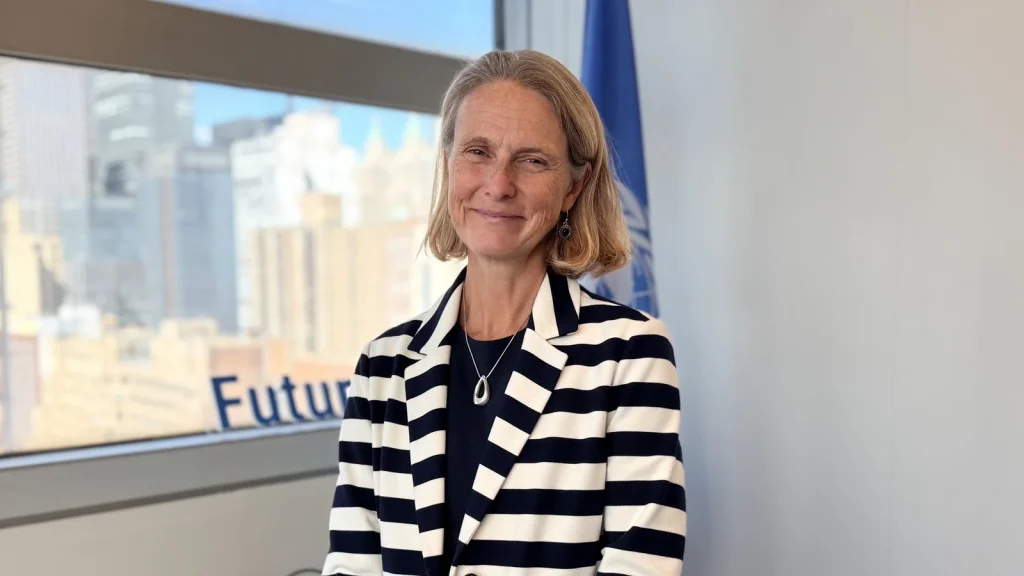
Michèle Griffin, who was raised in Dublin and Louth, has spent 30 years working for the United Nations — an organisation she said she had dreamed of joining “since I realised such a thing existed”.
- Advertisement -
She began as an intern before working with successive secretaries-general, helping them “to think about the big picture”, and ultimately becoming director of her department.
This week marked Ms Griffin’s 30th UN General Assembly. Looking back on her career, she said she still sometimes has to pinch herself and feels “privileged” to work alongside people “trying to make the world a better place”.
Ms Griffin has worked with successive Secretarties-General throughout her career
Her department’s work ranges from logistical support to helping countries address barriers to participation, particularly for women, minority communities, disadvantaged people and people with disabilities.
“We get a lot of requests now for help with information integrity, and making sure that both the risks and opportunities of technology are handled well, and in a way that preserves public trust in the election and preserves a credible election,” she told RTÉ News.
AI governance was among the central issues discussed during High-Level Week at UNGA, and Ms Griffin said she is addressing the subject with election management bodies across the world.
“We are figuring out where AI can be helpful, but, of course, we have to be very aware of the ways in which it can, even inadvertently, hurt trust, undermine credibility, make people question elections, make people worry about their data and how it’s used and exposed,” she said.
She warned that malicious actors were already exploiting the technology to interfere with democratic processes.
“And, of course, there are bad actors who can use AI to undermine elections, and we’re seeing a huge amount of that already happening around the world.”
Ms Griffin said the debate forms part of a much broader discussion about how AI should be governed internationally.
“What should the guard rails be? How do we put safeguards in place?” she asked.
Ms Griffin began her UN career at the Irish Permanent Mission
Despite the rapid development of new technology, Ms Griffin said the basic principles underpinning a credible election remain unchanged.
UNGA discussions also turned to reform of the organisation and the role the UN will play in the years ahead.
Asked about the UN’s next chapter, Ms Griffin referred to a sign in her office bearing a single word: ‘future’.
“If you didn’t have the UN, you’d have to invent it,” she said.
She argued that the organisation is increasingly necessary in a world where major challenges cannot be resolved by countries acting alone.
“In a world where most problems can’t be solved within national borders, more than ever you need a place where countries can come together, and not just countries, but all sorts of civil society, all sorts of actors who have in their power to solve problems, that they would come together to one place and talk about how to solve those problems together.
“I’m personally, obviously, a true believer in that and have been convinced of it, and have given my entire career to trying to make that happen.”