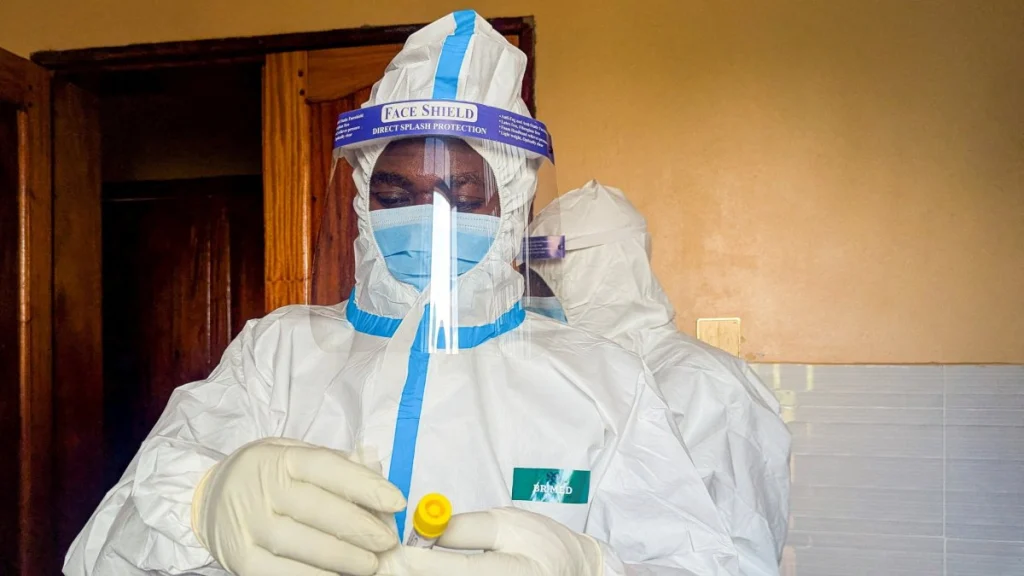
More than 250 people have joined a clinical trial in Congo testing an experimental drug intended to prevent Ebola infection — a potentially important development as authorities struggle to control the country’s deadliest outbreak.
The study is evaluating obeldesivir, an antiviral pill developed by Gilead, against Bundibugyo virus, the strain responsible for the rapidly spreading outbreak. No vaccine or treatment for the virus has yet been approved, making the trial part of a broader effort to protect people exposed to Ebola and interrupt transmission.
- Advertisement -
The trial opened in July at a health center in eastern Congo’s Ituri province, the outbreak’s epicenter. Participants include health workers, relatives of infected patients and others who may have been exposed to the virus, according to interviews this week by The Associated Press with people enrolled in the study and doctors overseeing it.
Authorities have recorded at least 8,300 confirmed cases and 4,000 deaths since declaring the outbreak in mid-May. The virus has reached seven provinces, while efforts to identify infections, trace contacts and stop transmission continue to fall behind the pace of the outbreak.
Participants take obeldesivir soon after suspected exposure, before symptoms appear, in a strategy known as post-exposure prophylaxis, or PEP.
One woman enrolled in the EBO-PEP trial told AP she joined in August after her husband tested positive for Ebola. So far, she said, no one else in her family has developed symptoms. She and other participants asked not to be identified because of the sensitive nature of the outbreak and the medical study.
Ebola spreads only after symptoms begin, meaning people exposed to an infected patient must wait to learn whether they will become ill. In Congo, identifying those most likely to be incubating Bundibugyo virus — a process known as contact tracing — has proved difficult.
Another participant said two family members had contracted Ebola and one had died.
“This disease is killing. It’s better to take precautions,” he said.
ALIMA, a medical nonprofit, is coordinating the trial, which aims to enroll nearly 1,000 adults and children older than 12. Eligible participants must have been in contact with a confirmed Ebola case within the previous five days and must not yet have symptoms. Half of those enrolled will receive a placebo.
Dr. Godefroid Basara, who is working on the trial, said participants are examined in person every day for 21 days and receive a final follow-up phone call after 42 days.
ALIMA said anyone who begins showing symptoms will receive immediate supportive care, which has been shown to improve outcomes when treatment starts early.
If the pill works, researchers say it could help disrupt the chain of infection.
“ It differs from a vaccine, which may take days or weeks to provide protection. It is also different from curative treatment because it is intended for people who are not yet showing symptoms,” said Dr. Guilavogui Jean Paul Yassa, ALIMA’s research coordinator.
Dr. Jacques Zawadi, an investigating physician with ALIMA at the trial center, said most participants have been willing to take part. Recruiting people who live far from the facility, however, has been difficult.
The study also faces interruptions when participants learn that relatives have died from Ebola.
“This is the biggest challenge we face. When a person is emotionally affected, it is not easy to reason with them and ensure they return to the study,” Zawadi said.
Congo’s National Institute of Biomedical Research and France’s ANRS Emerging Infectious Diseases are also participating in the trial.
Meanwhile, health workers in Congo have begun receiving the Ervebo vaccine, which proved effective during earlier outbreaks caused by a different and more common Ebola virus. Authorities say it may provide some protection against Bundibugyo virus, but researchers are still determining whether it can prevent illness.
On Thursday, Doctors Without Borders said one of its staff members had tested positive for Ebola and was being evacuated to the Netherlands. In June, an ALIMA humanitarian physician also tested positive after returning to France from one of the outbreak’s virus hot spots.
The World Health Organization has warned that the outbreak continues to outpace efforts to track and contain it. It is expected to surpass the regional West African outbreak of 2014 to 2016, the deadliest on record, which killed 11,000 people.
The Axadle Times Newsletter
Keep up to date with what’s happening in Turkey,
it’s region and the world.
SIGN ME UP
You can unsubscribe at any time. By signing up you are agreeing to our Terms of Use and Privacy Policy.
This site is protected by reCAPTCHA and the Google Privacy Policy and Terms of Service apply.