Nearly 4,000 people have died in the Democratic Republic of the Congo’s Ebola outbreak, as conflict and mass displacement in the country’s east hamper efforts to identify infections and stop the virus from spreading.
The Health Ministry recorded 8,224 confirmed cases and 3,982 deaths through Sept. 29, putting the crude case-fatality rate at approximately 48%. More than 2,200 people have recovered, while hundreds were still hospitalized or being held in isolation.
- Advertisement -
Declared on May 15, the outbreak is being driven by the rare Bundibugyo virus, an Ebola species for which no approved vaccine or specific treatment currently exists.
The virus has been detected in 63 health zones across seven provinces. Ituri remains the epicenter, with cases also reported in North Kivu, South Kivu, Haut-Uele, Bas-Uele, Tshopo and Sud Ubangi.
By scale, the outbreak is now the deadliest in Congo’s history, overtaking the 2018-2020 epidemic caused by the Zaire species.
Globally, it ranks as the second-largest Ebola outbreak on record, behind the 2014-2016 epidemic in West Africa. That outbreak infected more than 28,000 people and killed over 11,000.
The World Health Organization has warned that infections continue to appear in new health zones, placing further strain on an already stretched response.
The WHO has rated the risk within Congo as very high and the threat to neighboring countries as high, particularly because cases have emerged near international borders.
Bundibugyo virus is a zoonotic disease believed to have a natural reservoir in fruit bats. Humans may first contract it through contact with infected animals, after which the virus can spread between people through blood, secretions and other bodily fluids.
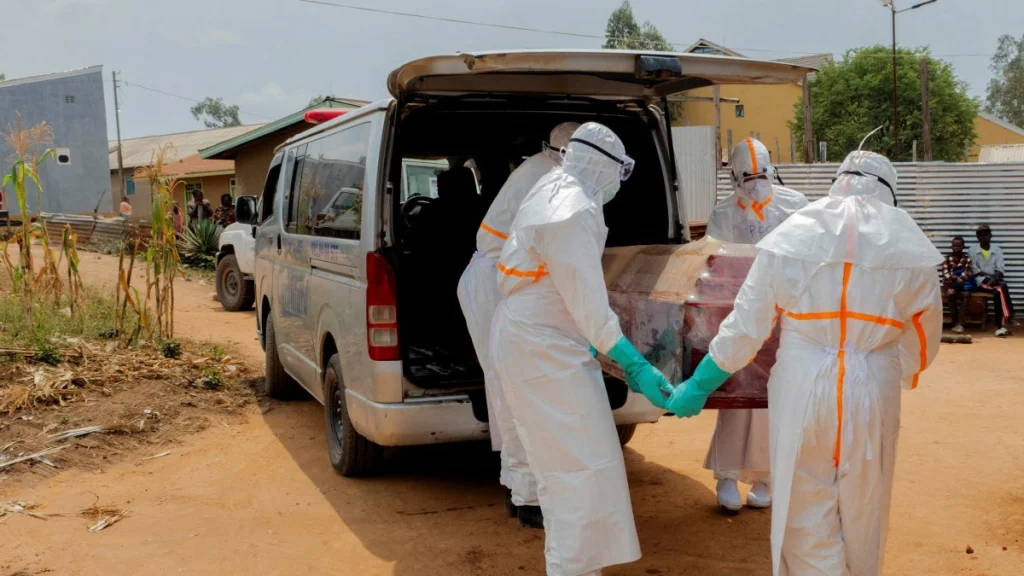
Poor infection-control conditions in health facilities can fuel transmission, as can burial rituals involving close contact with the bodies of people who have died.
Symptoms generally develop between two and 21 days after infection. They may begin with fever, fatigue, muscle pain, headache and a sore throat, then progress to gastrointestinal illness and, in severe cases, organ failure and bleeding.
Because no approved vaccine or targeted therapy is available for Bundibugyo virus, authorities rely heavily on early diagnosis, isolation, contact tracing, safe burials and supportive care.
Health officials have increased laboratory capacity and expanded treatment facilities. But insecurity and difficult terrain continue to make it hard to reach communities affected by the outbreak.
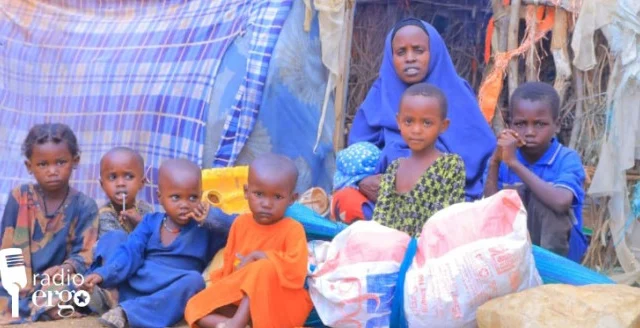
The latest disruption occurred at Kigonze, a displacement camp near Bunia in Ituri province that had been home to about 19,000 people.
Congolese and health officials said security forces entered the camp in search of weapons and people suspected of having ties to armed groups.
Clashes then erupted, driving thousands of residents away over several days and leaving the camp largely deserted.
The mass departure has severely complicated Ebola surveillance. Two health officials familiar with the situation told Reuters that approximately 1,000 people identified as Ebola contacts were living at Kigonze. One of the officials said only about one-fifth had been traced after the residents fled.
An Ebola transit center at the camp, where suspected cases could be isolated, tested and treated, was also burned down.
Julien Harneis, the U.N.’s senior Ebola coordinator in Congo, said the events had intensified an already formidable crisis by disrupting surveillance, contact tracing and access to medical care.
Kigonze had already been hit by a deadly wave of illness. Reuters reported in June that more than 30 people had died there in slightly more than a month, with Ebola linked to many of the deaths.
The U.N. refugee agency has documented 88 confirmed Ebola cases and 56 deaths at displacement sites across Congo, including Kigonze, while cautioning that the true toll is probably higher. The International Organization for Migration reported that fatality rates among Ebola patients at other displacement sites had surpassed 80%, compared with about 50% across the outbreak as a whole.
The emergency is unfolding in Ituri, North Kivu and South Kivu, areas that have faced decades of armed conflict and collectively shelter more than 5 million displaced people. Overcrowded settlements, inadequate sanitation and constant population movement are creating additional obstacles for disease-control teams.
The outbreak has not developed in the same way everywhere. The WHO has recorded falling case numbers in parts of Ituri, while North Kivu has seen increases. New cases in border regions have also heightened fears that the virus could move beyond Congo.
Congo’s Health Ministry, the WHO, Africa CDC and international partners have broadened their joint response. Their work includes improving surveillance, laboratory testing, treatment, community engagement and coordination across borders.
The Axadle Times Newsletter
Keep up to date with what’s happening in Turkey,
it’s region and the world.
SIGN ME UP
You can unsubscribe at any time. By signing up you are agreeing to our Terms of Use and Privacy Policy.
This site is protected by reCAPTCHA and the Google Privacy Policy and Terms of Service apply.