
U.N. political mission closes in Somalia with no agreed successor to mediate election dispute
MOGADISHU, Somalia — Somalia is losing a key political mediator just as questions over the president’s mandate threaten to deepen divisions: The United Nations’ political mission closes Saturday, ending more than three decades of successive U.N. missions that helped rebuild a country devastated by civil war.
- Advertisement -
The government describes the departure as evidence that Somalia can increasingly manage its own affairs. Opposition leaders and analysts, however, say the mission is ending at a precarious moment, with the president’s legal authority under dispute, al-Qaida-linked militants still waging war and worsening drought adding to humanitarian pressure.
Somalia asked the U.N. to withdraw the mission in 2024. The Security Council then approved a two-year transition in which Somali institutions and other U.N. bodies would assume its responsibilities. The departing United Nations Transitional Assistance Mission in Somalia advised political leaders and helped mediate disputes.
African Union forces will continue assisting Somali troops in their fight against militants, while U.N. agencies responsible for humanitarian aid will remain in the country.
A separate U.N. office will keep supplying transport, equipment and other logistical support to African Union troops and some Somali security units. From state collapse to rebuilding
Somalia’s central government collapsed in 1991 after dictator Mohamed Siad Barre was overthrown. Rival clan-based factions then battled for control, leaving the country without a functioning central authority as war and hunger devastated communities. The United States launched Operation Restore Hope in 1992 to protect famine-relief deliveries. A year later, 18 American soldiers were killed in Mogadishu’s “Black Hawk Down” battle, helping bring the U.S. military operation to an end.
U.N. peacekeepers left in March 1995 without securing a lasting political settlement. The organization subsequently established a civilian political office aimed at promoting reconciliation.
That office helped Somali leaders bring the country’s formal transitional period to a close in 2012. A provisional constitution was adopted, a new federal parliament was established and a president was elected.
Over the years, successive U.N. political missions backed elections, justice institutions and regional administrations that share power with the national government. In 2016, the mission supported a regional team working to implement a ceasefire between forces from Puntland State and Galmudug, two rival administrations in central Somalia.
Yet institution-building has not settled disputes over political authority or enabled the government to establish control throughout the country.
Al-Shabab, an al-Qaida-linked group, holds large swaths of rural territory and regularly attacks Mogadishu and other cities. An officer who survived an ambush in southern Somalia told the AP that at least 20 soldiers died in the latest assault on Monday. The government did not report troop casualties, and the figures could not be independently verified.
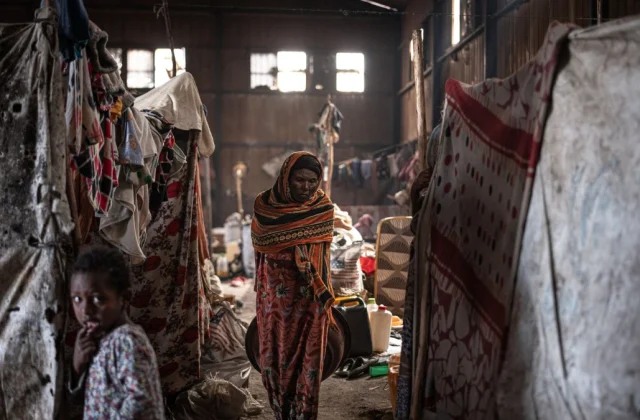
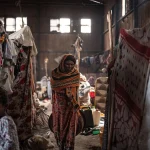
Insecurity is compounded by repeated drought and flooding. Failed harvests and dying livestock have driven families from their homes, while hunger worsens and aid funding declines. An unresolved election dispute drags on
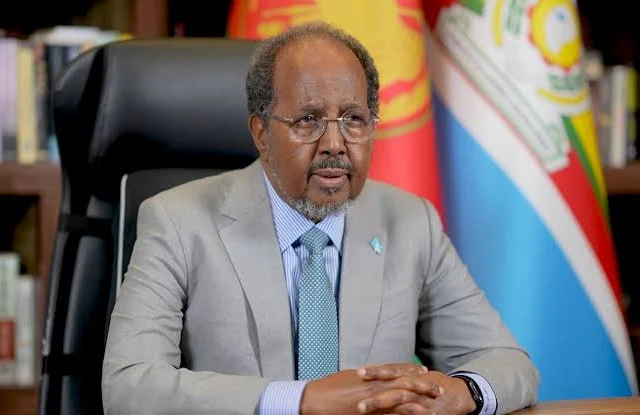
A continuing dispute centers on whether President Hassan Sheikh Mohamud and parliament can legally remain in office.
Under the previous four-year terms, Mohamud’s mandate was set to expire May 15, while parliament’s term was due to end April 14. Parliament passed constitutional amendments extending both terms to five years. The government says the changes permit the president and lawmakers to stay in office until 2027.
Opposition leaders reject applying the amendments to current officeholders, arguing that their mandates have already expired.
In June, opposition supporters and security forces clashed in Mogadishu before a planned demonstration over alleged constitutional violations and efforts to extend Mohamud’s tenure. Residents reported intense gunfire and fled their homes.
James Swan, then the U.N. secretary-general’s special representative, tried to broker an electoral agreement through separate discussions with the government, opposition leaders and regional administrations. Talks supported by the mission in July ended without resolving the conflict.
Mohamed Husein Gaas, director of the Mogadishu-based RAAD Peace Research Institute, said the mission’s closure would eliminate an important avenue for mediation.
“Somalia could find itself confronting a political crisis without an agreed mechanism to contain it,” he told the AP.
He cautioned that the competing positions could lead to rival claims of legitimacy and weaken coordination among security forces.
In a September letter seen by the AP, the opposition Somali Future Council called for an international mediation mechanism to be established after the mission’s departure.
Deputy Prime Minister Salah Ahmed Jama offered a more optimistic view at a farewell ceremony in Mogadishu on Monday.
“The ceremony signifies that Somalia has moved beyond the transitional period and difficult circumstances,” Jama said.
U.N. Secretary-General António Guterres, in a statement marking the closure, recognized Somalia’s serious political, security and humanitarian challenges and urged the international community to maintain its support.
Mohamud has invited political leaders to attend election talks from Nov. 14–18, but the main opposition groups have not confirmed whether they will participate. By then, the U.N. political mission that helped bring the sides together will have ended.