Ugandan Troop Pullout Triggers Security Fears Around Somalia’s Capital
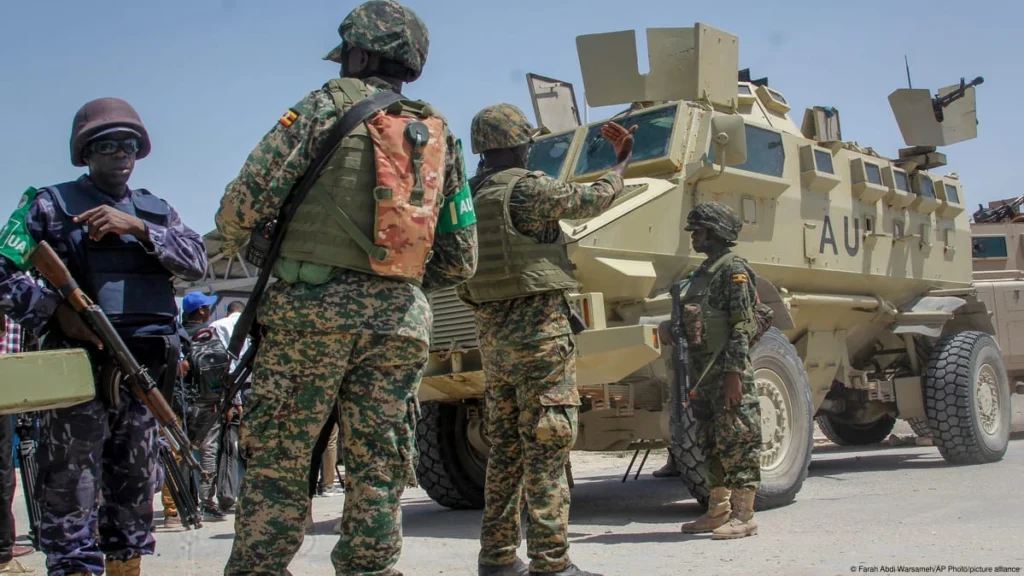
MOGADISHU, Somalia — Uganda’s decision to pull troops from strategic positions in southern Somalia is fueling concern over the security of Mogadishu, where African Union forces have helped contain attacks by Al-Shabaab militants.
The four positions affected — Sabid and Caanoole, Bariire, Awdheegle and Buulo-Gaduud — are viewed as vital links between southern Somalia and Mogadishu, as well as key points along routes into the capital.
They are located in Lower Shabelle, a region that has endured years of clashes between Somali government forces and Al-Shabaab, which has fought an insurgency against the internationally backed administration for more than a decade.
Regional security analyst Samira Gaid said Lower Shabelle, the areas around Mogadishu and several important bridges form a crucial defensive belt protecting the capital.
Ugandan soldiers have held positions across the area for years, helping safeguard major routes and block militant advances toward Mogadishu.
Uganda has so far repatriated 109 soldiers, who left Mogadishu last week as part of a wider plan to scale back the country’s military presence in Somalia.
On November 2, the Ugandan military announced that it would begin a gradual withdrawal of all its forces from Somalia, including personnel deployed under the African Union Support and Stabilization Mission in Somalia (AUSSOM).
The process is scheduled to conclude by the end of 2027.
Somalia’s federal government has said its national army will assume control of the positions abandoned by Ugandan troops.
Army chief General Mohamed Ali Barise said preparations for the transfer were already under way, signaling that Somali forces were set to take responsibility for security at the sites.
Still, uncertainty persists over whether the Somali military has enough personnel, equipment and logistical resources to hold the strategically important positions.
The handover comes as AUSSOM faces serious financial pressure, limiting its ability to provide troops with sufficient supplies, transport and other operational support.
The African Union mission remains central to assisting Somali forces in the fight against Al-Shabaab. The group continues to control parts of the countryside and launch attacks on military bases, government officials and civilians.
Security analysts have cautioned that any vulnerabilities resulting from the withdrawal could allow the militants to recover lost territory or intensify pressure on communities near the capital.
If Somali forces fail to establish firm control over the vacated positions, key supply routes could come under threat and security gains achieved through years of joint operations with African Union troops could be weakened.
The pullout represents another important step in Somalia’s protracted effort to take full responsibility for national security following decades of dependence on international military assistance.
It also creates a critical test for the federal government, which must show that its forces can defend strategic territory independently, secure major transport routes and prevent Al-Shabaab from exploiting the changing security landscape.
The transition’s outcome will depend not only on the formal transfer of the military positions, but also on whether Somali forces receive the personnel, equipment, funding and logistical backing required to retain them.
AXADLETM