Saudi Arabia’s Red Sea Strategy Challenges Its Claim to Neutral Mediation
Saudi Arabia presents itself as an impartial broker in the region’s conflicts. Yet from Sudan and Yemen to Eritrea and Somalia, its actions point to a more assertive project: constructing a security network designed to protect Riyadh’s maritime routes and geopolitical interests.
- Advertisement -
Riyadh regularly casts itself as the power capable of bringing rival parties to the negotiating table and helping end regional wars. Its conduct away from the cameras tells a more complicated story. In crisis after crisis, Saudi Arabia has supported particular factions—a role difficult to reconcile with genuine neutrality.
From Port Sudan to Mogadishu, via Yemen and Eritrea, the central question is no longer simply whether Saudi Arabia can mediate between opposing sides. It is where the kingdom stands within those conflicts, and how much influence it exercises over the balance of power around the Red Sea, including the ports and trade corridors it considers strategically important. Viewed through that lens, the image of a neutral mediator gives way to that of a state building an influence axis along both shores.
Sudan was the first arena where Riyadh’s two roles came into direct conflict. Saudi Arabia sponsored the Jeddah talks between Sudan’s army and the Rapid Support Forces in 2023, presenting itself as a force seeking to halt the war and protect civilians. Since then, however, its position has increasingly tilted toward the army commanded by Abdel Fattah al-Burhan.
That alignment carried a significant cost in January 2026, when Reuters reported negotiations over a $1.5 billion Pakistani arms package for the Sudanese army, including aircraft, drones and air-defence systems, with Saudi Arabia acting as an intermediary. The arrangement had stalled by April, once again because of Riyadh’s involvement. Reuters said Pakistan suspended the sale after Saudi Arabia objected and withdrew its funding. On the same day, Crown Prince Mohammed bin Salman hosted al-Burhan in Jeddah. A mediator involved in arming one side of a war cannot credibly present itself as neutral.
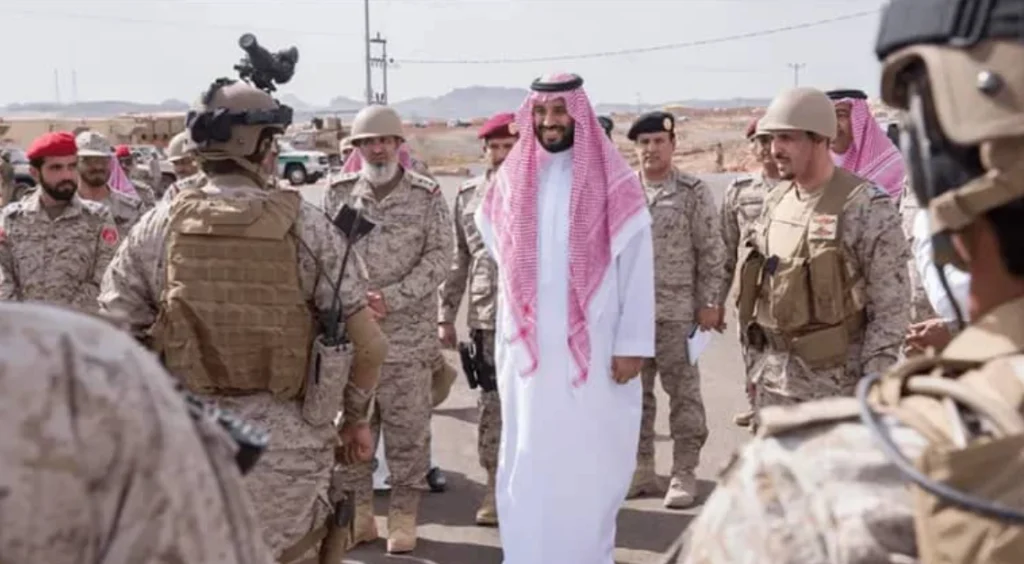
In Sudan, mediation and partisanship have converged. In Yemen, Saudi Arabia’s role is more direct. Since March 2015, Riyadh has led a military coalition, conducted air operations, supported government forces and local armed groups, and provided economic assistance to Yemen’s internationally recognised government.
Saudi involvement has extended beyond its campaign against the Houthis. The kingdom has become a major force within the anti-Houthi camp, particularly as its confrontation with the Southern Transitional Council has intensified. In early January 2026, Saudi aircraft struck Transitional Council positions in Hadramawt as Riyadh-backed forces moved to retake southern territory—at the same time Saudi Arabia was urging Yemeni factions to enter dialogue. Military action changes the distribution of control; political negotiations can then formalise the result.
Riyadh’s ties to Yemen’s Islah Party deepen that contradiction. The Carnegie Endowment has documented Saudi dependence on forces associated with Islah in the fight against the Houthis, along with the military and financial assistance provided to them. That support sits uneasily beside Riyadh’s stated opposition to the Muslim Brotherhood, the political movement with which Islah is affiliated. Saudi Arabia has therefore helped shape Yemen’s war, select its partners and determine the map of control.
The same approach is visible across the Red Sea. During the Yemen war, Saudi Arabia developed close security ties with Eritrea, whose territory and ports supported the coalition’s military operations. Coordination between Riyadh and Asmara continued through 2025 and 2026 as tensions mounted between Eritrea and Ethiopia over access to the Red Sea. Regional assessments say Saudi Arabia and Egypt have leaned toward Eritrea in its dispute with Ethiopia over maritime ambitions, while Addis Ababa has viewed the growing relationship among Riyadh, Cairo and Asmara with concern. The development is particularly striking because Saudi Arabia sponsored the 2018 peace agreement between Eritrea and Ethiopia, signed in Jeddah, before its own security partnerships pulled it into the strategic contest between them.
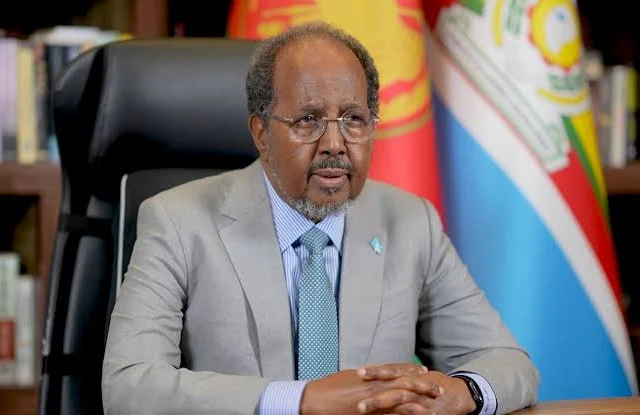
Somalia completes the emerging pattern. After Saudi Arabia declared its support for Somalia’s territorial integrity and rejected Israel’s recognition of North Western State of Somalia, Riyadh and Mogadishu signed a military cooperation memorandum in February 2026. Saudi development and humanitarian assistance have continued as well. The agreement comes as competition over ports and military footholds intensifies around Bab al-Mandab, and regional studies describe the rapprochement as part of Riyadh’s effort to expand its security presence along Africa’s Red Sea coast. The memorandum alone does not make Saudi Arabia a party to Somalia’s internal conflict, but it brings Mogadishu into Riyadh’s growing web of security partnerships and gives the kingdom greater leverage in the Horn of Africa.
Any assessment of Saudi policy must also account for the longer record involving extremist financing by Saudi donors and institutions. US diplomatic cables released by WikiLeaks in 2010 showed Washington’s concern over funds moving from Saudi donors to extremist groups. The UN Security Council also placed branches of the Al-Haramain Foundation on sanctions lists associated with al-Qaeda. Lawsuits filed by families of the September 11 victims form part of the same history. Courts have allowed allegations involving individuals linked to Saudi Arabia to proceed, keeping earlier Saudi policies under scrutiny even as Riyadh portrays itself as a partner in counterterrorism and regional stability.
The methods vary across the region, but the strategic objective is consistent: securing partners capable of protecting Saudi interests in the Red Sea and the Horn of Africa. In Sudan, that means political support for the army and involvement in its weapons procurement; in Yemen, direct military action; in Eritrea, a security partnership and regional alignment; and in Somalia, an expanding framework for military cooperation.
This does not mean Saudi Arabia is waging five wars simultaneously. It does mean the kingdom cannot accurately be described as neutral in any of them. Mediation may coexist with national interests, but its claim to neutrality weakens once the mediator becomes part of the power balance it is attempting to manage. That is the point at which the appearance of impartiality breaks down—not because Riyadh has stopped convening talks, but because, across one arena after another, it is helping determine who negotiates, who retains power and who controls territory. A mediator that helps shape the balance of a war cannot also demand to be treated as a referee standing above the disputants.