‘We Don’t Need Erdogan’: Anger Against Türkiye Spills Onto Somalia’s Streets
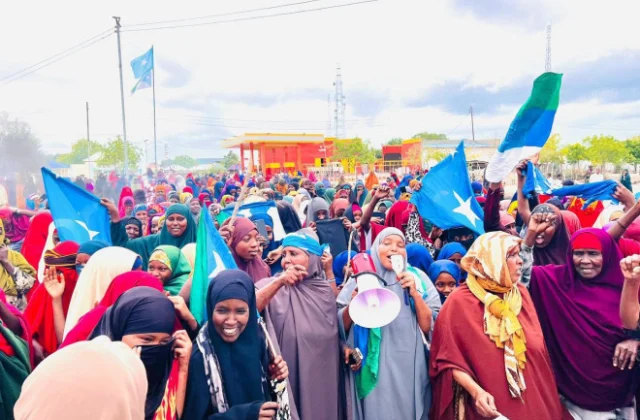
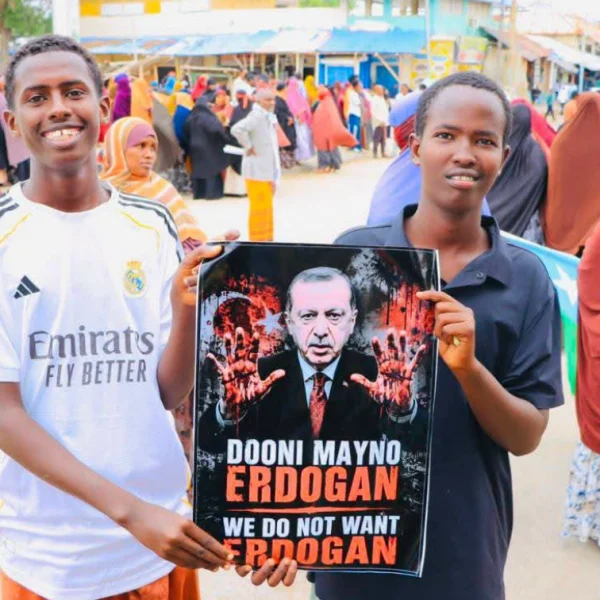
KISMAYO, Somalia — Anti-Türkiye sentiment erupted across parts of southern Somalia as hundreds of protesters marched through Kismayo, the interim capital of Jubaland, after a disputed incident in Doolow district, in the Gedo region.
- Advertisement -
The demonstrators alleged that Türkiye played a role in an airstrike aimed at senior Somali military commander Gen. Mahad Abdirahman Aden, better known as Gen. Shub.
Some protesters set fire to the Turkish flag. Others held images of Turkish President Recep Tayyip Erdogan with blood depicted on his hands, while placards declared: “We do not need Erdogan.”
“We used to love Erdogan and Türkiye, but now we hate them,” protesters chanted.
The rallies came after Jubaland officials and critics of Somalia’s federal government claimed that Turkish military aircraft had taken part in an operation against Gen. Shub in Doolow.
Somalia’s federal government has rejected claims that an airstrike took place at the reported site. Türkiye has not officially acknowledged any involvement in the incident.
Protests were also reported in Afmadow, in Lower Juba, where more than 1,000 people reportedly assembled to condemn what they called foreign interference and Türkiye’s role in Somalia’s internal affairs.
The crowds demanded respect for Somalia’s sovereignty and unity, insisting that the country’s political and security disputes should be settled by Somalis rather than outside powers.
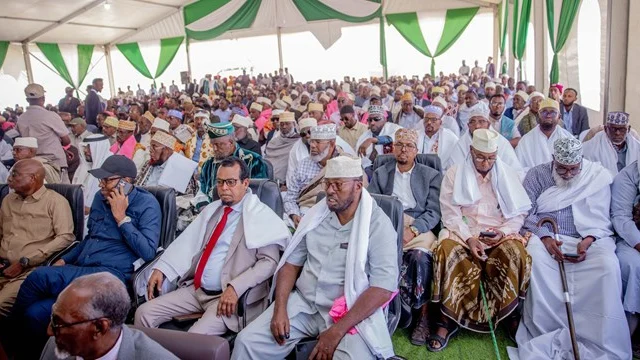
Jubaland officials condemned the alleged operation as well, rejecting the deployment of foreign military aircraft against people and territory under the administration’s control.
“We will not accept our people and our territory being attacked by aircraft belonging to foreign countries,” Jubaland’s minister for women said during the protests.
Jubaland’s information minister accused the federal government of attempting to invade the state and pledged that the administration would resist.
“Any kind of invasion against Jubaland has failed before and has failed again,” he said, vowing that the administration would defeat President Hassan Sheikh Mohamud and his allies.
Kismayo’s mayor said residents and Jubaland authorities were ready to defend the administration’s existence and what he described as the dignity of its people.
Jubaland’s security minister, meanwhile, accused the federal government of weakening Somalia’s state institutions and power-sharing arrangements. He said Jubaland was prepared to defend itself against the central government and what he called a “new coloniser.”
The demonstrations point to mounting anger in parts of Jubaland toward Türkiye, which has traditionally been among Somalia’s closest international partners. They also come as political tensions between Mogadishu and the Jubaland administration continue to deteriorate.
The confrontation has been especially pronounced in Gedo, where the federal government and Jubaland have competed for political and security control for years.
Türkiye has cultivated strong military and economic ties with Somalia, providing military training, defence cooperation and assistance with maritime security and offshore energy operations.
Yet the gatherings in Kismayo and Afmadow show that opposition to Ankara’s perceived involvement in Somalia’s security affairs is growing in parts of Jubaland, particularly after the contested Doolow incident.
AXADLETM