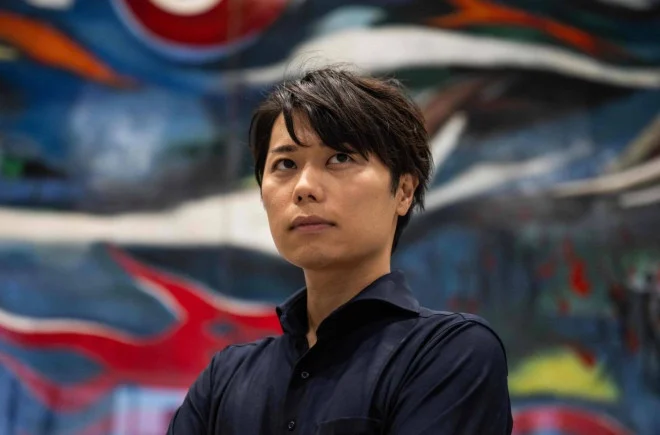
Yosuke Nagai, director of the nongovernmental organization Accept International | AFP-JIJI
At 19, Yosuke Nagai travelled into the orbit of Somalia’s war with a determination to help its young people. Today, he leads the country’s only foreign-funded programme still working to reintegrate Islamist fighters.
- Advertisement -
Nagai launched a programme for Somali students in 2011, seeking to address the conditions fuelling the brutal insurgency waged by Al-Qaeda-linked Al-Shabaab.
By 2013, he had created a rehabilitation initiative for Somali gang members. Three years later, that effort developed into a partnership with the Somali government to reintegrate former Al-Shabaab members.
His teachers urged him to reconsider, warning that the work was, in his words, “freaking super dangerous”.
“I was like, okay, fine. But what are you doing to help?,” he recalled.
Since then, his NGO, Accept International, has worked with 1,700 imprisoned Al-Shabaab fighters and 250 defectors. The organisation has also expanded its operations to Yemen, the Palestinian territories, Indonesia, and elsewhere.
As Washington and other donors scale back much of their assistance to Somalia, Accept International has become effectively the only foreign agency continuing to work on deradicalisation there.
‘Agents of peace’
Supported by donations from Japan, Nagai has 17 staff working in Somali prisons and at a centre for defectors in Mogadishu. Another 15 work at a rehabilitation centre in Dhusamareb, the capital of Galmudug state.
The work can be confrontational.
“We do counselling and Islamic education for defectors and prisoners. Al-Shabaab prisoners are more radicalised. They sometimes say negative things to us like: ‘Hey infidels, I will kill you’,” Nagai said.
Still, he said the results make the risks worthwhile. Among the former fighters are people who have gone on to become tailors, traffic police officers, and soldiers in Somalia’s national army.
Nagai does not use the word “deradicalisation”, instead describing the process as “empowerment”. He believes the programme can transform former fighters into “agents of peace”.
The programme runs for about a year, combining basic education with vocational training, including carpentry. About one-third of participants are illiterate, Nagai said, leaving them “vulnerable to brainwashing”.
Nur Ali, 32, is one of the programme’s success stories. The former insurgent now runs Accept International’s prison programmes. He joined Al-Shabaab at 17 after government forces killed his brother. After spending several months with the group, he was captured and sentenced to 15 years in prison.
He met Nagai in prison, where the Japanese activist was accompanied by a religious leader who told him that “things are better and more positive when you forgive”, Ali told AFP by phone from Mogadishu.
“Young people need education. They need to be guided,” he said, adding that many former combatants now “take me as an example to change their lives”.
Al-Shabaab retains control over large parts of central Somalia and is deeply woven into local society, circumstances that can make it difficult for members to break away.
Nagai remembers a 21-year-old who escaped the group shortly before he was due to become a suicide bomber. At first, the programme appeared to be succeeding: he was “very social, he loved talking to me”. But Nagai later learned that the young man had returned to Al-Shabaab after pressure from his father, who supported the insurgency.
“That is one of the realities,” Nagai said.
‘Loss of confidence’
Deradicalisation was once a central priority during the height of the West’s so-called “War on Terror”. But donors have largely turned away from the effort as confidence in the Somali government’s programmes has declined.
The United Nations supported Somalia’s reintegration programmes from 2013 to 2024, but ended its funding in 2025. Its final report said “the limited information the UN and international actors had regarding key aspects of the process contributed to a loss of donor confidence”.
The United States, Somalia’s largest donor, did not respond to questions about whether it had provided funding for such programmes.
When Somali government forces recapture territory from Al-Shabaab, authorities often send religious scholars to counter the group’s extremist messaging.
However, the government’s reintegration programmes are severely underfunded, said Martine Zeuthen, author of a report on the issue for the Royal United Services Institute, a British think-tank.
Facilities for former fighters have inadequate food supplies and widespread disease, she said. Corruption and infighting within the government have compounded the problems.
The government did not respond to AFP’s requests for comment.
“When the government is fighting a war like this, these people are rarely the priority,” Zeuthen told AFP. “When there’s no international focus on these people, it has a negative impact on trying to encourage more people to leave.”
‘Filling the gap’
As international backing has faded, Nagai and Accept International are effectively left as the only agency still working to assist former insurgents.
“There have been some international organisations or UN agencies supporting them, but now it’s over. Now we are filling the gap,” Nagai said.
For some former fighters, the support has been life-changing. Abdullahi, 29, said he joined Al-Shabaab out of desperation after being promised $5,000. The money never arrived, and he described life with the insurgents as “horrible”.
He believes more fighters would leave if centres like the one in Dhusamareb were available. Since fleeing Al-Shabaab in January, he has been studying English and learning tailoring skills there.
“There are a lot of people who want to defect but they don’t know where to go,” Abdullahi said.