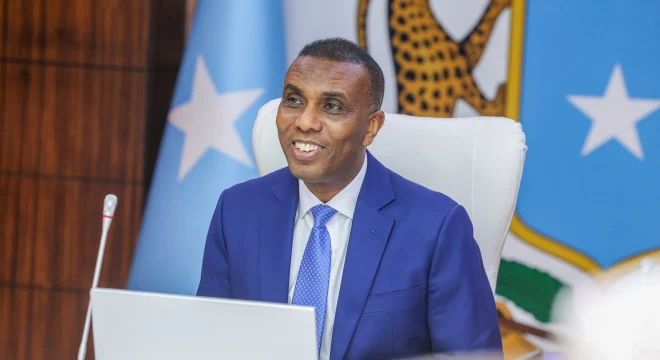
Mogadishu (AX) — Somalia and Qatar are deepening their security and defense partnership, Somali Prime Minister Hamza Abdi Barre said, calling a bilateral defense agreement an important step toward developing stronger, more professional Somali security institutions.
In an exclusive interview with Qatar’s Al Sharq newspaper, Hamza said ties between the two countries had entered a new phase, marked by strategic cooperation in politics, the economy, investment, security and defense.
- Advertisement -
“Somalia seeks long-term cooperation with Qatar and the Gulf countries, which is not limited to crisis management, but also focuses on investment in infrastructure, energy, ports, food security and economic development,” he said.
Hamza said Somalia’s independence, unity and territorial integrity could not be negotiated, adding that the federal government opposed any action that challenged the country’s sovereignty.
On North Western State of Somalia, the prime minister said Mogadishu continued to believe that internal disagreements could be settled through dialogue between Somali parties.
He cautioned against foreign interference and efforts to impose what he described as a new political reality within Somalia.
Hamza also restated Somalia’s opposition to any proposal to relocate Palestinians to the country.
He said Somalia would not serve as a destination for Palestinian settlement or participate in any arrangement aimed at displacing Palestinians or weakening their national cause.
Palestinians, he added, have the right to live freely and with dignity in their own country.
The prime minister also discussed security in the Red Sea and Gulf of Aden, voicing concern over regional tensions and the possible consequences for shipping and global trade.
Somalia supports de-escalation, dialogue and diplomatic engagement, he said, emphasizing that maritime security is especially important to a country whose strategic coastline borders one of the world’s key waterways.
Hamza further commended Qatar’s efforts to ease tensions and advance diplomatic solutions.
Addressing the campaign against al-Shabab, Hamza said Somali forces had retaken extensive territory from the militant group during the past four years, destroying bases and strongholds in areas where it had maintained a presence.
“The fight is not limited to military operations, and that the government is also working to cut off al-Shabab’s financial resources, counter extremist ideology and rebuild administration and public services in areas recovered from the group,” he added.
The government, he said, would grant amnesty to al-Shabab members who surrender their weapons, reject extremist ideology and rejoin society.
Hamza said Somalia’s broader objective was to build the capacity needed to defend the country, safeguard its independence and help promote security and stability across the Horn of Africa and the Red Sea.