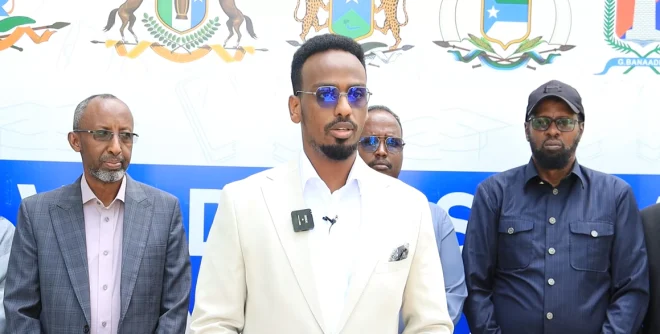
Mogadishu (AX) — Somalia’s education authorities have agreed to recruit 4,000 teachers, introduce national assessments for third- and sixth-grade pupils, and expand support for schools as part of a broad plan to improve education nationwide.
The Federal Ministry of Education, state education ministries and the Banadir Regional Administration reached the agreements Sunday at the end of a three-day consultation in Mogadishu. Participants reviewed the performance of education institutions at the federal, state and regional levels and examined progress on recommendations adopted at a previous consultation in August 2025.
- Advertisement -
Abdirahman Ali Mohamed, director general of the Banadir Regional Directorate of Education, said the talks centered on three main areas: education delivery, quality and management.
In the area of education delivery, officials agreed to strengthen school safety, sanitation and the overall learning environment. Schools will also be encouraged to display national symbols, including the flag of the Federal Republic of Somalia.
Participants welcomed federal funding for the school feeding program and urged authorities to expand it while ensuring its long-term sustainability. They also praised the Banadir administration for supporting public schools and called on other regional and district administrations to offer comparable assistance.
The authorities agreed to launch the recruitment of 4,000 teachers for the 2026-27 academic year. They also called for broader adult education programs and improvements in both the number and quality of facilities offering those services.
The meeting further agreed to finalize the registration and census of Quranic schools and other legally recognized religious education institutions throughout Somalia.
To improve education quality, participants stressed the need to enforce a policy prohibiting smartphones and similar devices during lessons. They said the restriction would reduce classroom distractions and support more effective teaching and learning.
Officials also agreed to introduce national assessments for third- and sixth-grade students in the 2026-27 school year and welcomed continued work to revise the national curriculum.
They called for the completion of reviews of the national examination system and the teacher competency framework. Participants also backed the creation of a national guide to assist schools in carrying out self-assessments.
The authorities designated 2027 as a year dedicated to training teachers serving in schools across the country, with the goal of expanding their knowledge and strengthening their professional skills.
The meeting urged closer cooperation between parents and school administrations to improve student discipline and behavior. It also called for updated educational materials and greater access to vocational and practical skills training, including distance learning.
On education management, participants underscored the role of strong leadership and effective administration in advancing Somalia’s education system.
They called for more advocacy and increased investment in education, with parents, district administrations, state governments and the Banadir administration all expected to contribute.
The authorities also agreed to conduct a comprehensive assessment of Somalia’s education sector and prepare the next national education development plan in line with the National Transformation Plan.
They further agreed to verify information on students, teachers and education facilities contained in the Education Management Information System, or EMIS, while speeding up implementation of the Education Development Fund.
The next national education consultation will take place in Las Anod, the capital of Somalia’s North Eastern State.