
Under Siege: Survival and Resilience in Xarardheere
In the arid heart of Somalia’s Mudug region, a dramatic struggle for survival is unfolding in Xarardheere. The strategic coastal town has become a flashpoint of conflict, caught in the crosshairs of Al-Shabaab militants and local clan militias. As the standard-bearers of tradition and resilience, the elders of Xarardheere now find themselves facing an increasingly dire predicament.
An Encircled Town
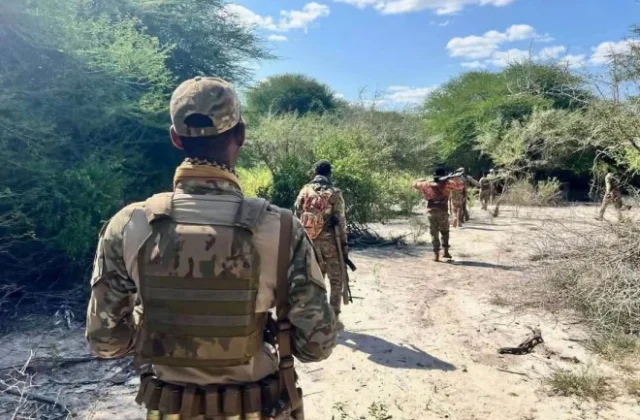
Xarardheere, a town once pulsating with trade and agriculture, is now ensnared in a siege that has thrown daily life into disarray. Al-Shabaab militants have surrounded the town from three directions, tightening a noose that has cut off vital supply routes. A besieged resident, Mohamed Aamin, shared somber reflections: “Yesterday, the Shabaab launched a heavy attack; many lives were lost. It is only our clan militia standing between them and the town.”
The local resistance, primarily made up of clan-based Ma’awiisley fighters, mirrors a broader pattern of decentralized defense forces battling extremism across Somalia. Despite their courage, support from the Galmudug administration and the federal government remains conspicuously absent, leaving these defenders isolated.
Strategic and Historical Significance
Security analyst Mohamed Sahal emphasized the town’s historical importance: “Xarardheere was not just a coastal bulwark but a critical node for smuggling and piracy, activities that funneled resources to Al-Shabaab.” Capturing Xarardheere in early 2023 was a significant triumph for the defenders, spearheaded by Galmudug-aligned forces. However, that victory is now fragile, a fleeting moment of reprieve amid continued assaults and bombings.
As prices soar and essentials become scarce, the question emerges: Can Xarardheere withstand this siege? And more broadly, how can Somalia’s central authority reinforce local militias effectively against insurgent aggression?
Fear and Negotiation Near Mogadishu
Meanwhile, south of Xarardheere in the Middle Shabelle region, a delicate dance unfolds in the district of Warsheikh. Al-Shabaab, having entered the Maxaa Saciid area for discussions with local elders, has shifted from overt aggression to negotiations with community leaders. Residents watch with wary eyes, cognizant of the potential for retaliatory airstrikes by Somalia’s international partners.
This dialogue between militants and locals reflects a complex tapestry of clan politics, where allegiances and enmities can pivot in the blink of an eye. The fear that permeates Warsheikh—some 61 kilometers from the capital’s relative stability—serves as a stark reminder of the tenuous security faced by rural areas.
The Global Context
The situation in Xarardheere is not an isolated phenomenon but part of an intricate web of conflicts exacerbated by global terrorism and regional instability. From the caves of Afghanistan to the jungles of the Sahel, insurgent groups exploit local grievances, often taking root in regions that the state overlooks. These groups masterfully navigate local politics, financial networks, and global communications, making them elusive yet profoundly impactful adversaries.
For Somalia, the challenge lies not just in military victories but in fostering systems of governance and community resilience that can resist and repel extremist ideologies. This requires international solidarity, understanding the cultural tapestry, and investing in the nation’s human capital and infrastructural backbone.
Resilience in the Face of Adversity
Despite the dire circumstances, there is an indomitable spirit among the people of Xarardheere. Memories of bustling markets and community gatherings linger, serving as a beacon of hope and a reminder of what is at stake. For those engaged in this battle of attrition, the fight is as much about preserving their way of life as it is about geopolitical strategy.
The courage of the Ma’awiisley fighters stands as a testament to the enduring human will to resist darkness and reclaim peace. Their struggle is echoed across regions where marginalized groups strive for autonomy and safety amidst chaos.
As global citizens, what can we learn from Xarardheere? How can we contribute to dialogues that foster peace, understanding, and ultimately, lasting resolutions? In a world more interconnected than ever, the resilience of a small Somali town speaks volumes about the universal quest for peace and stability.
In the end, Xarardheere’s story is one of ordinary people caught in extraordinary circumstances, their collective action a powerful narrative in the human saga of resistance and survival.
By Ali Musa
Axadle Times international–Monitoring.