
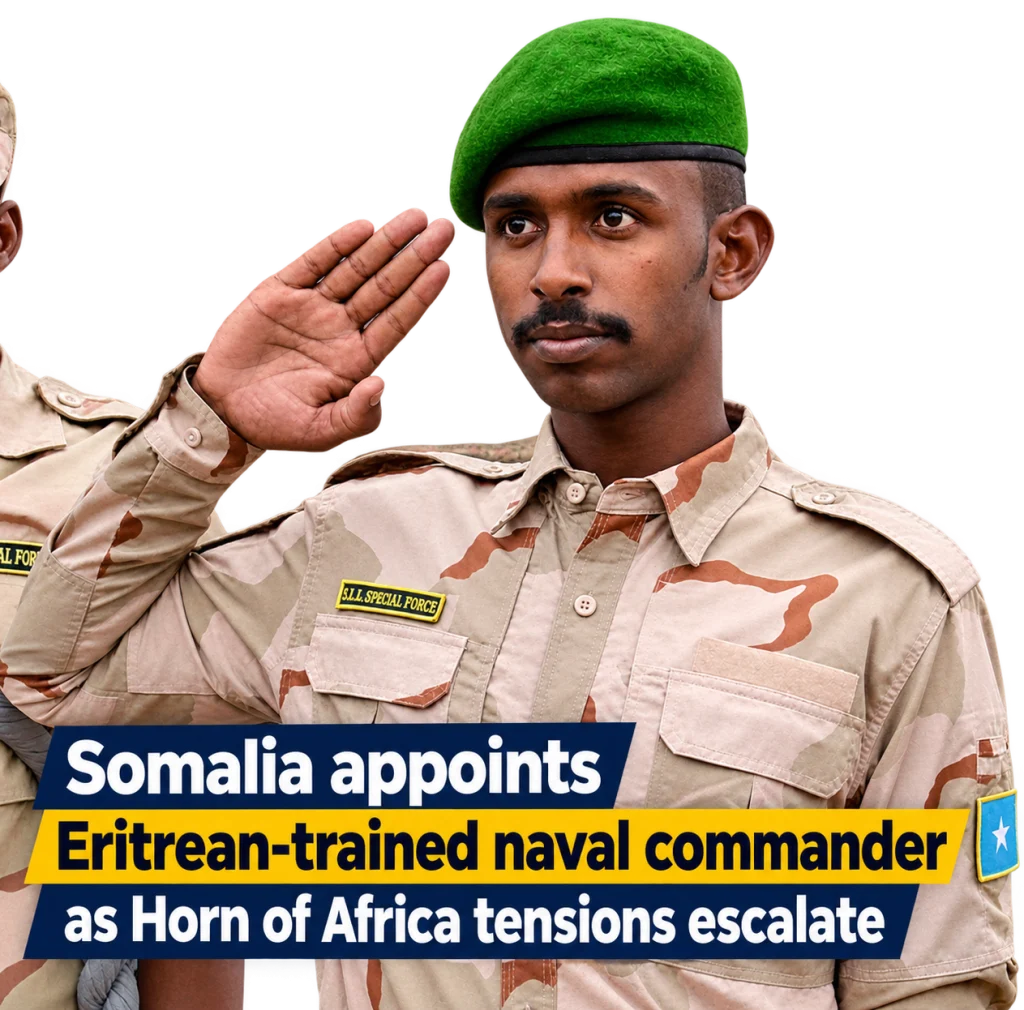
MOGADISHU, Somalia (Axadle) – A new navy chief with training from Eritrea has placed Somalia’s security choices under a sharper regional spotlight, with President Hassan Sheikh Mohamud’s decision coming as Mogadishu’s ties with Ethiopia face fresh strain and fighting in Southwest State adds another layer to the country’s political and military pressures.
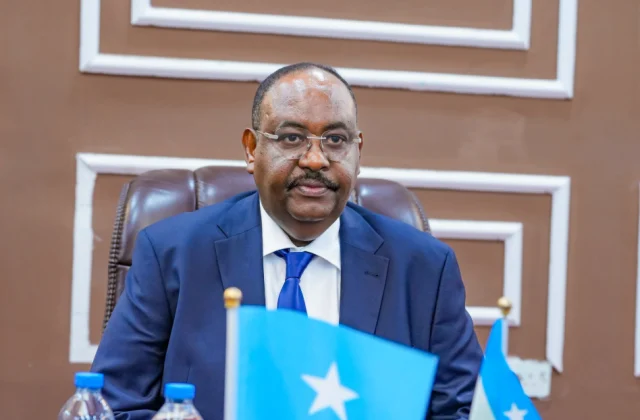
Mohamed Abdulqadir “Shariif” has been named commander of the Somali Navy and Coastal Defence Forces, taking over from Brig. Gen. Abdiwahab Omar. His background includes military training in Eritrea, a detail that carries added weight at a delicate moment in the Horn of Africa, where relations between Ethiopia and Eritrea have worsened and renewed conflict in northern Ethiopia has stirred concern about a broader escalation.
- Advertisement -
The move may be closely watched in Addis Ababa, especially as Somalia has deepened contacts with Eritrea and Egypt while remaining at odds with Ethiopia over sovereignty, regional security and access to the Red Sea. Ethiopian officials have not publicly signalled any objection to Shariif’s appointment.
Ethiopia maintains troops in southern Somalia through its long-running role in Somali security operations, including the campaign against al-Shabab. That deployment has become increasingly politically sensitive as the federal government in Mogadishu looks for backing against forces aligned with former Southwest State President Abdiaziz Hassan Mohamed Laftagareen.
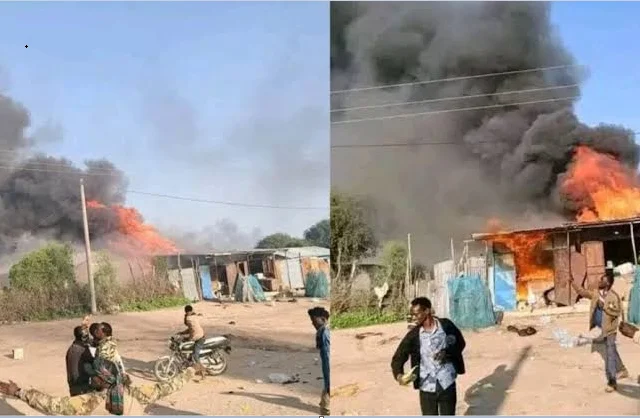
Media reports say Somali federal authorities requested Ethiopian military support against Laftagareen-aligned forces, but Ethiopian commanders reportedly refused to become involved in what they viewed as an internal Somali political dispute. Forces loyal to Laftagareen later retook several towns in the Bay region, according to media reports.
The developments drew pointed criticism from Abdulkadir Mohamed Nur Jama, Speaker of Somalia’s House of the People of the Federal Parliament, who challenged the role of Ethiopian troops after Laftagareen-aligned forces moved into areas where Ethiopian forces had been operating. He also accused Kenya of giving shelter and security protection to individuals associated with Laftagareen.
Shariif was born in Mogadishu and finished his secondary education in Aden, Yemen, before graduating with a bachelor’s degree in languages and literature from the University of Aden in 2017–2018. He later underwent specialised military training at Eritrea’s Ras Hamas Naval Academy, where his instruction covered naval operations, navigation, seamanship, military communications, leadership, force management, GPS systems and weapons training. He speaks Somali, Arabic, English and Tigrinya.
His elevation does not by itself prove a change in Somalia’s military alignment, but it does put an Eritrean-trained officer in charge of a strategic force while the region’s security partnerships are being closely examined. Ethiopia and Eritrea have traded accusations as tensions rise over Ethiopia’s drive for Red Sea access and renewed instability in northern Ethiopia. Shariif’s Eritrean military background is likely to draw regional attention, though any direct effect on Somalia’s relations with Ethiopia remains unclear.