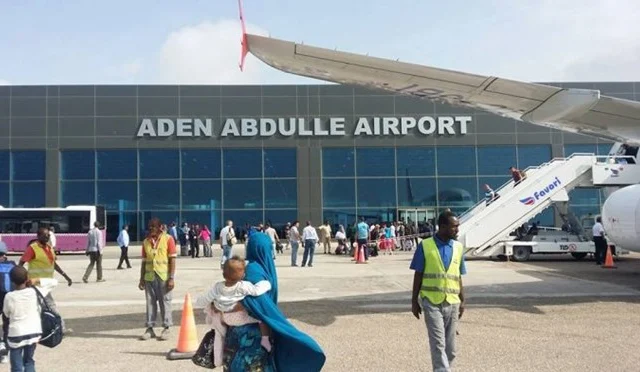

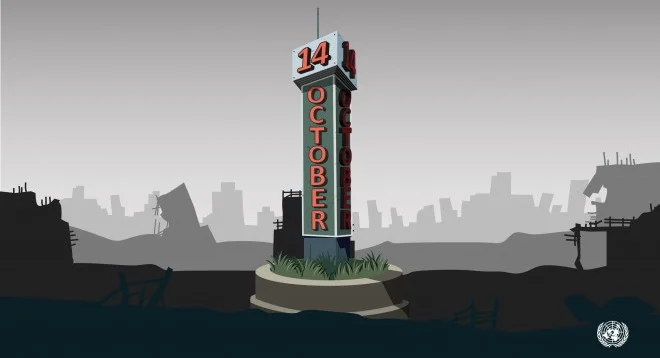
On 14 October 2017, a bomb tore through Zoobe junction in Mogadishu, killing hundreds of Somalis. Nine years later, we met inside a hangar at Aden Adde International Airport not simply to grieve, but to confront a harder question: how can remembrance help shape the country’s response to violent extremism?
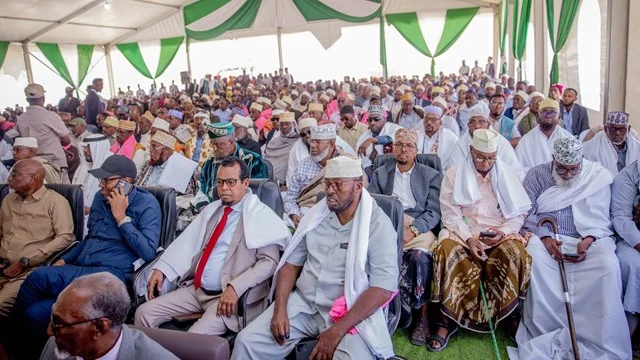
The First National Conference on Preventing and Countering Violent Extremism was held on 14 and 15 October under the theme “From Remembrance to National Resolve.” Federal and state officials joined religious and traditional leaders, women’s and youth organisations, civil society, the private sector, the media and international partners. Survivors and bereaved families were also present, and their experiences anchored the gathering. No propaganda can withstand the direct testimony of people who lost children, parents, homes and livelihoods to extremist violence.
- Advertisement -
None of this gathering could have taken place without the security provided by the Federal Government. I thank the President, the Prime Minister and Cabinet members for their leadership and for treating the conference as a national priority. I also thank the head of the National Intelligence and Security Agency and NISA officers, whose efforts secured Mogadishu and its surroundings, allowing delegates, survivors and bereaved families to meet safely. Much of that work goes unseen, but it made this conference possible.
The conference produced a clear outcome. Participants issued a joint communiqué rejecting terrorism and violent extremism in every form. They called for a unified national message to be carried by public institutions, religious scholars, elders, civil society and the media. They also pledged to support the formal consideration of 14 October as a National Day of Remembrance and National Resolve. That decision remains with the relevant institutions, and we will respect the procedures required.
The logic is straightforward. Al-Shabaab presents itself as an authority on religion and society. A government declaration by itself cannot effectively challenge that claim, and Somalis understand why. The Somali Ulema have firmly rejected Al-Shabaab as a religious group, and I thank them for taking that clear and courageous stand. When the message is delivered by Ulema, elders, survivors and mothers, it carries a different weight. It becomes a national position that armed groups cannot defeat through force. This is a non-military response, and we believe it is one of the most lasting tools available to us.
To the survivors and bereaved families: you brought your pain into a public forum and spoke in the hope that others would be spared the same suffering. We heard you. Your testimony will influence both the way this country remembers and the way it prevents future violence. TUBSAN is committed to treating you with dignity, involving you in the conference follow-up and advocating for psychosocial support within the assistance provided by our partners.
To the Federal Member States: an attack on one Somali community harms the entire nation. I thank the state delegations that travelled to Mogadishu and stood with the Federal Government on this issue. Prevention cannot succeed without cooperation among federal, state and local institutions. We will develop the follow-up framework in consultation with you and coordinate through your institutions, not bypass them.
To our elders: traditional leaders possess a form of authority that no ministry can confer. For generations, they have resolved disputes and helped communities remain together. I ask you to carry this national message into every clan and community, especially to the young men targeted by recruiters. A young person is far less likely to be drawn into extremism when the warning comes from an elder he knows and respects.
To the survivors and bereaved families: you were at the centre of this conference. You described what the violence took from you with dignity and courage. Your testimony is our most powerful case against extremism, and it will not be treated as ceremony or decoration. Your views will guide how we remember, prevent and report. The follow-up framework will include space for your voices, and you will have the right to hold us accountable.
To the Federal Member States: your delegations came to Mogadishu to stand with the Federal Government on an issue no region can resolve alone. Violence against any Somali community is violence against the nation. I thank you for acting on that principle. Effective prevention requires routine cooperation between federal, state and local institutions, and TUBSAN will work with your administrations to make that cooperation practical and consistent.
To our elders: clan and community leaders command a trust no ministry can manufacture. When an elder tells young men that violence committed in the name of religion or clan benefits no one, the message can travel further than a broadcast. We ask you to continue speaking, and we will support that work.
I also thank the women’s and youth organisations, civil society, persons with disabilities, minority communities, the private sector and the media for participating. I ask all of them to remain involved, because prevention will be built inside communities, not solely in government offices.
To Somalis abroad: through remittances, advocacy and the daily work of supporting families, you have helped sustain this country. Many of you lost relatives in the Zoobe attack or in other acts of violence. I ask you to regard 14 October as your day as well. Mark it wherever you live. Share survivors’ accounts. Challenge the recruiters and propagandists who reach young Somalis online in Nairobi, Minneapolis and London just as easily as they reach them in Mogadishu. The conference called for responsible digital engagement that protects victims and avoids amplifying extremist messages. The diaspora has a central role in that effort.
To our international partners: your support contributed to this gathering, and we are grateful. The conference was grounded first in Somali leadership and Somali security; your assistance strengthened that foundation. The communiqué calls on partners to align financial and technical support with nationally identified priorities and to coordinate through government-led mechanisms. This is a call for discipline, not a criticism of generosity. When scarce resources are duplicated, they are wasted and the communities we serve receive mixed signals. TUBSAN, in turn, commits to transparency. We will consolidate the conference outcomes, help establish a time-bound follow-up framework with clear responsibilities, milestones and reporting arrangements, and issue a concise public update before each 14 October. Partners will be able to see what was promised and what was delivered. Those investing in prevention, early warning, education, psychosocial support and routes to economic participation will find willing partners at community level.
To our neighbours: violent extremism does not stop at national borders. Recruitment networks in Somalia draw on grievances and propaganda that move across the Horn and East Africa. Somalia’s stability is therefore a regional concern, as is the credibility of the counter-narrative we advance. I invite governments, religious institutions and civil society organisations in neighbouring countries to exchange lessons with us and to learn from our experience. A shared language against extremist violence, spoken on both sides of every border, leaves these groups with less room to operate.
I also extend my thanks to the women’s and youth organisations, civil society, persons with disabilities, the private sector and the media that took part. Editors and broadcasters have a particular duty to cover victims with dignity and avoid giving extremists the publicity they seek. Business owners, meanwhile, can contribute by creating genuine opportunities for young people.
We should not exaggerate what a two-day conference can achieve. A communiqué is only a promise until it is put to the test. The real work begins now. Commitments must become measurable indicators, and those indicators must lead to annual reporting. Survivors, women, youth, minority communities and persons with disabilities must have meaningful roles in designing prevention policies, rather than being given ceremonial seats. We must also confront the conditions extremists exploit, including exclusion, injustice, misinformation, weak public trust and the limited opportunities available to young people.
The annual cycle will be especially important. Every 14 October, TUBSAN will report on progress, giving Somalis the opportunity to judge our performance. If the day becomes merely another ceremony, we will have failed those we came together to honour. If it becomes an annual measure of national resolve, it can transform the way Somalia responds to terrorism.
The dead cannot be brought back to their families. But their deaths can be answered with unity, honesty and sustained action. That is the pledge made in Mogadishu, and it is one we intend to honour.