
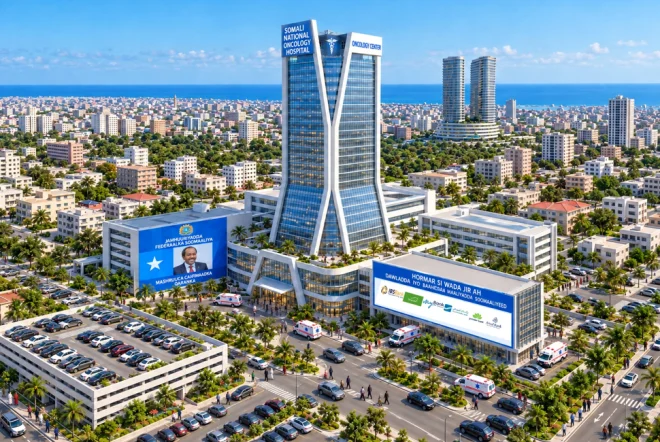
Figure 1: (Architectural Concept): A proposal showing how domestic private capital and sovereign support could create Somalia’s first national network for cancer diagnosis and treatment.
Somalia is confronting a deepening health emergency, with cancer increasingly reported across families and communities nationwide. As the country continues to reckon with the legacy of armed conflict, another danger has emerged: the apparent spread of cancer-related illness and deaths. Understanding the crisis requires attention to Somalia’s environmental vulnerabilities after the collapse of central government in 1991. International bodies and reporting organisations—including ReliefWeb, The Ecologist, WWF for Nature, VOA, Keydmedia and Al Jazeera—along with Dr Hussein’s detailed report and photographic evidence presented to the UN Human Rights Council, have reported allegations that foreign entities dumped toxic waste along Somalia’s largely unprotected borders.
- Advertisement -
Somalia’s coastline stretches for more than 3,000 kilometres, from Kamboni to Zeylac, and includes numerous populated urban centres whose residents may face direct exposure. Communities far inland are not necessarily beyond the danger: contaminants can spread through water seepage, livestock grazing, dairy supply chains and polluted groundwater.
The risk associated with chemical waste is intensified by weak regulation and an uncontrolled marketplace. Potentially carcinogenic cosmetics, counterfeit medicines and substandard food imports are openly promoted and sold. Regulatory authorities lack the resources and experience needed to establish and enforce even basic quality-control standards, while inferior medicines and food products remain available in plain sight and with little apparent accountability. Diesel-powered stations operating inside urban neighbourhoods add another burden. Combined with alleged toxic dumping and an almost entirely unregulated commercial environment, these conditions create a setting in which a rising cancer burden is hardly surprising.
In many countries, cancer is more commonly associated with older people, and patients can draw on established systems for screening, early detection and comprehensive treatment. Somalia faces a far different reality. The disease affects both young and old, while the country has little basic diagnostic capacity and even fewer treatment options. When patients reach hospitals abroad, their cancer is often already at an advanced stage, followed by rapid deterioration and death. In many communities, such cases are described as a “mysterious illness or death,” with some attributing them to chemical pollutants and environmental radiation.
The following tragic case, while anecdotal, illustrates the broader failure of the healthcare system:
The patient was a close partner and far more than a friend: a husband, father, respected community and business leader, and a man of extraordinary intelligence and resourcefulness. He routinely helped strangers without seeking credit or recognition. The day I first met him was also the day he secured the facility that later became the first campus of ILAYS ACADEMY. He took particular pleasure in seeing other people succeed.
His generosity extended well beyond personal relationships. A charitable water project he established more than 20 years ago—known only to a small number of people—still serves nearly half a million people every day. In early 2024, he invited me to visit Guri’el and then offered, without charge, his hotel building for the opening of a new ILAYS ACADEMY branch. I proposed an alternative, but his selflessness left me overwhelmed.
Abdulkadir Abdi Dini was a deeply humble, honest and courageous man who championed education, justice and reason. His support for ILAYS ACADEMY was so complete that many people assumed he owned the institution. A telecommunications engineer by profession, he was above all a person of rare distinction—truly one of a kind.
By early 2024, Dini had persistent pain in his hip and thigh. Doctors initially attributed it to nerve damage. After he sought care at a major regional hospital in East Africa, he received the same diagnosis—specifically sciatica—and was prescribed physiotherapy. Reassured by the agreement between the two local and regional doctors, he spent the next six months undergoing therapy and swimming, without improvement. Later, during Umrah in Mecca, Saudi Arabia, he learned that the condition was cancer, not sciatica. Two years later, he died from the disease. His loss is irreplaceable; he embodied the very best of Somali society.
The absence of specialised oncology expertise and the wider neglect of healthcare have compounded the emergency, allowing some of the country’s finest people to die without timely care. Even patients with the means to travel abroad, as Dini did, can receive incorrect medical advice. By the time cancer is identified, the disease may already have advanced beyond effective intervention.
Somalia cannot afford to lose its brightest people while depending on underfunded start-ups, nor can it simply wait for foreign aid. Of roughly 100 hospitals in the capital, only one—Oasis—is dedicated to cancer care. Its work is commendable, but it remains far too limited for a country facing a potentially widespread environmental and public-health threat. Somalia needs national diagnostic capacity as well as treatment facilities.
Addressing the crisis requires two coordinated efforts: mobilising private capital and professional expertise, while undertaking environmental remediation and imposing effective regulation.
The first should be an ambitious public-private partnership. With public revenues constrained and private investors often reluctant to enter high-risk ventures, the process could begin with a presidential decree backed by Somalia’s corporate sector. The president would convene a high-level national conference on cancer, bringing together leading banks—including IBS, Dahabshiil, SSB, MyBank, Premier and Amal—and Somali medical professionals.
The president’s challenge to the financial sector would be direct: banks are building private wealth, but have invested too little in the healthcare infrastructure that underpins social trust and human stability. To make complex, high-risk public-interest projects more attractive, the state could offer sovereign backing, tax incentives, land grants and political recognition. Health Minister Dr Ali Haji has said Somali patients spend more than $100 million on medical tourism in India alone. Once destinations such as Türkiye, Egypt and Kenya are included, the total rises to hundreds of millions of dollars—money that, if partly retained within the country, could strengthen national healthcare infrastructure for the long term.
Somali medical professionals—our skill-investors—should require little persuasion. The same sense of duty that brings them to their clinics each day can motivate them to answer a national call to protect fellow citizens at their most vulnerable. They carry financial responsibilities of their own, but wealth has never been the central reason many entered medicine; their work reflects a deep commitment to service.
The interests of both groups could be aligned through a 30-year Build-Operate-Transfer (BOT) arrangement, giving medical experts full operational independence. Such a model would provide a reasonable return to financial and professional investors while making advanced screening, early detection and treatment accessible to the public at affordable prices.
If the civil war has demonstrated anything, it is Somalia’s resilience. With a presidential decree, sovereign guarantees and appropriate regulatory incentives, financial institutions and medical professionals could assemble the capital and expertise needed to establish world-class diagnostic and specialised oncology centres nationwide. The challenge is ultimately one of leadership: bringing together expertise and investment to confront cancer as a national threat.
The second priority is environmental cleanup combined with the creation of a strong regulatory body. Treating patients without addressing possible environmental sources would leave the underlying problem intact. The government should work with friendly countries—including the UK, Türkiye, Saudi Arabia, Qatar and Malaysia—to conduct comprehensive radiological and chemical surveys along the coastline, inland water sources and reported dumping sites. It should also establish advanced national laboratories capable of testing personal-care products for cancer-causing substances. Building on pioneering work by advocates such as Amira Adawe, authorities should prohibit toxic skin-whitening chemicals and impose rigorous controls on food and medicines. Only through such measures can toxic waste, carcinogenic products and substandard food and drugs be identified, isolated and safely destroyed.
Somalia’s cancer crisis should not be reduced to genetic misfortune or attributed entirely to modern lifestyle choices. It is also linked, in this account, to neglected borders and an environmental emergency. Alleged industrial and nuclear-waste dumping has left a toxic legacy that continues to endanger people, including individuals such as Engineer Dini. By building specialised treatment capacity and pursuing comprehensive cleanup and regulatory programmes, Somalia can better protect future generations and seek justice for those already lost.
___________________________________
Abdinasir Ali Mohamed (Founding Principal of ILAYS ACADEMY)[email protected]Substack: substack.com/@abdinasiram