After months of transfers between detention centers in several states, nine Somali men were deported from the U.S. military facility at Guantánamo Bay, Cuba, to Somalia.
Pennsylvania resident Abdullahi Jamal Abdi. was held at U.S. detention facilities at Guantanamo Bay, Cuba, as part of a group of a dozen Somali men, before he was deported. Credit: Provided
- Advertisement -
U.S. immigration authorities have deported nine Somali men from Guantánamo Bay, Cuba, to Somalia, including three Minnesotans.
Among the men aboard last week’s private flight were Adam Mohamed Abdullah and Hassan Abtidoon, who spent about a month in U.S. detention facilities at Guantánamo before being sent to Somalia.
In interviews conducted from Guantánamo, detainees said Immigration and Customs Enforcement (ICE) agents told them they would be deported from Louisiana to Somalia, with a refueling stop in Cuba.
Two of the Minnesotans and another man interviewed by Sahan Journal on Sept. 9 said they had work permits and Social Security numbers. Still, they became targets of the Trump administration’s intensified deportation campaign.
Adam said the men received only 30 minutes’ notice to get ready. Officers shackled them before moving them to the plane, and they remained chained throughout the journey, which included stops in Puerto Rico, Dakar, and Nairobi.
While the group prepared to leave Dakar, an officer asked everyone to stay quiet so he could rest. One detainee responded with a joke: “We are in Africa, and we are the captains now,” drawing laughter from the others.
Rebuilding a life
Speaking by phone from Mogadishu, Adam, 31, said he appreciated the media attention given to the men’s case. He noted that the Trump administration had devoted substantial resources to the deportation, including a private jet to carry them from Cuba to Somalia.
Yet returning has brought new difficulties. Adam said he is facing financial uncertainty and anxiety as he tries to rebuild his life.
His mother died on March 9, while he was being held in Kentucky. Officials refused to let him place an international call to his family, he said, a decision that left him unable to eat or sleep.
“I requested a voluntary departure while she was sick, but they denied it,” Adam said. “Even when she died, I pleaded with them, but there was nothing they did.”
Now adjusting to life in Mogadishu, Adam said some neighbors view him through the lens of Guantánamo Bay, the notorious prison associated with terrorism suspects. That perception has extended to his relatives. “Even some of my family members don’t believe that I went there innocent,” he said.
Stranded at the Mogadishu airport
For Hassan, 31, detention and deportation overturned plans to work, marry and continue his education.
“Back in Somalia, my options are very limited, and my safety is at risk,” he said.
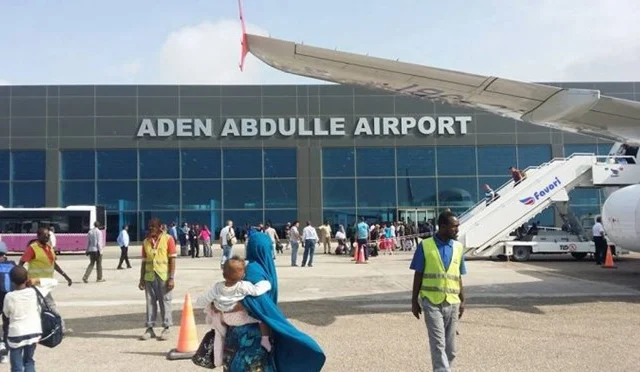
His ordeal continued after the deportation flight arrived in Mogadishu. Hassan said he spent hours stranded at the airport because ICE had taken his iPhone and wallet during his detention at the Kandiyohi County jail in Willmar. His wallet held $740 in cash.
Without the phone, Hassan could not retrieve contact information for relatives in Somalia. The missing money and bank cards also meant he could not pay for food or a hotel room.
“I never expected that,” he said. He is now staying with his sister in Mogadishu.
Abdiaziz Abdullahi, the cousin of Hassan Abtidoon, said he was stunned by the conditions the men described at Guantánamo. They included little privacy, continuously bright lights, exposure to cold, tight shackles during movement and phone calls limited to 10 minutes.
Abdiaziz said an American Civil Liberties Union (ACLU) attorney told him the men’s deportations had been accelerated. The ACLU has filed a lawsuit seeking to stop the use of Guantánamo Bay to hold immigration detainees, and that case remains pending.
Back in a country he barely remembers
Abdullahi Jamal Abdi, 42, was among eight Somali men held at Guantánamo Bay for a month before their deportation. A ninth Somali detainee arrived from Louisiana shortly before the deportation flight left.
Abdullahi entered the United States legally as an 8-year-old refugee on Aug. 28, 1992. He does not speak Somali and is unfamiliar with Somali culture.
His wife, Reyann Abdi, said immigration officials appeared to focus on Abdullahi because of a DUI charge he received as a teenager.
“After being detained and hiring an attorney we found it all stemmed down to a small filing fee that his mother failed to pay when he was a minor,” she said. “We were fighting the case legally when he was abruptly deported with false travel documents and without even going in front of a judge.”
Reyann said the deportation has torn apart a family that had been together for more than 17 years. The couple have two children.
“My children often ask where their father went and why he left, especially our 5-year-old son who doesn’t understand what happened to his father,” Reyann said.
She is also worried about Abdullahi’s safety in Somalia, where he has no family connections. For now, he is living in a hotel without permanent housing while waiting for his mother to arrive in two to three weeks.
Guantánamo detention adds stigma
Marc Prokosch, a Twin Cities immigration attorney, represents Adam and three other Somali men detained at Guantánamo Bay. In an interview with Sahan Journal on Monday, Prokosch said ICE’s actions appear legally permissible because the men have deportation orders for their home country.
“I will admit that, legally, this was proper under the current interpretation of the law. However, morally and ethically, it is an abomination. I truly believe that we as Americans do not want our names associated with this behavior carried out in our name,” Prokosch said.
Prokosch said he was also troubled by ICE’s removal of location information from its public database for detainees with final deportation orders. The change has made it harder for him to reach his clients.
“People with final removal orders have legal options, but I need to be able to talk with them to explore those options,” he said.
He also pointed to the costs of current immigration enforcement. “Congress just allocated $75 billion for ICE to use as they see fit. We have historical precedent, such as the Keyse Jama case from about 15 years ago, where the government spent a quarter of a million dollars just to deport one person.”
Prokosch said the Department of Homeland Security’s decision to send deportees to Guantánamo Bay appeared designed to deter people from seeking asylum in the future.
“This creates a stigma that implies, ‘If you were in Guantánamo, you must be a terrorist.’ This is deliberate,” he said.