
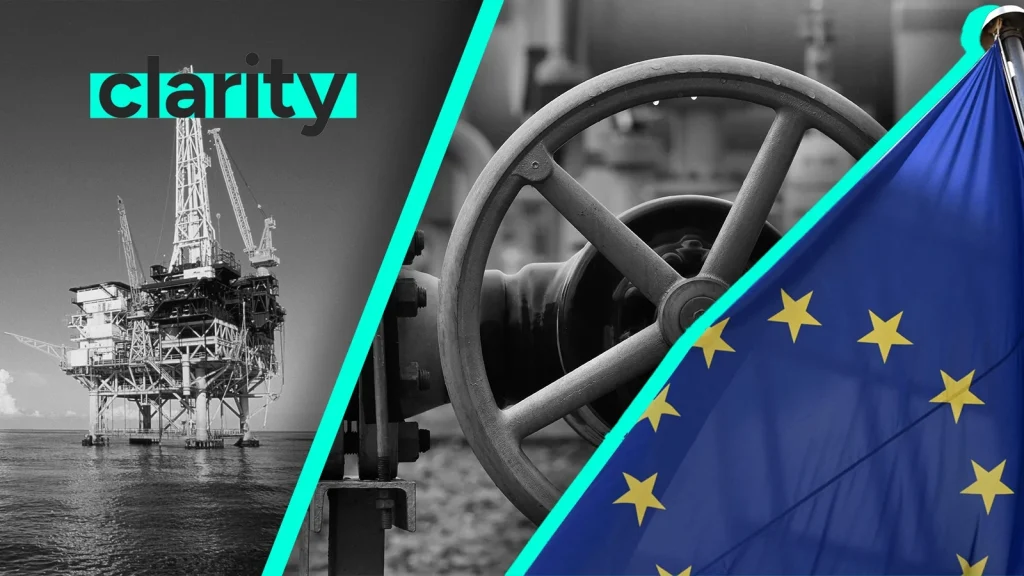
Europe is facing another energy shock, with the US-Iran war now in its eighth month adding to the disruption caused by Russia’s war against Ukraine.
Restrictions remain in place around the Strait of Hormuz, the crucial maritime route through which 20% of the world’s oil and gas exports normally pass.
- Advertisement -
Energy and fuel prices have surged worldwide, putting fresh pressure on households and businesses.
The shortage of oil and gas is also feeding consumer inflation and driving up government borrowing costs.
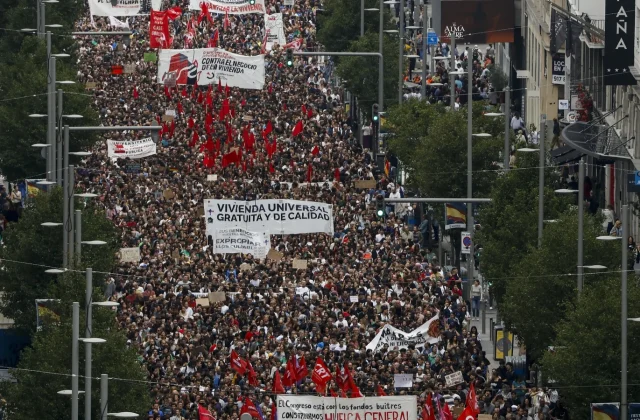
Across Europe, the squeeze is being felt at the ballot box. Recent research suggests that higher energy bills are helping to increase support for populist and far-right parties.
As EU energy ministers wrestled with the crisis at a meeting in Dublin this week, and with next week’s budget approaching, RTÉ’s Europe Editor Tony Connelly examines how the situation reached this point and what governments can do to ease the pressure on households.
The wars in Iran and Ukraine are rippling through global oil and gas markets, raising living costs and deepening an already tense political atmosphere in Europe and the United States.
Before an informal meeting of EU energy ministers in Dublin this week, Energy Commissioner Dan Jørgensen told the FT that 50 million Europeans could face a choice between heating their homes and buying food this winter.
“We have millions of citizens who basically, at the end of the month, will have to choose between freezing or being hungry because they cannot pay the bills,” he said.
Average residential electricity prices across the EU were 34% higher in the first half of 2025 than in 2019. Wholesale prices could rise by 25% year-on-year in the second half of 2026.
Electric Ireland raised residential electricity prices by 8% and gas prices by 7.7% in July. It was the first increase since the immediate aftermath of Russia’s invasion of Ukraine.
What is driving the increase in prices?
About 20 million barrels of oil a day – equivalent to one fifth of global consumption – normally pass through the Strait of Hormuz, along with 20% of LNG exports from Qatar and the United Arab Emirates (UAE).
After the US and Israel attacked Iran on 28 February, shipping through the strait slowed almost to a standstill.
Oil prices jumped by 8%, while European gas prices climbed 20% almost immediately.
Although Europe does not rely on the Gulf for most of its gas, wholesale buyers have been forced to compete with traders from China, India and Japan as the LNG market tightens.
Europe has also failed to build up gas stocks to the level critics say is needed.
The European Union has received criticism for not stockpiling more gas for winter
Gas storage stood at 46 billion cubic metres (bcm) in February, down from 60 bcm in 2025.
A cold snap this winter could leave European wholesale buyers paying a premium for the supplies they need.
Europe is also heavily reliant on the Gulf for refined petroleum products, including jet oil.
The EU’s electricity system has benefited to some extent from the growth of renewables, which now generate 35% of power across the main markets, compared with 24% just before Russia’s invasion.
But volatile gas prices can still push electricity costs higher, while a global diesel shortage is placing additional strain on major sectors of the economy, particularly agriculture.
Why are electricity prices so much higher in Ireland?
During the second half of 2025, Ireland recorded the highest electricity prices among all EU member states, at €0.40 per kWh – 40% above the EU average.
The premium reflects Ireland’s distance from Europe’s main electricity grids, its greater dependence on fossil fuels, a dispersed population and the high cost of maintaining its grid. Ireland’s economy expanded during a period when gas-fired power was relatively cheap.
Gas is required at the final stage of the energy chain to produce electricity, which means countries that depend heavily on it can face disproportionately high energy costs.
Gas prices have swung sharply since the Iran war began. They initially rose 75% after LNG production in Qatar came to a halt.
The European LNG price has increased by 70% since July, reaching €73 per megawatt hour (MWh), compared with a normal range of €30-€60 per MWh.
Why is diesel suddenly to the forefront?
Diesel is politically sensitive because it powers so much of the modern economy, from cars and farm vehicles to industry, shipping and heavy machinery. It also produces more energy than other oil products.
The wars in the Gulf and Ukraine are disrupting supply chains, refineries and shipments that account for about one third of the global diesel market. In an already tight market, that disruption pushes prices higher.
The Middle East normally supplies 19% of the world’s diesel, while the US supplies 15% and Russia 11%.
A further release of diesel and oil could be possible depending on an upcoming meeting of the IEA
In August, diesel shipments from the Gulf were about one quarter of their pre-war levels, while Russia’s diesel exports had fallen by one fifth.
The situation is particularly acute for US President Donald Trump and the Republican Party as they look ahead to the November midterm elections.
Diesel prices reached a record $6.52 a gallon last week, around 70% above pre-war levels.
Across the EU, average prices rose to €2.24 a litre, compared with a pre-war average of €1.59.
What has the Trump administration been doing to cool prices?
Mr Trump has spent several weeks criticising Ukraine’s attacks on Russian refineries, although the International Energy Agency (IEA) says the more immediate impact has come from the war in Iran.
After meeting Ukraine’s President Volodymyr Zelensky in New York, Mr Trump raised the possibility of a 90-day ban on US diesel exports as a way of lowering prices at the pump.
On Thursday, he tied that threat specifically to a demand that France and Germany release 120 million barrels of diesel from their strategic reserves.
In March, shortly after the US-Israel attack on Iran, the IEA coordinated the largest release of strategic oil reserves in history, involving 400 million barrels.
Watch: IEA Chief Fataih Birol speaks to RTÉ’s Six One News on rising fuel prices
We need your consent to load this rte-player contentWe use rte-player to manage extra content that can set cookies on your device and collect data about your activity. Please review their details and accept them to load the content.Manage Preferences
US administration officials had complained that France and Germany made commitments under the agreement to release some of their reserves but had been slow to act.
On Tuesday, Minister for Climate, Energy and the Environment Darragh O’Brien told reporters as he arrived at the informal meeting of EU energy ministers in Dublin Castle that contacts in New York and Washington the previous week indicated the Trump administration was moving away from a diesel export ban. He added: “We’re not being complacent.”
What impact would a 90-day ban on US diesel exports have had?
There were concerns inside the United States that an export ban could ultimately do more harm than good.
Without exports, diesel would have to be stored domestically, but the US would not have enough capacity to hold the fuel if the ban continued for 90 days.
Reducing diesel refining would also interfere with the production of other by-products, including gasoline.
Some US manufacturers import diesel themselves, meaning they could end up paying more on the international market.
Analysts said Mr Trump was unlikely to maintain the ban for the full three months and might have lifted it after the midterm elections in early November.
Rising energy prices has been cited as an issue for Donald Trump and the Republican party
For Europe, a US ban on diesel exports would have delivered another blow, pushing already elevated prices even higher.
The EU has sharply reduced imports of Russian oil products, leading to a significant rise in purchases of US diesel.
Last year, the EU imported 180,000 barrels of US diesel a day, nearly one third of its total imports.
“We fully reject any ban on diesel,” European Commission spokesperson Anna-Kaisa Itkonen said yesterday morning.
“A ban would not be beneficial to anyone. It would undermine our trust in the United States as a reliable partner,” she added.
What are the political implications for Europe?
French President Emmanuel Macron described a US export ban as “catastrophic”, particularly because higher energy prices are aggravating an already severe cost-of-living crisis and are believed to be strengthening far-right parties across Europe.
Far- and hard-right parties are expected to make major gains in France, Spain, Italy and Poland next year.
A CESifo study published in Germany in July found that, following Russia’s invasion of Ukraine, households experiencing above-average increases in energy prices were 7.5% more likely to vote for the far-right AfD.
How seriously did the EU take the US threat?
Diplomatic efforts intensified after EU energy ministers met in Dublin on Tuesday.
After Mr Trump threatened France and Germany, the French government on Thursday asked the European Commission to organise a conference call involving Irish officials, because Ireland holds the EU Presidency, as well as counterparts from the UK, Germany and Italy.
The EU’s Energy Union Task Force held an emergency meeting yesterday morning, bringing together officials from every member state to coordinate a political response to the US threat.
Reports from the meeting said France had proposed a Europe-wide release of 50 million barrels of diesel from strategic reserves, with another 50 million barrels released globally through a coordinated IEA agreement.
At midday, the European Commission confirmed that the task force had met but declined to verify the figures. It said any release of oil stocks was a matter for the IEA, while the commission would coordinate the participation of EU member states in any strategic release.
By late yesterday morning, the Irish presidency had called another emergency meeting, this time involving EU ambassadors. In Paris, meanwhile, the Elysée Palace announced that Mr Macron would hold a video call with G7 leaders, including Mr Trump.
French President Emmanuel Macron said the release of diesel and oil would be ‘frontloaded’
Shortly afterwards, the US president wrote on Truth Social: “Europe has just agreed to release a massive amount of their heavily stocked Diesel Oil.
“The process will begin immediately. Thank you for your attention to this matter! President DJT.”
A G7 statement confirmed the announcement moments later.
G7 countries had agreed to release 100 million barrels of crude oil and diesel over the following four months, including a frontloaded quantity in the next 20 days – apparently a reference to Mr Trump’s hopes for the congressional elections.
Leaders also agreed to coordinate refinery maintenance to prevent simultaneous shutdowns and urged other countries with refining capacity to produce more diesel from crude where possible.
However, the statement made clear that some of the planned release consisted of commitments G7 members had already made through the IEA in March.
It also left unclear how much of the release would be crude oil and how much would be diesel.
The announcement immediately affected markets. European diesel futures fell, with the benchmark dropping 8% to $1337.75 per tonne, its lowest level since the start of September. Wholesale diesel prices in New York harbour declined by almost 5% to $4.43 a gallon.
Last night, Mr Trump told reporters there would be no US export ban and said one “was never really on the table”.
“But what Europe did was a great thing,” he added.
Whether the move will be enough to protect Mr Trump’s midterm prospects remains uncertain.
What more can governments do?
Officials will now closely monitor the effect of the release on diesel prices.
Over the longer term, the EU wants to expand renewable energy and reduce its dependence on imported fossil fuels.
For the moment, Europe remains almost entirely reliant on imported oil. But the decline in European refining capacity means there is a growing focus on importing refined products, including diesel, according to the Bruegel think tank.
Diesel imports have increased 25-fold since 1990.
The EU also aims to accelerate electrification across the bloc.
“Clean electricity generated in Europe will allow Europe to reduce its dangerous dependency on geopolitically volatile and expensive imported fossil fuels,” Bruegel’s deputy director Simone Tagliapietra told EU energy ministers in Dublin.
He added: “It will also unlock new industrial opportunities, especially related to the manufacturing of those clean technologies for which Europe has comparative advantages.”
Cross-border interconnectors form part of the EU’s plan diversify energy supply
But greater electrification will require much closer cooperation between member states to harmonise national grids and expand cross-border interconnectors.
Critics say electricity policy is becoming increasingly re-nationalised as countries pursue separate energy subsidy programmes and capacity mechanisms.
“Clarity on needs and reduction of regulatory risks will lower capital costs. This can drastically cut the cost of the capital-intensive system that we want to build to electrify our economies,” Mr Tagliapietra told ministers.
A central piece of legislation that the Irish Government hopes to advance during its EU presidency is the so-called ‘Grids Package’.
Its aim is to strengthen 11 million kilometres of electricity networks across the continent, bringing supply and demand into better balance, improving storage, expanding cross-border interconnectors and preparing the grid to handle and share the growing volume of wind and solar power intended to replace imported fossil fuels.
Those questions will dominate upcoming meetings under the Irish presidency, including a key summit in Brussels on 15 October.