
German Chancellor Friedrich Merz is facing his gravest political crisis yet after his centre-right CDU suffered two painful regional election defeats, losing ground to parties on both the far right and far left.
After only 16 months in office, Mr Merz’s approval ratings have collapsed. His party has endured a succession of losses in regional contests against the anti-immigration Alternative for Germany (AfD), which now leads nationwide polling.
- Advertisement -
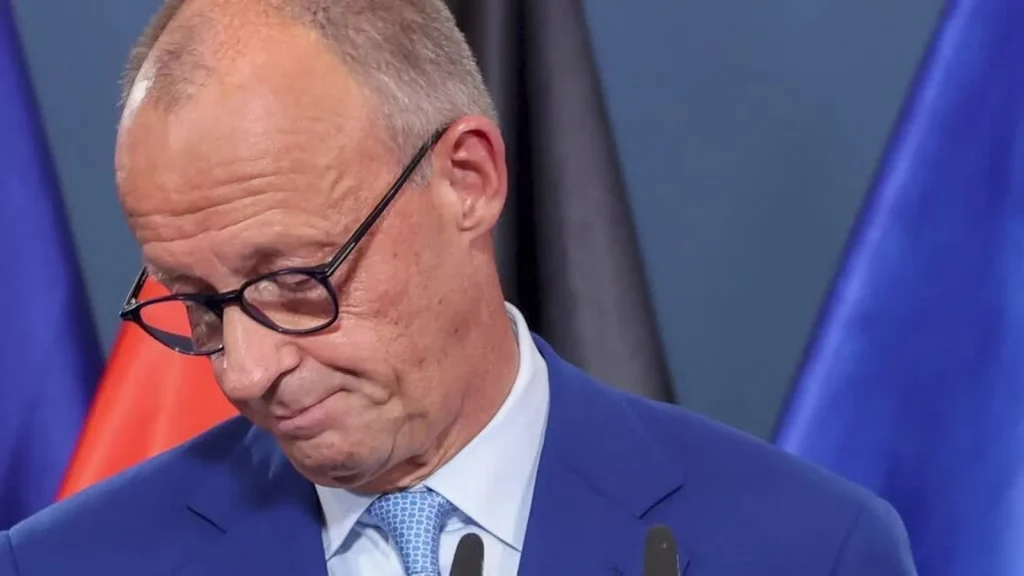
As speculation mounted that his CDU/CSU bloc could move against him, Mr Merz made the unusual decision to address the country on television last night, appearing just minutes after the first exit polls were released.
He acknowledged that the CDU had suffered a “disaster” in Mecklenburg-Western Pomerania state. The situation worsened as counting continued: the party fell below the 5% threshold, effectively removing it from parliament altogether.
The CDU was also decisively beaten by the far-left Die Linke in Berlin. In his televised remarks, Mr Merz warned that “trust in our country’s institutions is waning” and being “actively undermined by radical parties on both the left and the right”.
“What needs to be done now requires backbone, steadfastness and patience,” Mr Merz said. “I will demonstrate this as CDU party chairman and, above all, as chancellor of our country.”
Analysts interpreted the address as an effort to seize control of the political narrative before a fresh wave of criticism reached the government.
“His extremely early move shows that Merz is staking a claim to define the narrative,” political scientist Oliver Lembcke of Ruhr University Bochum said.
Mr Lembcke described the intervention as “leadership from a defensive position – and an attempt to prevent a personnel debate with an uncertain outcome from gathering steam”.
Carsten Brzeski, an economist at ING bank, said the chancellor’s rare television appearance should be understood as “an attempt to choke off the speculation about his possible resignation that has been building in recent weeks.”
German Chancellor Friedrich Merz appeared on TV after exit polls were released for the elections in the state of Mecklenburg-Western Pomerania
A difficult week ahead
Following yesterday’s CDU crisis meeting, the chancellor has cleared his schedule for the days ahead and abandoned plans to travel to New York for the UN General Assembly as he prepares for possible aftershocks from the elections.
For weeks, Mr Merz has been trying to contain rumours that he could be removed by his centre-right CDU/CSU bloc.
Potential successors whose names have circulated include Hendrik Wuest, premier of the populous state of North Rhine-Westphalia, and Markus Soeder, the Bavarian premier and leader of the CSU, the CDU’s regional sister party.
Yet no rival has publicly launched a challenge. Some may fear that an act of disloyalty would rebound against them, while others may be deterred by the daunting task of restoring the party’s fortunes during one of the worst crises in its history.
When Mr Merz became chancellor in May last year, he promised to revive Germany’s weakening economy, rebuild the military to deter Russia and curb irregular immigration in an effort to reassure voters and draw support away from the AfD.
Instead, the AfD now leads national polls, while Mr Merz’s personal approval rating stands only slightly above 10%. His position has not been helped by a series of blunt and abrasive remarks.
The latest elections took place just two weeks after the far-right, pro-Trump and Moscow-friendly AfD delivered another shock defeat to the CDU in Saxony-Anhalt.
The run of electoral setbacks comes as Mr Merz has struggled to advance the economic and social welfare reforms he promised, amid tensions with his coalition partners in the SPD.
The embattled chancellor did receive some much-needed backing from CDU powerbrokers last week, when eight state premiers jointly declared that Germany needs “stability now more than ever” rather than “discussions about personnel”.
They stopped short, however, of offering Mr Merz a direct personal endorsement.