Pentagon considers cutting up to 40,000 US troops from Europe
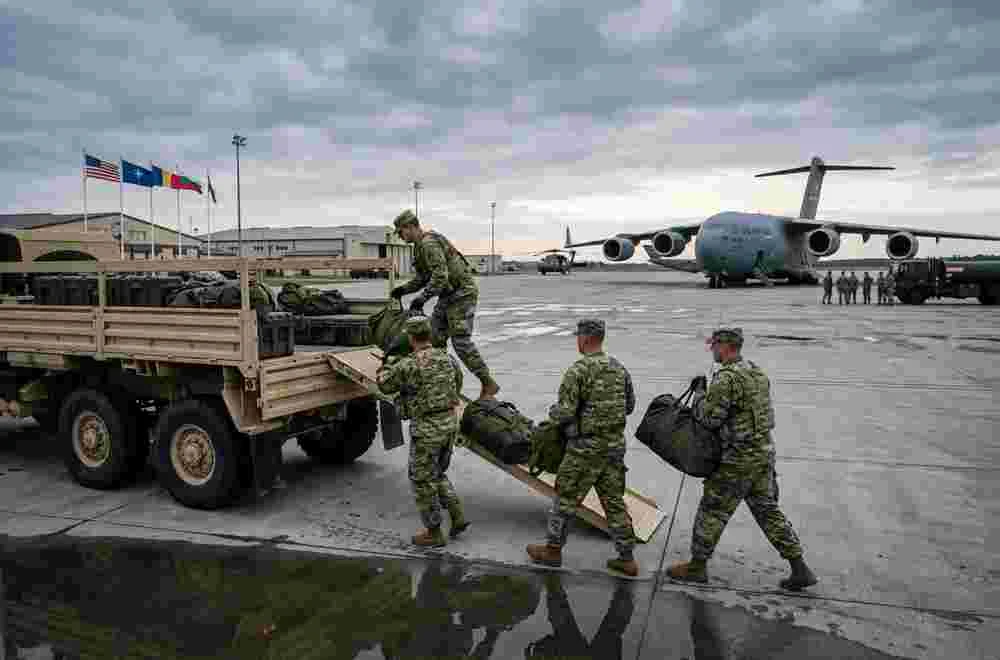
WASHINGTON — The United States could pull as many as 40,000 service members out of Europe under options being examined by the Pentagon, a move that would significantly reshape Washington’s military presence on the continent, according to US and Western officials familiar with the discussions.
- Advertisement -
The proposals form part of a six-month review of the US military posture in Europe that the Pentagon began earlier this year. Officials stressed that no decision has been reached and that multiple plans remain under consideration.
The option receiving the most attention would withdraw roughly 25,000 troops, or nearly one-third of the approximately 80,000 US personnel currently based in Europe. A larger-scale plan could cut the force by up to 40,000 service members.
The assessment extends beyond troop totals. Pentagon officials are also reviewing the future placement of aircraft, naval forces, weapons systems and the wider network of US military infrastructure across Europe.
Germany, Italy and Spain could be among the countries most affected because they host some of the largest American military deployments on the continent, officials cited in reports about the deliberations said.
The prospect of a drawdown has unsettled some NATO allies, especially as European governments continue to confront security pressures linked to Russia and the war in Ukraine.
The potential reductions are also being considered as President Donald Trump’s administration pushes European allies to carry more responsibility for their own defence. Washington has repeatedly urged NATO members to raise defence spending and become less dependent on US military capabilities.
US Defense Secretary Pete Hegseth directed the European force review in June. Senior Pentagon officials are conducting the assessment in coordination with the US military command responsible for operations across Europe.
Gen. Alexus Grynkewich, who leads US European Command and serves as NATO’s Supreme Allied Commander Europe, has taken part in the review and is expected to submit recommendations to Hegseth. A final recommendation is expected in November, after which it will be presented to Trump.
The possible troop reductions have sparked discussion in Washington as well. Senator Jeanne Shaheen, the senior Democrat on the Senate Foreign Relations Committee, has urged the closer involvement of US diplomats, arguing that changes to troop deployments could influence relations with European allies.
The Pentagon’s review comes as Washington reconsiders its military priorities worldwide. The administration’s defence strategy has put greater emphasis on directing resources to other regions, including the Indo-Pacific, while calling on European partners to assume a larger role in their own defence.
At the same time, the United States has continued sending forces to parts of Europe. Lithuania said Tuesday that a new rotation of US troops was being deployed to the NATO member, which borders Russia and Belarus. Lithuanian officials welcomed the move as evidence of continued US engagement despite uncertainty over the broader review.
The assessment does not represent a final decision to leave or significantly reduce US forces in Europe. Officials are considering several possibilities, including troop cuts, shifting some units toward NATO’s eastern flank or maintaining different levels of military capability in various parts of the continent.
A major reduction would mark a consequential change in the US military presence in Europe, a core element of NATO’s collective defence structure for decades.
AXADLETM