Debt relief, integration into regional markets and the implementation of the new investment law have transformed Somalia into a new market offering broad opportunities. This report provides an in-depth analysis of the investment opportunities available to domestic and international businesses, particularly across four interconnected economic pillars: the blue economy, fisheries, energy and agriculture. It also highlights the conditions that could facilitate their realization.
Introduction
For the past three decades, Somalia has generally been viewed through the lens of state fragility rather than the investment opportunities emerging in the country. However, that picture has now changed completely. Since reaching the Completion Point under the Heavily Indebted Poor Countries (HIPC) Initiative in December 2023, Somalia has cleared most of its international debt, formally joined the East African Community (EAC), and enacted the Somalia Investment Law of 2025. Foreign direct investment (FDI) rose sharply to $834 million in 2025, while the Somali diaspora sends more than $3 billion back to the country each year in personal remittances alone.
The investment opportunities in the country are not only extensive but also closely interconnected. Somalia has the longest coastline on mainland Africa, abundant fish resources of which only a small proportion is sustainably utilized, some of Africa’s greatest solar and wind energy potential, and livestock exports worth more than $1 billion in 2025. At the same time, the cost of electricity in the country is among the highest in the world, cold-chain infrastructure is absent in many areas, and only a small portion of land suitable for irrigation is cultivated.
This article demonstrates that the greatest benefits lie in the complementarity and interconnectedness of these economic sectors. Access to affordable renewable energy makes high-quality refrigeration possible; refrigeration enables fish and meat to be exported to international markets; and modernized ports convert export production into foreign currency. Domestic investors, members of the diaspora and international investors who view Somalia’s economy as an interconnected system rather than as a collection of separate sectors will therefore be best positioned to capitalize on these valuable opportunities.
The Investment Climate
Somalia’s overall economic environment has entered a new phase over the past three years. In December 2023, the Executive Boards of the International Monetary Fund (IMF) and the World Bank’s International Development Association (IDA) jointly approved Somalia’s HIPC Completion Point. This reduced the country’s total external debt from $5.3 billion at the end of 2018 to approximately $600 million, while eliminating $4.5 billion in debt-service obligations (IMF). Weeks before that decision, Somalia was admitted as a full member of the East African Community, giving Somali businesses the opportunity to export duty-free to a large market of nearly 300 million people (The EastAfrican).
The economy is growing, although at a somewhat slower pace than before. Gross domestic product (GDP) grew by 4.1 percent in 2024; the IMF projected growth of 3.0 percent in 2025 and 3.3 percent in 2026, citing reduced foreign assistance and climate-related changes as factors behind the slowdown (Ecofin Agency). Nominal GDP was estimated at approximately $14.2 billion in 2026 (IMF World Economic Outlook, citing Fermor). The country’s fiscal policy continues to be guided by the IMF’s Extended Credit Facility, under which disbursements have reached $100 million. The institution has cited progress in Central Bank supervision and preparations for the reintroduction of the Somali shilling (Channel Africa).
Investor interest has also risen noticeably. According to UNCTAD’s World Investment Report 2026, FDI inflows to the country increased from $601 million in 2021 to $834 million in 2025, while the total stock of foreign investment grew over the same period from $4.3 billion to $7.2 billion (Dawan Africa). Relative to the size of the economy, these inflows are highly significant: World Bank data show that foreign investment was equivalent to 6.4 percent of the country’s GDP in 2024 (World Bank WDI).
The country’s legal framework has also evolved in line with this growth. The Somalia Investment Law of 2025 established a transparent and credible framework that encourages foreign participation, with the Somalia Investment Promotion Office (SOMINVEST) serving as the official entry point into the country. Somalia became a member of the Multilateral Investment Guarantee Agency (MIGA) in March 2020, enabling foreign investors to obtain political-risk insurance (World Bank). Preparations for a public-private partnership (PPP) law have also continued since the country’s debt was forgiven.
The Blue Economy: Ports, Logistics and Marine Resources
Somalia’s 3,333-kilometre coastline and approximately one million square kilometres of territorial waters lie along the vital maritime corridor connecting the Red Sea, the Gulf of Aden and the Indian Ocean (US Commercial Service). The country’s geography alone makes it a natural location for maritime trade, transshipment and logistics services. Investment opportunities fall into three main categories: the development of ports and free-trade zones, services supporting offshore oil exploration, and small businesses operating along the coast.
Ports and Free-Trade Zones
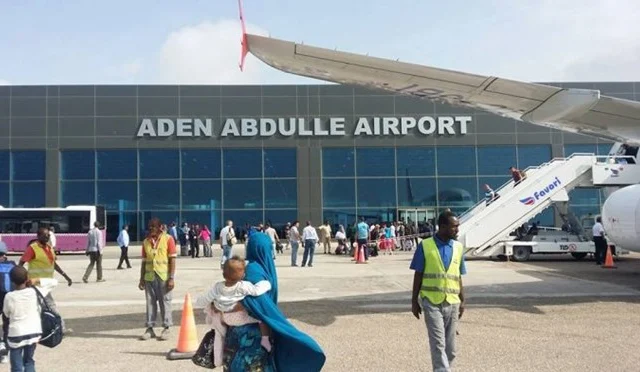
Port development has already attracted some of the largest foreign investments. In Berbera, DP World operates under a 30-year agreement that began in 2017 and involves investment of up to $442 million in two phases, including a new port, a large container yard and the Berbera Economic Zone (Gulf News). In Boosaaso, a 30-year agreement with the Puntland administration provides for a $336 million modernization of the port, also in two phases (Trade Arabia). The Port of Mogadishu, managed by Türkiye’s Albayrak Group, is among the Federal Government’s largest sources of domestic revenue. In July 2026, the president announced plans to construct an entirely new port to meet the capital’s growing needs (Dawan Africa). Other smaller ports, including Kismaayo, Hobyo and Garacad, which received its first ship in 2022, have also attracted interest from public- and private-sector investors (Maritime Executive).
Across all these port facilities, the challenges are similar: insufficient berthing areas, limited warehouses and cold-storage facilities, shortages of cargo-handling equipment, and a lack of comprehensive professional management. Each of these gaps represents a business opportunity on a scale that can be addressed through contracts carried out by local logistics companies, which would not be required to finance an entire port concession.
Offshore Oil and Gas
Somalia’s offshore oil and gas resources have long been the subject of discussion, but they are now being tested in earnest. Under a government agreement signed in 2024, the Turkish Petroleum Corporation (TPAO) collected three-dimensional seismic data from Blocks 142, 152 and 153, and in April 2026 began drilling the first well