Two Irish nationals are among hundreds of people missing after a devastating flash flood swept through the Himalayan border region between Nepal and China’s Tibet, killing at least 157 people.
A powerful surge of mud and debris tore through the banks of a river along the Nepal-China frontier, engulfing buildings and sending rescuers into a desperate search for survivors.
- Advertisement -
Alpine Eco Trek, the operator leading the excursion, said two Irish citizens and 12 UK nationals — including a 13-year-old girl — remain unaccounted for after the flood struck Nepal’s Rasuwa region.
The Nepal-based company, which runs guided tours and expeditions, confirmed to PA that the two Irish nationals were travelling with its group across the Nepal-Tibet border.
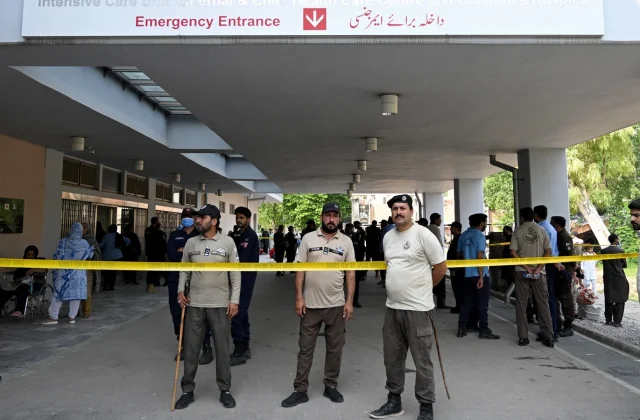
Rescue personnel carry a person affected by the flash floods in Nepal
The Department of Foreign Affairs, including the Embassy of Ireland in India, which is also responsible for Nepal, said it would provide consular assistance to affected Irish citizens and their families.
However, it noted that, as with all consular matters, it does not comment on individual cases.
Sensitive content – CCTV captures people fleeing before mudslide hits Nepal-China border crossing
Nepal’s tourism board confirmed that the Irish and British travellers were among 384 people reported missing overall.
UN Secretary-General Antonio Guterres said UN teams and partner organisations were mobilising personnel and supplies in Nepal to help communities struck by the deadly flooding.
Ram Kumar Adhikari, manager of Alpine Eco Trek, said four South African nationals travelling with the group were also believed to be missing.
Travel records shared with PA show that the missing British nationals are aged between 13 and 65.
The company, which also organises expeditions to Mount Everest, said four Nepalese guides — aged 38, 35, 45 and 29 — were missing as well.
The Nepal Tourism Board said its employees and tourist police were “working to verify the whereabouts and safety status of tourists and travellers who were in or travelling through the affected areas”.
Its initial assessment recorded 291 foreign nationals as missing in the affected locations, while the nationalities of more than 100 others had yet to be established.
I was shocked to see the devastating flooding in Nepal. Our condolences go to all who have lost loved ones. My Department is monitoring the situation closely and stands ready to provide consular assistance to any Irish citizens impacted.
— Helen McEntee TD (@HMcEntee) August 26, 2026
Minister for Foreign Affairs Helen McEntee said officials were closely tracking the situation and were prepared to support Irish citizens affected by the disaster.
Irish citizens seeking help can contact the Embassy of Ireland in India on +9111 4940 3200.
Chinese state media said a mudslide at a Tibetan trade hub on the Chinese side of the border had caused “major casualties”, prompting President Xi Jinping to order an “all-out” rescue operation.
The first floor of a building in Nepal submerged by the flooding
Raju Bhadel, 56, described receiving a tearful phone call from his brother-in-law.
“I got a call from (my brother-in-law) this morning, and they were crying and said their entire house had been swept away. Three family members were rescued, but his brother is still missing,” he said.
Nepalese police said the death toll had risen to at least 95.
More than 380 tourists, including 291 foreign nationals, could not be accounted for during the eight hours after the flood struck.
The tourism board said the missing included Americans, Indians, an Australian, Malaysians and Britons.
भोटेकोसी नदी रसुवामा तिब्बत तर्फबाट ठुलो बाढी प्रवेश गरेकोले अर्को सूचना नआउँदासम्म त्रीशुली नदीको तटिय क्षेत्रका जिल्लाहरु नुवाकोट, धादिङ, चितवन, गोरखा लगायतका स्थानहरूमा उच्च सतर्कता सहित सुरक्षित स्थानमा रहन अनुरोध छ। pic.twitter.com/Zun6icZZCM
— Nepal Police (@NepalPoliceHQ) August 26, 2026
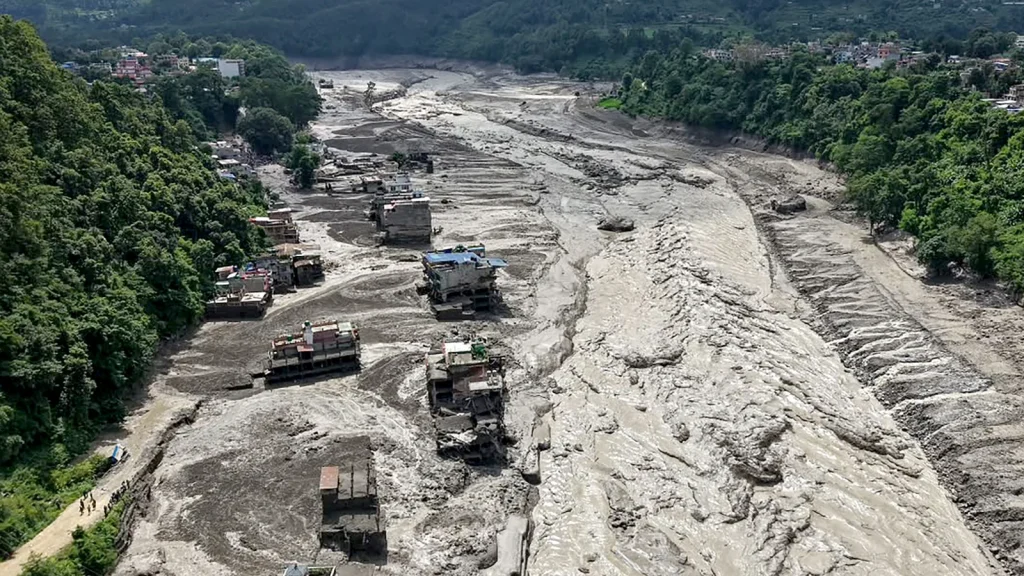
Images released by Nepal Police showed floodwaters racing along the river and carrying away houses, while photographs from AFP showed only the upper floor of one home protruding from the mud.
A police spokesman told AFP that authorities were still assessing the scale of the destruction, but had “alerted people who are staying near the riverside to relocate”.
An aerial view shows the devastation left behind by the flooding
The Nepal Army dispatched helicopters and disaster-response teams to the affected region.
The Nepal Electricity Authority said damage to hydropower, solar and other facilities had affected around 430 megawatts of generating capacity.
“The disaster has damaged the production, transmission and distribution facilities of the Authority… resulting in disruption of electricity supply,” it said.
A mudslide struck near Gyirong Port in southwest China’s Xizang Autonomous Region on Wednesday, with people feared missing, local authorities said. #mudslide pic.twitter.com/BOCyQFUfu7
— China Xinhua News (@XHNews) August 26, 2026
Sarthak Shrestha, a remote sensing and geoinformation analyst at the Kathmandu-based International Centre for Integrated Mountain Development (ICIMOD), said an initial assessment had found “no anomalies” on the Chinese side of the frontier.
“We believe a rock-ice avalanche occurred in Nepal, blocking the Lhende river and causing the cascading flood event,” he told AFP.
Mudslide risk
Authorities said several highways had also been shut.
Chinese state broadcaster CCTV reported that “a mudslide disaster on the Nepalese side resulted in major casualties and missing people at the Gyirong Port” in Tibet.
Video broadcast by CCTV, which AFP said it could not immediately verify, showed fast-moving water carrying branches and other debris across a flooded road.
According to CCTV, China’s leader said “the most urgent task is doing everything possible to search for and rescue the missing people… quickly treat injured people and minimise casualties to the greatest extent possible”.
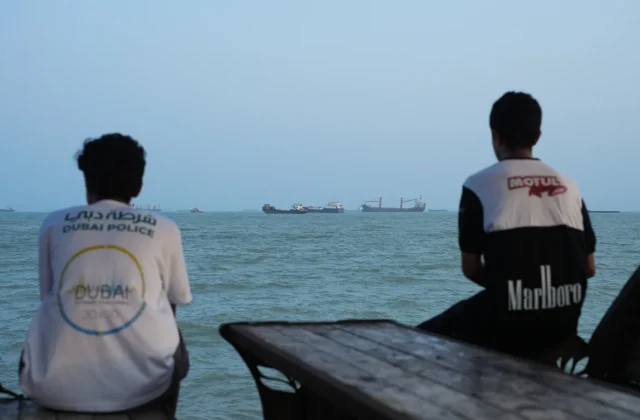
Three men pictured looking out at the destruction caused by flooding in Nepal
Traffic officials in Tibet’s Shigatse warned on social media that roads in the area were “at risk of mudslides and unsafe for passage”.
Xinhua reported that 17 people went missing after a mudslide near Gyirong Port in July last year.
From June through September, monsoon rains routinely cause deadly floods and landslides across South Asia.
Scientists have warned that climate change is making extreme weather events in the region more frequent and more severe.
Qianggong Zhang, head of climate and environmental risks at ICIMOD, said another flood could be close.
“With a blockage still lodged upstream on the Nepal-China border river, authorities warn a second flood may occur,” he said.
We need your consent to load this rte-player contentWe use rte-player to manage extra content that can set cookies on your device and collect data about your activity. Please review their details and accept them to load the content.Manage Preferences
Additional reporting: AFP and Reuters