Iran and Oman have reached agreements covering their respective shares of the Strait of Hormuz and the revenues generated by the strategic waterway, a spokesperson for Iran’s Revolutionary Guards said, according to the semi-official Tasnim news agency.
The spokesperson also accused the United States of hindering negotiations between Tehran and Muscat, saying the talks had been delayed as a result.
- Advertisement -
The comments followed remarks by Iranian President Masoud Pezeshkian, who said a fresh round of US economic sanctions would fail to achieve its intended effect, local media reported.
“With the measures that the government’s economic sectors have foreseen, America will not achieve anything with economic pressure at this stage, just as it was unable to achieve anything in the war,” Mr Pezeshkian said, according to the ISNA news agency.
Iranian leaders have played down the impact of the latest measures, pointing to the country’s experience with decades of severe sanctions imposed shortly after the 1979 revolution.
“Our principle is understanding and resolving issues through interaction and negotiation, but at the same time, we will stand firm against economic pressures, as we have done so far and will continue to do,” Mr Pezeshkian added.
Talks between Iran and the United States have ground to a halt as the two adversaries dispute control of the strategically important Strait of Hormuz.
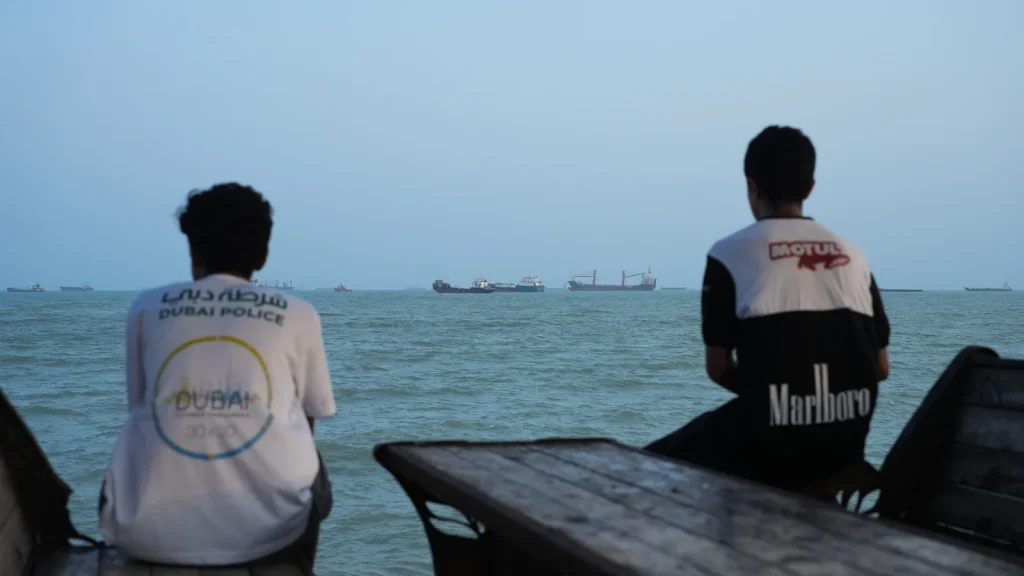
Shipping through the vital passage — which normally carries about one-fifth of global oil and liquefied natural gas exports — remains largely paralysed, sending disruption through international energy markets.
Iran has controlled access to Hormuz since the war began on 28 February and has sought to levy fees on vessels passing through the strait.
Shipping through the Strait of Hormuz has been restricted since the war began on 28 February
Washington is demanding a return to the pre-war system of unrestricted navigation. US President Donald Trump has meanwhile claimed that the United States “has total control” of the waterway.
Iran and Oman have held intermittent discussions for several weeks over how traffic should be managed through the strait, which carried one-fifth of the world’s oil and liquefied natural gas shipments before the conflict.
Most commercial shipping has been suspended since the war began on 28 February, when the United States and Israel launched strikes against Iran.
Tehran and Muscat said they had discussed “a joint temporary navigational corridor” and agreed to remove mines from the strait.
Although direct fighting between the United States and Iran has largely eased, diplomatic attempts to secure a peace agreement have stalled, leaving passage through the waterway hazardous.
An oil tanker was hit yesterday by an unidentified projectile and disabled about 9 nautical miles (17 km) northeast of Ash Shishah in Oman, near the entrance to the strait, the United Kingdom Maritime Trade Operations said.
Seeking to further pressure Iran’s economy, the United States threatened earlier this week to penalise countries that continue trading with Tehran, although it said the measures would not be imposed immediately.
Oil prices declined for a second consecutive day as traders discounted the immediate effect of the US sanctions. Iran condemned Washington’s attempt to isolate its economy as an act of “gross lawlessness” and said it expected many countries to reject the pressure campaign.
Public support for the war in the United States has dropped to its lowest point since the conflict’s opening days, while Mr Trump’s approval rating has reached a record low ahead of November’s congressional elections, according to Reuters/Ipsos polling.
Thousands of people have been killed in the conflict, with most of the deaths reported in Iran and Lebanon. The United States and Israel have also weakened much of Iran’s conventional military capability.