Senior officials from Saudi Arabia, Turkey and Pakistan travelled to Tehran for urgent talks aimed at preventing the Middle East conflict from erupting again, as Egypt approved the potential deployment of military support to Riyadh amid a new wave of attacks by Yemen’s Houthis.
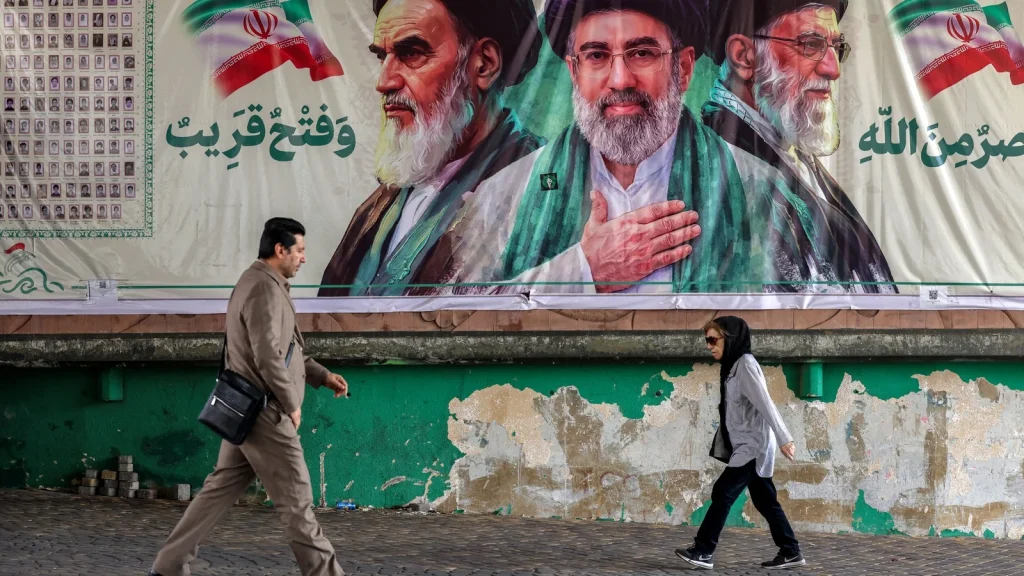
The representatives of the three countries that signed the Mecca defence pact arrived in Iran as part of an effort to “de-escalate between the parties to the current crisis”, Saudi Arabia’s foreign ministry said.
- Advertisement -
The discussions, attended by Saudi Defence Minister Prince Khalid bin Salman, come after the United States, Iran and Israel each warned that fighting could resume in the eight-month-old war.
It marks the first joint trip to Tehran by officials from Pakistan, Saudi Arabia and Turkey since the countries created their defence alliance in Mecca, the holy city in western Saudi Arabia, in August.
Regional tensions have intensified ahead of Israel’s pivotal elections tomorrow and next week’s US midterm elections, in which US President Donald Trump’s Republican Party is fighting to retain control of both chambers of Congress.
As the Tehran meeting opened, United Nations Secretary General António Guterres said preventing further escalation in the region was “essential”.
Prince Khalid bin Salman has emerged as one of Saudi Arabia’s key diplomatic interlocutors
“The risk to have the combination of an overwhelming military attack on Iran and an overwhelming military attack by Iran on the countries of the Gulf, needs to be avoided at all costs,” he told reporters at a news conference in Cairo.
“As agreed, Saudi Defence Minister Khalid bin Salman, Pakistani army chief General Asim Munir and Turkish intelligence chief Ibrahim Kalin will participate in this meeting,” said Ali Bagheri Kani, deputy secretary of Iran’s Supreme National Security Council.
Mr Kani told state television that Iran’s security chief, Mohsen Rezaei, would also attend.
“This historic meeting in Tehran may be the last chance before escalation spirals out of control, an attempt to impose a path of de-escalation before it’s too late,” Saudi security analyst and researcher Hesham Alghannam wrote on X.
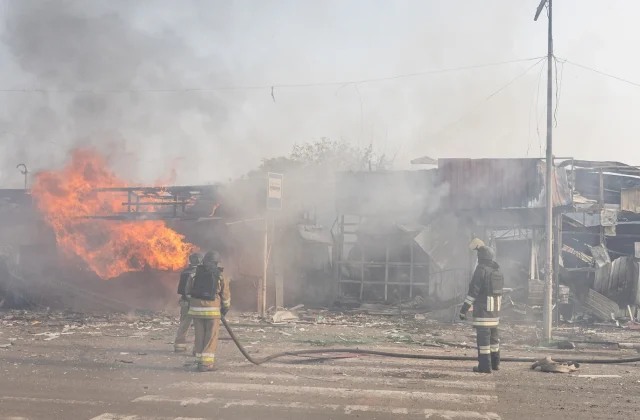
New explosions were reported in Riyadh overnight after the Iran-backed Houthis claimed to have launched another strike on the Saudi capital’s international airport yesterday.
After weeks of attacks, Egypt’s parliament approved a request from President Abdel Fattah al-Sisi to provide defensive military assistance to Saudi Arabia “if requested”.
Egypt possesses the Arab world’s largest military, including hundreds of thousands of active personnel, fighter aircraft and air-defence systems supplied by countries such as the US, China, France and Russia.
It remained unclear what form any assistance would take.
Qatar and Pakistan have been at the centre of mediation efforts between the US and Iran.
Qatar sent a delegation to Tehran yesterday, Iran’s foreign ministry spokesperson Esmaeil Baqaei said.
Andreas Krieg, of London-based risk consultancy MENA analytica, described the Saudi defence minister’s participation as “hugely significant”.
Mr Krieg referred to Mr Bin Salman as the “strategic mastermind of Saudi Arabia”.
The defence minister, who is the brother of Crown Prince Mohammed bin Salman, the kingdom’s de facto ruler, has become one of Riyadh’s most important diplomatic channels and has repeatedly been sent on sensitive missions across the region.
“His seniority and proximity to the Saudi leadership send a powerful signal,” Saudi analyst Ali Shihabi, who is close to the government, wrote on social media.
“Riyadh is investing serious political capital in dialogue with Iran, seeking to contain escalation and create a credible diplomatic path out of the crisis,” he added.
US President Donald Trump said that Washington ‘may do another little Epic Fury’
Recent statements from leaders in the region and beyond have fuelled speculation that the conflict could flare up again.
Iranian Foreign Minister Abbas Araghchi said there had been “talk of a new war”, but insisted that Tehran’s policies had not changed.
On Friday, US President Donald Trump said Washington “may do another little Epic Fury”, a reference to the US-Israeli campaign against Iran that began on 28 February.
Israeli Prime Minister Benjamin Netanyahu warned yesterday that Iran could seek to interfere in Israel’s elections, in which he is locked in a close contest to remain in office.
“We have intelligence signs that our enemies, Iran and its proxies, could challenge us with attacks in order to disrupt the elections,” Mr Netanyahu said in a video issued by his office.
“Don’t test us. You will suffer disproportionate blows,” Mr Netanyahu added, having made his security record a central theme of his campaign.
His comments followed a report by Israel’s Channel 12, citing unnamed sources, of a dispute between Mr Netanyahu and army chief Eyal Zamir over an unspecified new directive related to the war with Iran. The prime minister denied the report.
Iran’s foreign ministry said the result of the Israeli election, in which Mr Netanyahu faces a tight race, would make “no difference”.
“It makes no difference to us who, in these elections, takes the helm of a regime that has brought nothing but violence and massacres to our region,” ministry spokesperson Mr Baqaei said at a weekly briefing, one day before the Israeli legislative polls.
Iran claims control over the Strait of Hormuz
The conflict has spread across the Middle East since late February, when the US and Israel launched surprise attacks on Iran as Washington and Tehran were negotiating over the country’s nuclear programme.
An April ceasefire ended the first period of intense bombardment, but Iran and the United States have continued their struggle for control of the Strait of Hormuz, a crucial waterway through which around a fifth of the world’s oil and liquefied natural gas once travelled.
Iran claims authority over the strait and routinely targets vessels attempting to pass without its approval, while the United States has established a naval counter-blockade around Iranian ports.
Diplomatic attempts to settle the crisis remain deadlocked, particularly after a June agreement that set out a route towards a permanent settlement collapsed.
The fighting has also widened to include clashes between Saudi Arabia and the Iran-backed Houthis in Yemen.
Saudi coalition says struck Houthi missile facilities
CCTV footage shows what the coalition says was a Houthi attack on Abha International Airport
In a separate development, the Saudi-led coalition fighting Yemen’s Houthis said it had destroyed several missile launch sites and storage facilities, while the Iran-backed group claimed responsibility for another assault on Riyadh’s international airport.
The coalition operation followed a night of explosions in the Saudi capital, where authorities had sent residents text alerts warning of a “hostile aerial threat”. Riyadh has faced repeated Houthi attacks in recent weeks.
Coalition spokesperson Turki al-Maliki said on X that the strikes destroyed four ballistic missile launchers, a missile depot and tunnels operated by the Houthis, who control extensive areas of Yemen.
The operation, he said, was designed to “cut off Houthi militia supply lines between areas under their control”.
Riyadh airport
The Houthis have launched repeated attacks on Riyadh’s King Khalid International Airport, including one this month that killed 13 people and injured more than 300. It was the deadliest attack in Saudi Arabia in more than a decade.
Mr al-Maliki said Saudi air defences had “intercepted and destroyed a ballistic missile launched by the terrorist Houthi militia toward Riyadh”.
Flights resumed after the airport reopened, although the Houthis warned passengers to stay away from the facility, describing it as a “military target”.
The Houthis again said they had struck the airport “with a ballistic missile, striking the target with precision”, according to a social-media post by their military spokesperson, Yahya Saree.
Mr Saree also claimed that Houthi drones had hit oil-pumping stations.
Houthi military spokesperson Yahya Saree said Riyadh airport was still ‘unsafe’
The airport shutdown dealt a serious blow to Saudi Arabia, delaying the kingdom’s flagship investment conference until 2027 and disrupting the journeys of thousands of travellers.
The Dakar Rally was among a growing number of events cancelled, postponed or moved as the war’s effects spread.
Mr Saree warned that Riyadh airport remained “unsafe” and continued to be a “military target”.
“The Saudi regime shall bear the consequences of any operations at the airport,” he said.
Saudi Arabia and the Yemeni government it supports have faced sustained Houthi attacks in recent weeks after a years-long truce collapsed during the summer, redirecting the wider US-Iran conflict that began in February.
As flights restarted at Riyadh airport, Greek Prime Minister Kyriakos Mitsotakis met Crown Prince Mohammed bin Salman to discuss a key air-defence system.
Mr Mitsotakis “responded favourably to the kingdom’s request to keep the Patriot system in Saudi Arabia, given the current challenging circumstances”, his office said.
Greece has stationed a battery to operate the US-made Patriot system in Yanbu, a major oil-export centre on the Red Sea coast.
Yesterday, the Saudi-led coalition said its air defences had intercepted at least 10 ballistic missiles.
“The bombardment has been very heavy since this morning – may God keep us safe. Everything is shaking because of the explosions,” a resident of Khamis Mushait in Saudi Arabia told AFP yesterday on condition of anonymity.
Saudi Arabia’s civil defence agency later reported that two people had been injured in the south by falling debris, while several buildings and vehicles were damaged.
Images released by the kingdom’s official press agency showed part of a building’s upper facade torn away, leaving metal reinforcement rods exposed.
A separate image showed large windows blown out, with broken glass scattered across the pavement and part of the road.