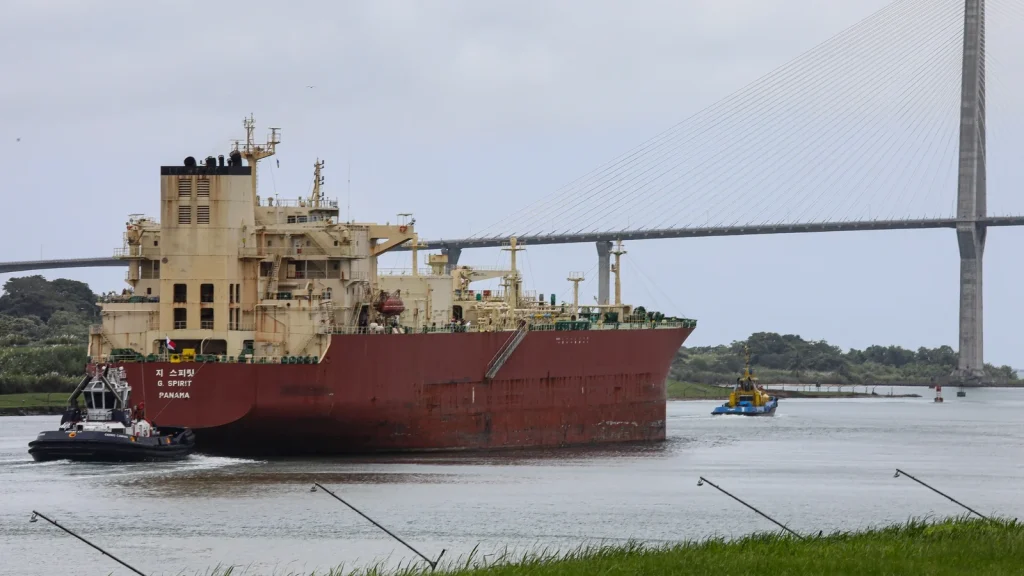
A worsening drought linked to the El Niño weather pattern has prompted the Panama Canal to begin restricting traffic through one of the world’s most important trade routes.
The Panama Canal Authority said falling water levels in the two artificial lakes that supply the canal had left it with little choice but to impose new limits.
- Advertisement -
The daily number of ships permitted to transit the waterway between the Atlantic and Pacific oceans will be reduced in stages, falling from 36 vessels to 32 by mid-September.
Panama has declared a nationwide emergency over El Niño, a naturally occurring Pacific Ocean weather pattern that alters global winds, atmospheric pressure and rainfall while contributing to higher worldwide temperatures.
El Niño also forced the canal authority to reduce daily crossings in 2023.
The phenomenon has not yet reached its peak, but Central America is already facing a severe drought. Honduras and El Salvador have likewise declared emergencies.
The Panama Canal carries 5% of global maritime trade and about 40% of US container traffic.
Authorities have already introduced additional water-saving measures, including reducing the maximum draft—the depth of a vessel below the waterline—for the largest ships.
In 2023, El Niño led the canal authority to cut the number of daily crossings to 22 vessels.
On Thursday, the World Meteorological Organization (WMO) said a potentially exceptional El Niño warming event had become firmly established in the tropical Pacific and was expected to intensify significantly into a “very strong” El Niño over the coming months.
The event is forecast to continue strengthening through the autumn and reach its peak toward the end of 2026, with its effects on the climate expected to persist well into 2027.
The WMO emphasized that El Niño is a naturally occurring climate phenomenon and is not caused by human-induced climate change.
However, the current event is unfolding against a backdrop of an already warmer planet and unusually high ocean temperatures.