
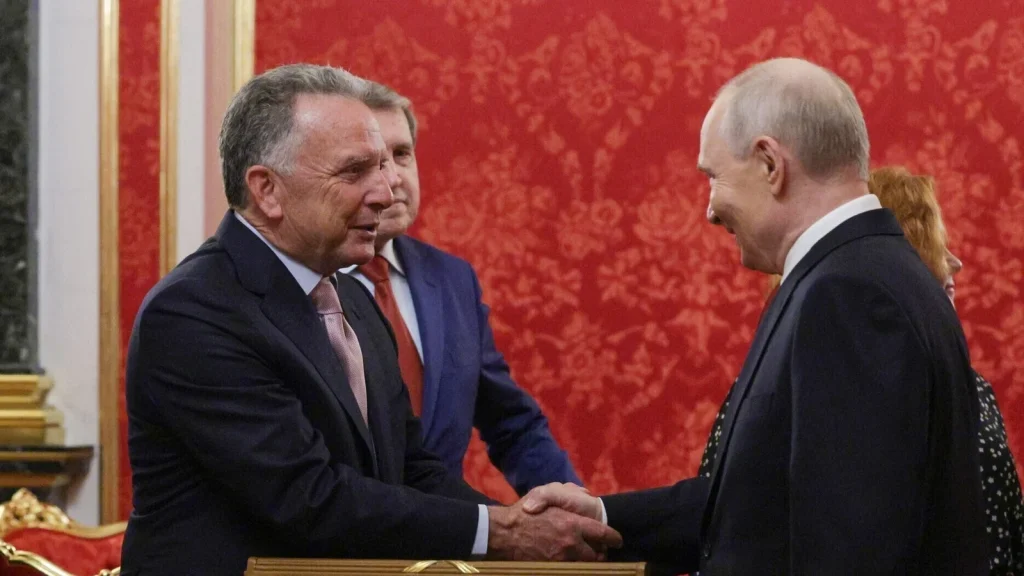
Russian President Vladimir Putin held more than three hours of what the Kremlin described as “highly useful” talks with two US envoys seeking an agreement to end the war in Ukraine, but there was no sign that the meeting produced a breakthrough.
Kremlin aide Yuri Ushakov said Steve Witkoff and Jared Kushner had presented “a number of ideas regarding possible avenues for a settlement.” He did not disclose details of the proposals.
- Advertisement -
Mr Ushakov said Mr Putin told the envoys that Russia was making “real progress” on the battlefield, remained confident it would achieve its objectives and believed any settlement must address “all the root causes of the conflict.”
Those positions have been repeatedly aired by Moscow during a war that has lasted more than four and a half years. In recent weeks, both sides have stepped up long-range air attacks, even as the front line has changed little.
Steve Witkoff and Jared Kushner were visiting Russia for the first time since January
The envoys left Russia shortly after the meeting and are expected to see Ukrainian President Volodymyr Zelensky in Kyiv today.
“The talks went beyond a mere exchange of views on resolving the Ukrainian crisis. Economic issues and potential major, mutually beneficial Russian-American projects were discussed in some detail,” Mr Ushakov said.
“Overall, one can say that the negotiations were timely and highly useful for both sides,” he added.
Kirill Dmitriev, Mr Putin’s investment envoy, later described the trip on X as an “important peacemaking visit.” He and Mr Ushakov attended the meeting.
Putin praises Trump’s efforts
Speaking on television as the talks began, Mr Putin commended Mr Trump’s efforts to bring the conflict to an end.
Mr Trump said on Friday that Washington had developed a new proposal intended to stop the war, though he offered no details.
Steve Witkoff and Jared Kushner are set to meet Ukrainian President Volodymyr Zelensky in Kyiv
“Understanding that he is entering a difficult situation, he nevertheless does not stop his efforts to help bring about a settlement and to make his contribution to resolving the Russian-Ukrainian conflict,” Mr Putin said.
He also pledged to protect the American negotiators. Kremlin spokesman Dmitry Peskov had said earlier that Mr Putin ordered Russian forces not to strike Ukraine for three days during their visit.
That pause followed 10 days in which Russia had bombarded Kyiv around the clock with missiles and drones, including a Friday strike on the headquarters of Ukraine’s SBU security service.
Ukraine, meanwhile, has carried out damaging attacks this summer against Russian refineries, oil terminals and warehouses belonging to online retailer Wildberries, seeking to increase the cost of Moscow’s continued military campaign.
Mr Zelensky said Ukraine was ready to halt attacks on Russia through tomorrow.
A vast gulf in positions
Russia and Ukraine remain far apart on the terms for ending the deadliest war in Europe since World War II.
Emergency service workers and local authorities respond to a Russian strike in the Bucha, Ukraine
Before reports surfaced about the visit by Mr Trump’s envoys, a source close to the Kremlin said Mr Putin remained determined to seize additional Ukrainian territory.
“There is no chance of reaching an agreement regarding the front line until Mr Putin finishes securing the remaining part of the Donetsk region,” the source said. The Kremlin leader, the source added, believed commanders’ reports showing that the objective could be achieved by the end of the year.
Western military analysts consider that prospect remote, pointing to Russia’s slow battlefield gains.
Ukraine has rejected giving up land it defended at enormous cost, arguing that such a concession would amount to surrender.
The Kremlin said on Friday that the position Mr Putin outlined in a speech two years ago remained “unshakeable”: Ukraine must surrender the whole of the four regions claimed by Russia and abandon its ambition to join NATO.
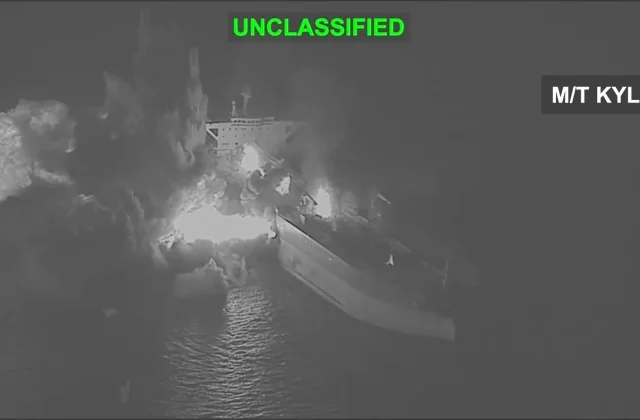
Since the last US-mediated peace talks between Russia and Ukraine in February, both countries have expanded long-range strikes against targets deep inside the other’s territory. Fighting at sea has intensified as well.