Chimpanzees once subjected to hepatitis B vaccine experiments are now receiving medical care and a chance at a more natural life at a sanctuary in Liberia.
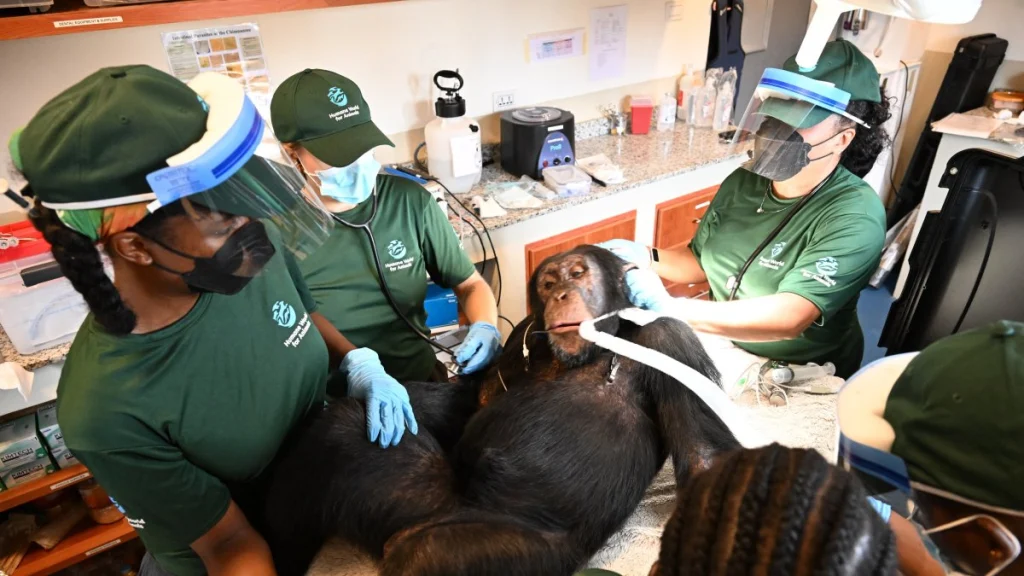
The animals recently underwent comprehensive health examinations at the Humane World for Animals’ Second Chance Chimpanzee Refuge in central Liberia, sanctuary director Liliana Pacheco Ricote told The Associated Press (AP). The procedures included dental cleanings, X-rays and pedicures.
- Advertisement -
From the 1970s through the early 2000s, more than 400 chimpanzees were used by American researchers in hepatitis B vaccine studies in Liberia, Ricote said. Many had been captured in the wild as infants before being taken to laboratories.
Today, the remaining animals live under the care of sanctuary staff, who track their health and provide medical treatment when necessary.
Liberia has the second-largest chimpanzee population in West Africa, behind Guinea. Yet the region’s West African chimpanzees have suffered a steep population decline, and the species is now classified as critically endangered.
“They were used in very invasive research … (and) went through a lot of experiments and pain,” Ricote said.
Humane World for Animals said it took permanent responsibility in 2015 for the 60 chimpanzees still alive when the research program ended. Most now reside at the sanctuary, spread across several mangrove-covered islands.
Conducted under anesthesia, the latest examinations allowed veterinarians to assess each chimpanzee from head to toe. The goal was to evaluate long-term health, identify potential diseases at an early stage and develop care plans suited to the animals as they grow older, Humane World for Animals said in a statement to the AP.
Veterinarians examined the chimpanzees’ teeth, hearts, lungs and nervous systems and conducted blood tests. The animals also received booster vaccinations and fingernail trims. The organization said it plans to examine the remaining chimpanzees as well.
“The health checks are a vital part of caring for these chimpanzees who have been through so much,” said Belen Perez Hernando, the sanctuary’s veterinarian.
The full impact of the experiments remains unknown. The chimpanzees are between 30 and 35 years old on average, and the findings from the latest assessments have not yet been finalized. Still, Ricote said the lasting effects were apparent.
“For those who were under the experiments, you could still feel the hurt and the pain that they went through,” she said.
“Seeing how much they hurt about what we’ve done, it gives me a lot of pleasure … to give them this second chance to live with dignity the life that they deserve,” Ricote added.