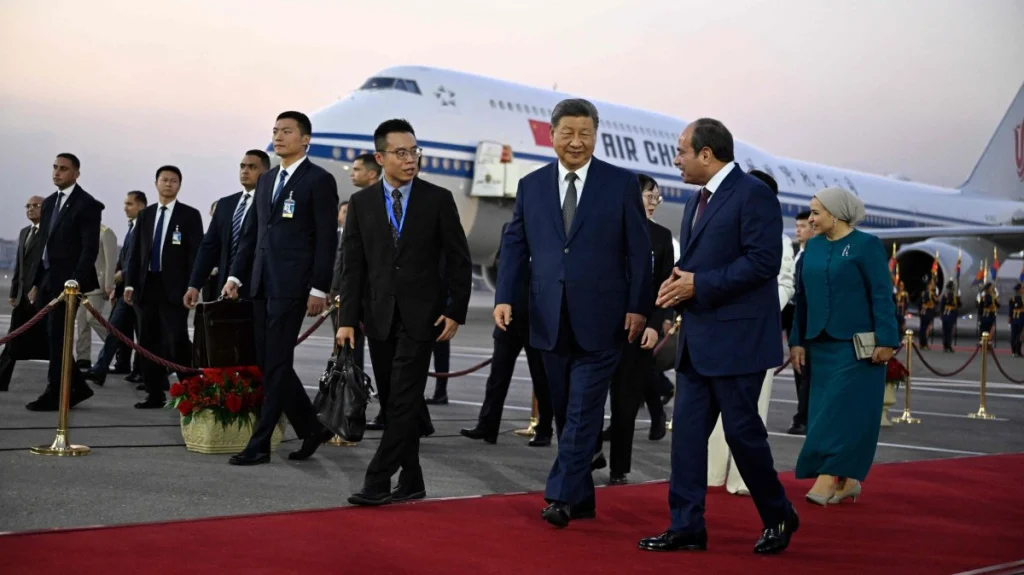
Egyptian President Abdel-Fattah el-Sissi received Chinese President Xi Jinping in Cairo on Wednesday, highlighting the rapid expansion of ties between Egypt and Beijing as turmoil in the Middle East prompts U.S. partners to reconsider their traditional security relationships.
Xi, on his first trip to Egypt in 10 years, was welcomed with a military ceremony at Cairo’s Ittihadiya presidential palace, Egyptian state television reported.
- Advertisement -
The visit follows months of upheaval in the Middle East during the U.S. war against Iran, a conflict that has unsettled regional economies and led some American partners to reassess their security arrangements.
Although Egypt remains a major U.S. defense partner and receives roughly $1.3 billion a year in military aid from Washington, Cairo has also expanded its economic and military cooperation with China.
Relations between Egypt and China have grown consistently since 2014, when el-Sissi traveled to China and signed a strategic partnership agreement.
Ayman Zaineldine, a former Egyptian diplomat, said Cairo’s effort to diversify its alliances had aligned with Beijing’s campaign to extend its influence beyond Asia.
“Egypt wants to widen the circle of its relations with major world powers, including China,” he told Reuters. “So the visions converge.”
Military ties, investment
Anticipation for Xi’s visit has built across the Egyptian capital, where streets have been decorated with Chinese flags and displays featuring landmarks such as Egypt’s Sphinx and China’s Great Wall.
Egyptian state media has emphasized opinion polls indicating that Chinese people hold favorable views of Egypt, while also broadcasting reports on China’s modern weapons systems.
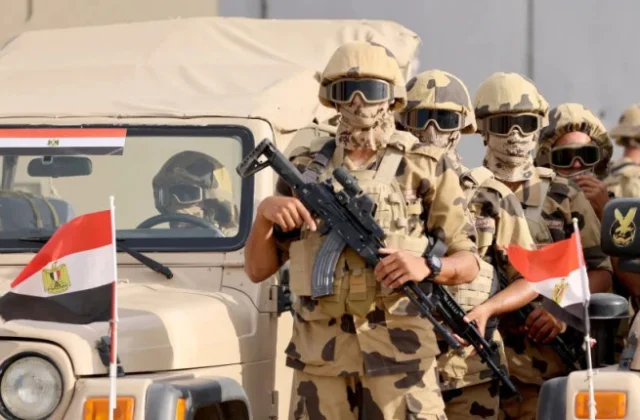
The two countries’ growing military relationship was showcased last month in Egypt’s “Eagles of Civilization” exercises with China. The drills included a rare air-combat exercise involving Chinese-made J-16 fighter jets and French-made Rafale aircraft.
For Beijing, Egypt’s regional reach and strategic position make it a significant partner as China pursues a broader diplomatic and economic role across the Middle East.
With control of the Suez Canal and a population of more than 110 million, Egypt also offers Chinese companies a major consumer market and an important investment destination.
Egyptian government figures show that imports from China surpassed $10 billion in the first half of the year, representing an increase of more than 14% compared with the same period a year earlier.
“Egypt represents something quite valuable to Beijing – a large domestic market for investment opportunities, and a lot of diplomatic weight in the region, including the Palestine question, as well as connectivity to Africa,” said H. A. Hellyer, a scholar at the Royal United Services Institute think tank.
Chinese companies have poured billions into Egypt in recent years, backing projects that include container-port development and green hydrogen, as well as the production of iron pipes, car tires and satellites.
China State Construction Engineering Corporation has also taken a leading role in building the business district of el-Sissi’s flagship new administrative capital, east of Cairo.