Migrants sent by the Trump administration to countries they had never called home have described hunger, dwindling water supplies and lengthy detention in facilities subject to little oversight.
In South Sudan, relatives say guards took advantage of detainees’ desperation, seeking thousands of dollars for basic necessities as the men remained confined in harsh conditions.
Ngoc Phan, a U.S. citizen, said she paid about $4,000 to guards after her husband, Tuan Phan, spent nearly a year in custody before being repatriated to Vietnam in June. The money, she was told, would cover food, water and a cellphone.
Instead, much of it was allegedly taken by the guards, while her husband and fellow detainees sometimes went days without enough food or safe drinking water.
“They used our desperate situation. If that’s not exploitation, I don’t know what is,” she said.
Phan called the alleged extortion a direct consequence of U.S. immigration policies that send deportees to impoverished and corruption-plagued countries, where they can be exposed to further abuse.
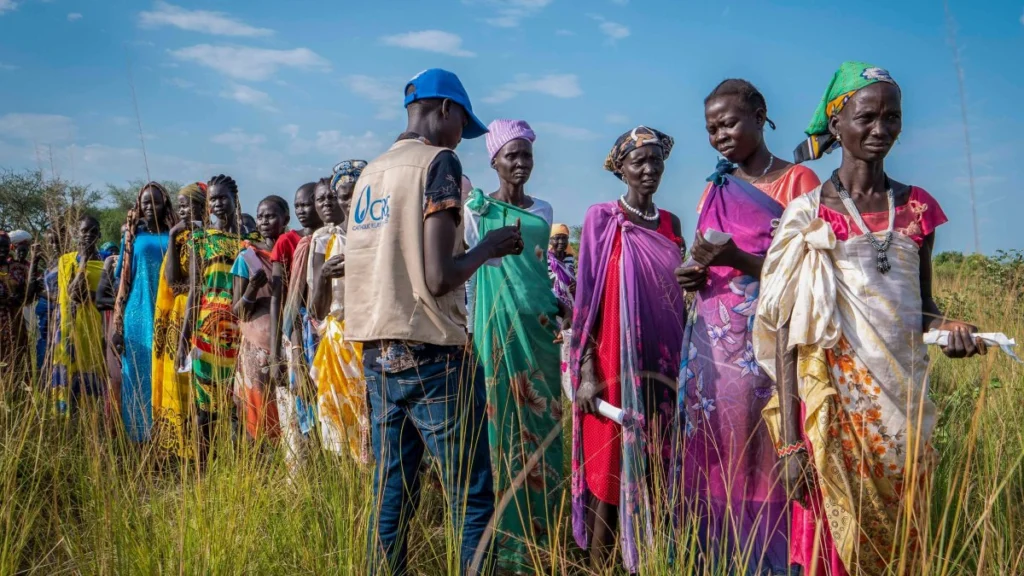
Five deportees are still being held in South Sudan, where years of civil war and catastrophic flooding have deepened poverty and food insecurity. Millions of people face severe hunger, the economy is in crisis and government workers routinely go without pay.
Tuan Phan, 44, said he lost roughly 20 pounds while detained in a gated, three-story building in Juba, the capital. As supplies dwindled, tensions between the guards and detainees escalated.
One detainee was punched in the face after asking that a window be opened for fresh air, Phan said. Another was confined to his room for several days after complaining that there was no soap.
“I feared for my life every day I was there,” he said.
The Associated Press spoke with six people familiar with the detainees’ treatment, including relatives and attorneys, and examined money-transfer receipts and messages involving the families of four detainees. Most of those interviewed asked not to be identified because they feared retaliation.
South Sudan’s Foreign Ministry rejected the allegations. It said the detainees receive sufficient food, water and medical care, maintain regular contact with relatives and lawyers, and have all related expenses covered by the government.
Families say guards demanded thousands of dollars
Ngoc Phan said she sent $300 to a guard in November 2025 after a lawyer warned her that the detainees were running short of food. Requests for more money, she said, became increasingly common.
When supplies ran out, guards allegedly told her husband to call and ask her to send funds. At times, they reached out to her themselves without explaining how the money would be used.
Relatives of three other detainees reported similar accounts. Receipts documented transfers of between $100 and $1,000 to four people identified as guards.
In one instance, messages and a transfer receipt show that a guard requested $1,000 for suits, shirts and shoes that a detainee allegedly needed before returning to his home country.
Phan said food vanished quickly because up to 12 guards lived and ate in the same building as the detainees. At times, the men subsisted on bread or rice and occasionally went days without a meal.
Water supplies were also unreliable. When their drinking water ran out, some detainees gathered rainwater.
“They give you a jug of water and say it needs to last a week. But then when it runs out, it can be another 10 days before you get more,” he said.
Fuel shortages led to power cuts that lasted for weeks. Broken plumbing, meanwhile, left the building reeking of human waste.
In September, one detainee asked his niece in the United States to stop sending money after a previous payment did not reach him.
U.S. deportations to third countries
Immigration advocates say the Trump administration has deported thousands of migrants to more than 30 countries that were not their countries of origin under agreements that have largely not been made public.
Many of those deported were asylum seekers covered by U.S. court orders barring their return to places where they might face persecution or torture.
Documents show that some receiving governments obtained millions of dollars in U.S. payments. Others sought diplomatic benefits or concessions related to trade, migration and foreign aid. South Sudan reportedly pursued relief from sanctions, though the details of its agreement remain unclear.
In July 2025, after a legal fight that culminated in a Supreme Court ruling, the administration sent Phan and seven other migrants with criminal convictions to South Sudan. Their convictions included murder and sexual assault.
The eight men, who came from Mexico, Cuba, Vietnam, Laos, Myanmar and South Sudan, had served their prison terms before being placed in immigration custody. A ninth deportee was later detained in the country.
The administration has defended the policy as a way to remove migrants with final deportation orders when their home governments refuse to take them back.
Alma David, an attorney for one of the men still held in Juba, said her client had been detained arbitrarily for more than a year and had not been charged with a crime.
“These are people who had lives and friends and families and who were scooped up and flown to a faraway country and locked up,” she said.
Detainees have few avenues for help
Relatives and lawyers say the conditions are unlikely to change without action by the U.S. government or international organizations.
But the Trump administration has shown little willingness to intervene, and U.N. agencies say they cannot act on their own.
A U.S. congressional aide said embassy personnel in Juba had been told not to visit the detainees or oversee their treatment. The aide said embassy staff gave that account during a visit in August 2025, but requested anonymity because the aide was not authorized to speak publicly.
The U.S. Embassy referred questions to the State Department, which did not respond to questions about whether such instructions had been issued.
The International Organization for Migration said it could not intervene without a request from South Sudan.
South Sudan’s Foreign Ministry said the United States had surrendered responsibility for the deportees.
Washington had “fully relinquished responsibility and no longer has any legal jurisdiction over, or ties to, these individuals,” the ministry said in a statement.