Somalia’s Constitutional Crisis Deepens as Power Struggle Engulfs Presidency and Supreme Court
The dismissal of Somalia’s Supreme Court chief justice has brought the country’s long-running constitutional dispute into sharper focus, exposing unresolved questions over presidential authority, judicial independence and the judiciary’s response to contested extensions of political mandates.
- Advertisement -
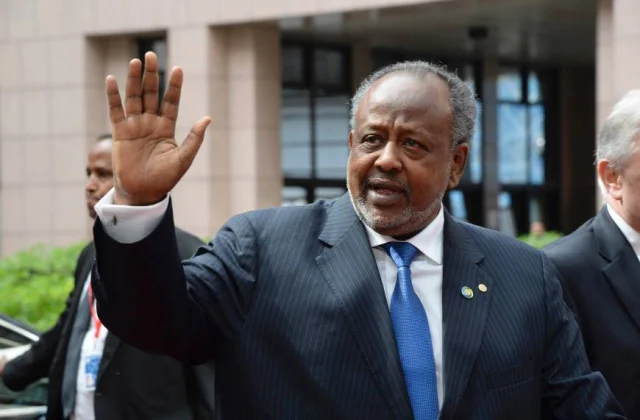
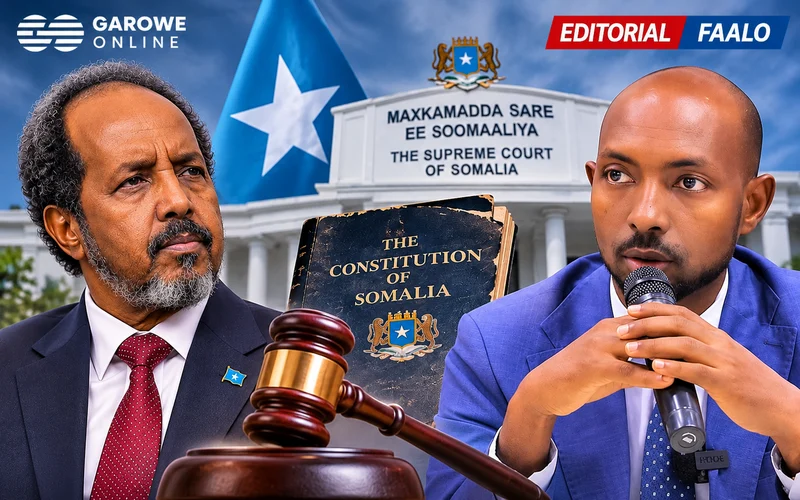
MOGADISHU — Somalia’s former president, Hassan Sheikh Mohamud, has reignited a constitutional battle by removing Supreme Court Chief Justice Bashe Yusuf Ahmed, a move that has intensified scrutiny of the limits of presidential power and the independence of the judiciary.
On November 4, 2026, Mohamud dismissed Bashe Yusuf and appointed Ibrahim Idle Suleiman to succeed him. The presidency attributed the decision to complaints about judicial administration, but did not publicly clarify whether the constitutional requirements for removing a chief justice had been observed.
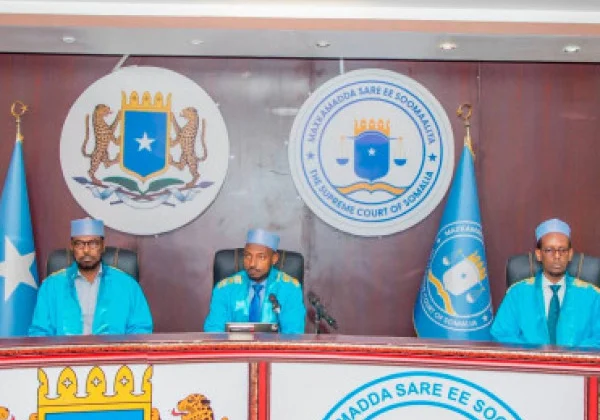
The Supreme Court challenged the decision the following day, declaring the dismissal unlawful. In its ruling, the court argued that Mohamud’s presidential mandate had expired on May 15, 2026, while Parliament’s term had ended on April 14.
That decision, however, immediately raised another question: Why did the Supreme Court remain silent while the executive pursued disputed constitutional amendments, extended political mandates and faced allegations that it was weakening the constitutional order?
Article 91 of Somalia’s 2012 Provisional Constitution sets the presidential term at four years. Mohamud, who was elected in May 2022, would accordingly have completed his term in May 2026.
But amendments approved in March 2026 increased presidential terms to five years. Opposition figures and the federal member states of Puntland State and Jubaland rejected the changes, while the federal government has maintained that they were lawfully adopted and remain in force.
The dispute over the chief justice’s removal poses a different constitutional question.
Article 90(j) of the 2012 Constitution establishes a process for appointing the president of the Supreme Court involving the Judicial Service Commission. Article 106, meanwhile, guarantees the independence of the judiciary.
In contesting the dismissal, the Supreme Court has relied on Articles 135 and 138 of the amended 2026 Constitution. It says those provisions require the involvement of the Judicial Service Commission and parliamentary approval before a chief justice can be removed, rather than allowing the president to act alone.
Yet the timing of the court’s intervention has placed its own conduct under renewed examination.
Throughout the political standoff over the constitutional amendments and the extension of presidential and parliamentary mandates, the dismissed chief justice did not publicly present a clear judicial challenge to those measures.
That silence does not, by itself, establish a legal breach. Courts typically act when cases are properly brought before them. Still, the court’s forceful assertion of constitutional authority immediately after its leadership was targeted has prompted questions about consistency, institutional independence and the timing of its ruling.
The Supreme Court said it was reviewing a constitutional petition filed in October by former President Sharif Sheikh Ahmed, who challenged the extension of the federal mandates.
In its November 5 decision, the court reportedly called for an electoral agreement within 30 days and elections within 90 days. It did not, however, strike down the amended constitution in its entirety, rejecting part of the petition that challenged the amendment process.
The dispute has therefore placed both the presidency and the judiciary under intense scrutiny.
Mohamud faces questions over the constitutional basis for remaining in office and whether he had the authority to remove the head of the judiciary without complying with the required legal procedures.
The Supreme Court, for its part, must answer why it did not intervene earlier over the contested constitutional changes and why its most decisive action came only after the independence of its own leadership was challenged.
If the earlier extension of presidential power was unconstitutional, judicial inaction could not make it lawful. And if the chief justice’s removal breached constitutional procedures, the judiciary’s earlier shortcomings cannot make that decision legitimate.
The dispute is therefore about more than whether Mohamud can continue in office or whether Bashe Yusuf should be restored. It goes to the broader question of whether Somalia’s constitutional institutions will apply the law consistently, even when doing so threatens their own political or institutional interests.
Somalia’s constitutional framework has long been strained by disputes involving federal authority, electoral mandates and the separation of powers. The latest confrontation shows how quickly that framework can weaken when constitutional principles are invoked selectively.
A constitution cannot serve as a tool of political convenience—defended when authority is under threat and ignored when those in power feel secure.
Somalia needs a constitutional system that stands above both the presidency and the judiciary, rather than one that gains force only when the interests of those institutions come into conflict.
Ultimately, Somalia’s defining question is not simply who holds the legal authority to govern. It is whether those charged with defending the Constitution will respect its limits before their own positions are placed at risk.